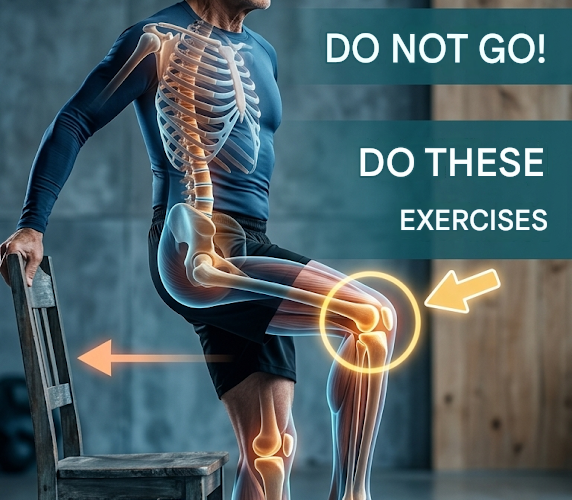
Listen to this carefully. Many people over the age of 60 believe that walking is enough to stay healthy. And yes, walking is beneficial… but it is not complete.
The body, over the years, needs more than just gentle movement: it needs strength, balance, and real muscle stimulation. If this is not worked, muscle mass decreases, balance deteriorates and the risk of falls increases considerably.
Today, you’ll discover four simple, effective, specialist-endorsed exercises that you can do at home with a chair or a wall, and that offer much deeper benefits than a daily walk.
Exercise 1: Heel Raises – Activate Your “Second Heart”
The calves play a key role in blood circulation. They act like a pump that helps blood flow back to the heart.
Benefits:
- Improves circulation
- Reduces swelling in legs
- Reduces the risk of thrombi
- Strengthens ankles and feet
How to do it:
- Stand up and gently hold on to a chair.
- Elevate your heels as high as possible.
- Hold up for 2 seconds.
- Slowly lowers over 3–4 seconds.
Do 3 sets of 15 to 20 reps.
Exercise 2: Chair Squat – Strength and Independence
Leg strength is one of the greatest indicators of autonomy in old age. This exercise fights muscle loss (sarcopenia).
Benefits:
- Strengthens legs and buttocks
- Improves balance
- Helps prevent falls
- Supports bone health
How to do it:
- Stand in front of a chair.
- Slowly lower yourself as if you were going to sit down.
- He barely touches the seat and climbs back in.
- Keep your back straight and your knees aligned.
Perform 3 sets of 10 to 15 repetitions.
Exercise 3: Push-ups against the wall – Open your chest and improve your breathing
Over the years, the posture tends to slouch, affecting breathing and heart health.
Benefits:
- Strengthens arms and chest
- Improves lung capacity
- Promotes circulation to the brain
- Reduces back pain
How to do it:
- Rest your hands on the wall at shoulder height.
- Lean your body forward.
- Bend your arms by bringing your chest closer to the wall.
- Push and return to the starting position.
Do 3 sets of 12 reps.
Exercise 4: Balancing on one leg – Protect your brain and prevent falls
Balance is key to avoiding accidents and maintaining mental agility.
Benefits:
- Improve coordination
- Stimulates the brain
- Reduces the risk of falls
- Strengthens stabilizing muscles
How to do it:
- Stand near a wall or chair.
- Lift one foot a few inches.
- Hold your balance for 20–30 seconds.
- Switch legs.
Repeat 3 times on each side.
Tips and recommendations
- Start progressively, without straining the body
- If you feel pain or dizziness, stop immediately
- Keep your breathing controlled during each exercise
- Do this routine at least 4 times a week
- Wear comfortable shoes or do it barefoot if it is safe
- Consult with a health care professional before starting if you have any medical conditions
Aging does not mean becoming weak, but adapting intelligently. Walking is a good start, but it’s not enough.
These exercises work muscles, bones, balance, and brain at the same time, helping you maintain your independence, energy, and quality of life.
Start today. Your body still has a lot of potential to show.