Weeds are one of the most frequent problems in gardens, orchards and patios. They grow fast, compete for water and nutrients, and often reappear even after manual removal. Faced with this, many people are looking for simple and inexpensive solutions without resorting to harsh chemicals.
Among the most popular alternatives is a homemade recipe passed down through generations: a mixture of vinegar, salt and liquid soap. While it doesn’t replace all professional gardening methods, it can be a useful tool in certain areas and situations.
In this article we explain how this preparation works, how to use it correctly and what precautions should be taken into account.
A traditional recipe that is still valid
Before modern commercial herbicides existed, many families solved the weed problem with common household ingredients. This is how this homemade formula was born, valued for its simplicity, low cost and ease of preparation.
The classic combination uses:
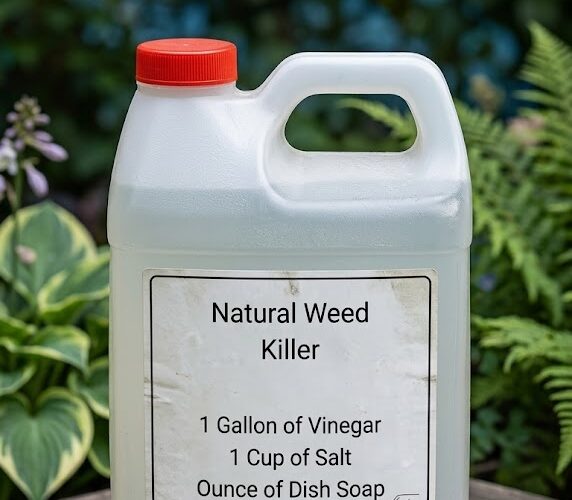
- 1 gallon or drum (about 3.8 liters) white vinegar
- 1 cup salt
- 1 tablespoon liquid dish soap
Each component fulfills a specific function, and together they enhance their effect on unwanted plants.
How Each Ingredient Works
White vinegar
Vinegar contains acetic acid, a substance that can damage weed leaves on contact. Its main effect is drying: it weakens the plant and promotes its wilting.
It usually works best on young or small weeds, as more developed plants can better withstand treatment.
Salt
Salt helps dehydrate the plant, hindering its ability to absorb water and nutrients. This can intensify the effect of vinegar.
However, it should be used sparingly, as too much can affect the quality of the soil.
Liquid soap
Soap serves as a surfactant. This means that it helps the mixture stick better to the leaves instead of slipping. Thus, the active ingredients remain longer on the surface of the plant.
How to prepare the mixture step by step
Preparing it is simple:
- Place the vinegar in a large bucket or container.
- Add the salt and mix until it dissolves as well as possible.
- Add the liquid soap.
- Stir gently to avoid too much suds.
- Transfer the preparation to a garden sprayer or sprayer.
Once ready, it is advisable to use it the same day to make the most of its properties.
How to apply it correctly
For best results:
- Spray directly onto weed leaves.
- Try to cover the entire visible surface well.
- Apply on a dry and sunny day.
- Avoid using it if rain is expected in the next few hours.
- Repeat the application if breakouts return.
The heat of the sun can help accelerate the drying effect of the mixture.
Where to use it
This recipe is usually most useful in places where vegetation is not desired, for example:
- Cracks in sidewalks
- Roadsides
- Car Driveways
- Tiled patios
- Garden Paths
It’s not the best choice for use near flowers, grass, or crops you want to preserve.
Important Precautions
Although it’s made with common ingredients, that doesn’t mean it should be used carelessly.
Please note:
- It can damage any plant it touches.
- Salt can remain in the soil and hinder future crops.
- Avoid applying near the roots of ornamental plants.
- Wear gloves to handle the mixture.
- Protect your eyes when spraying.
Comparison with commercial herbicides
Commercial products usually offer faster or more targeted results, but often contain more aggressive synthetic compounds.
The homemade version stands out for:
- Lower cost
- Easy-to-get ingredients
- Control over what is applied
- Good usefulness in specific areas
However, it may require multiple applications and greater consistency.
Tips for better results
If you decide to try this recipe, these recommendations can help you:
- Manually pull out large weeds before applying.
- Repeat treatment on persistent plants.
- Use precision nozzle so as not to affect other plants.
- Apply it at noon on sunny days.
- Keep the area clean to prevent new seeds.
What to remember
This homemade mix can be a practical alternative for controlling weeds in specific areas of the garden, especially in cracks, paths or hard surfaces. It is not a magic or universal solution, but used judiciously it can be an economical and simple help.
The key is to apply it carefully, sparingly, and understanding its limits to protect both your desired plants and the health of the soil.