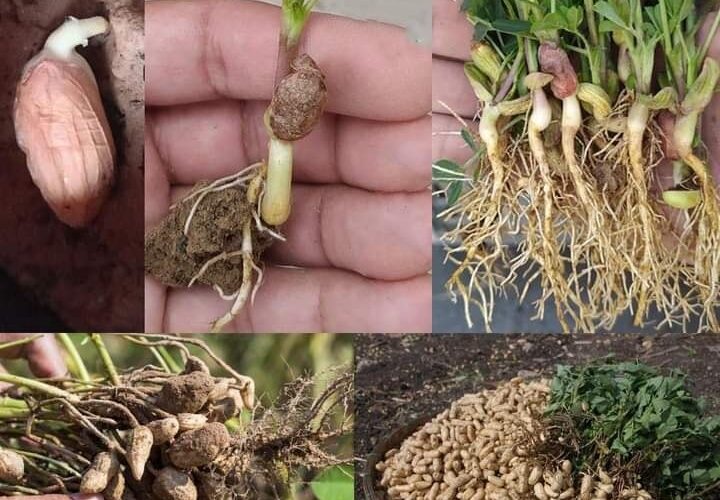

#1 Choosing peanuts:
- Opt for fresh, raw, uncooked peanuts in the shell.
- Avoid roasted or salted peanuts as they do not germinate.
#2 Preparation and Planting:
- Peanuts require a long growing season (100-130 frost-free days).
- Indoors, start 5 to 8 weeks before the last frost date to get an early start, especially in northern climates.
- Plant in loose, well-drained soil, adding sand and old compost if needed.
- Sow seeds 1 to 2 inches deep and 24 to 36 inches apart in rows at least 72 inches apart.
#3 Location and land:
- Choose a sunny spot because peanuts need full sun.
- Use row covers to protect young plants from spring frosts.
- The soil should be light, clayey, and slightly acidic (pH 5.5-7.0).
#4 Watering and Care:
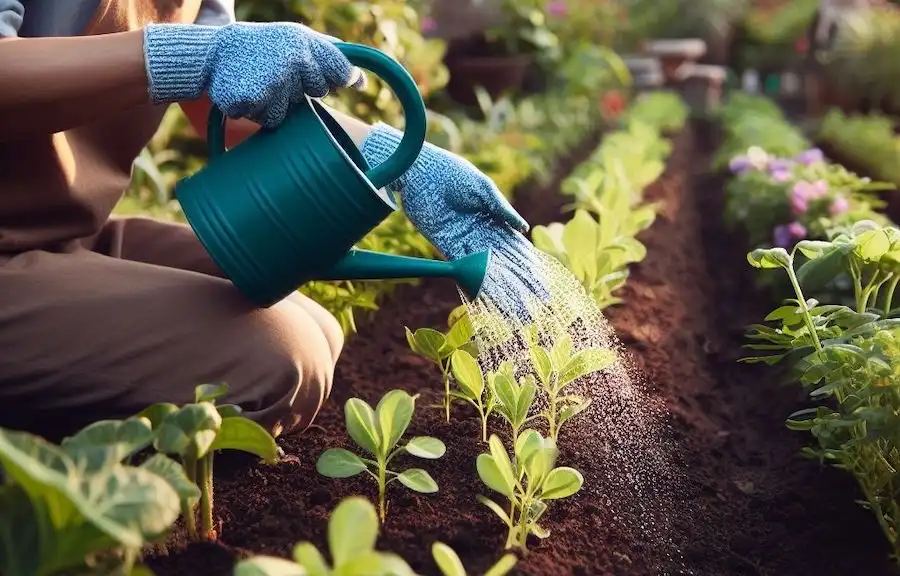
- Water at least 1 inch per week to maintain even moisture but not to flood the soil.
- Add mulch once the seedlings are half a foot tall to retain moisture and control weeds.
#5 Fertilization:
- Peanuts are nitrogen-fixing and therefore require less nitrogen.
- Focus on calcium, as it is crucial for pod development.
- Use a balanced or low-nitrogen fertilizer before planting.
#6 Pruning and propagation:
- Pruning is usually not necessary, but it can be done as maintenance.
- Propagate peanuts by seed, selecting healthy, ripe ones to save and plant next spring.
#7 Harvesting and Storage:
- Harvest time is approximately 100 to 150 days after planting.
- To harvest, remove the entire plant from the ground.
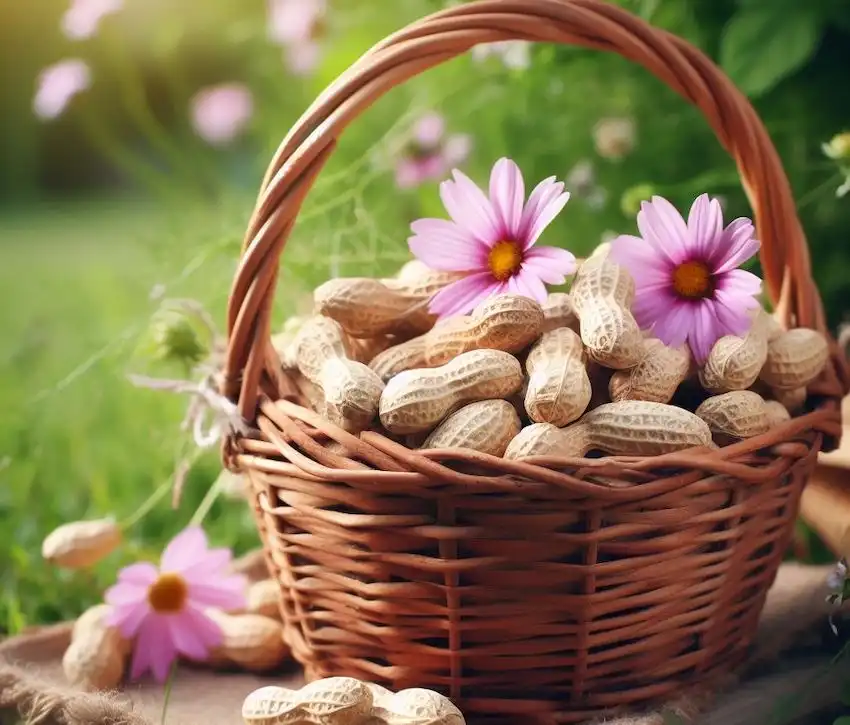
- Store raw peanuts in a mesh bag in a dry place or roast them to eat.
Growing peanuts can be a fun and fruitful task, especially if you have a sunny spot and some patience. With proper care, you’ll be able to enjoy homegrown peanuts in your garden!