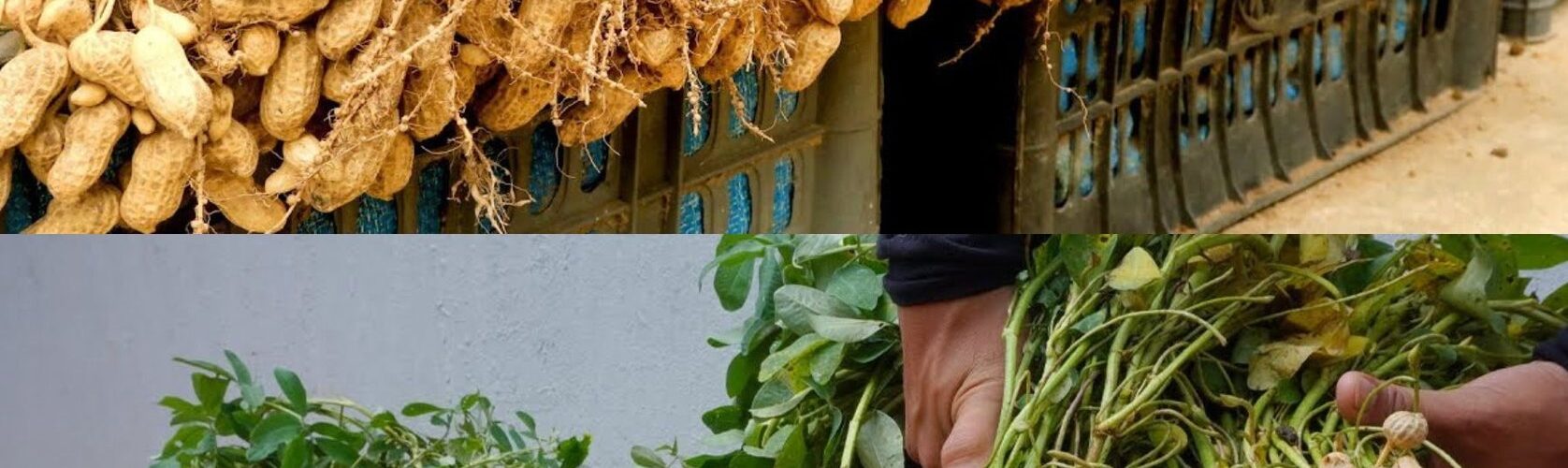
Did you know that you can plant your own peanuts at home?
To have all the possibilities on your side, you should first know that you’ll need a warm season to make it really easy to grow peanuts in a garden at home.
How to grow peanuts in a vegetable garden?
Peanuts (Arachis hypogaea) prefer a long, warm growing season and are typically planted from mid to late spring (after the threat of frost has completely passed) to mid-summer. When growing peanut trees, plant them in sandy soil that is rich in organic matter, such as leaves, compost, or well-decomposed manure.
Sow your peanut seeds:
You can find peanut seeds on the internet like on the Amazon site.
Your peanut plants will need to thrive in a sunny location. Requirements vary somewhat between peanut varieties. There are so-called creeping varieties with a long vegetative cycle (120 to 140 days) such as the Virginia variety, the seeds do not germinate prematurely, this variety is more resistant to leaf scab. Then the varieties with an erect bearing and short vegetative cycle (90 to 110 days) such as the Spanish and Valencian varieties, the yield is higher, but the rapid germination after maturity can be a problem.
Creeping-type peanuts have a vine-like growth habit and require a bit more garden space than their upright counterparts. Three to five seeds are usually planted 5 cm deep, 20 cm apart with rows at least 60 cm apart. The planting of creeping varieties should be about 4 cm deep and 15 cm apart. Once the seedlings have reached around 15cm, a layer of mulch, such as straw, can be added to help keep weeds under control.
Calcium is important for the growth and development of pods. Therefore, it may be necessary to add gypsum to the soil once flowering begins.
It is also essential to water weekly to prevent the pods from drying out.
How do peanuts grow?
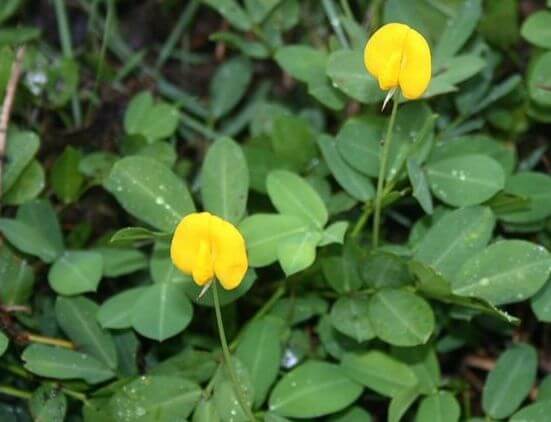
Most peanuts bloom after about six to eight weeks after planting.
The flowers are produced close to the ground in an upright bearing and along the length by creeping bearing. While plants bloom above ground, however, seed pods grow underneath. As the flowers fade, the stem begins to bend downward, bringing the pods to the ground. Since peanuts bloom over a period of several weeks (up to three months), the pods ripen at varying intervals.
Each pod produces two to three peanuts.
Peanut harvesting and storage.
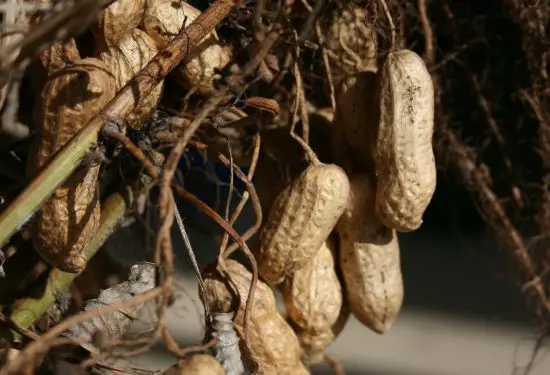
Most peanuts are ready for harvest after about 120 to 150 days after planting. Peanut harvesting usually takes place in late summer or early fall, when the foliage turns yellow. As peanuts mature, the color of their shell changes from white or yellow to dark brown or black. You can test the ripeness of the peanuts by scraping off half of the pods with a sharp knife. A dark brown to black husk means they are ready for harvest.
Pull up the plants carefully and shake off any excess soil. Then, dry the peanuts by hanging them upside down in a warm, dry area for about two to four weeks. Once dry, place them in mesh bags and store them in a well-ventilated area until ready to grill.
Boiled peanuts are best if boiled immediately after harvest and before drying.