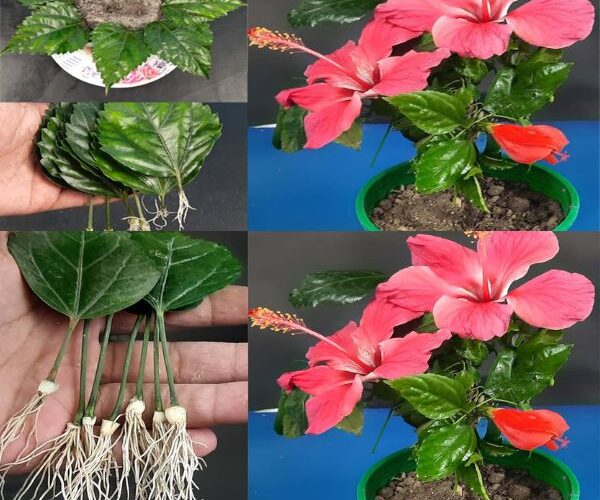
Large flowers are its hallmark: let’s talk about hibiscus.
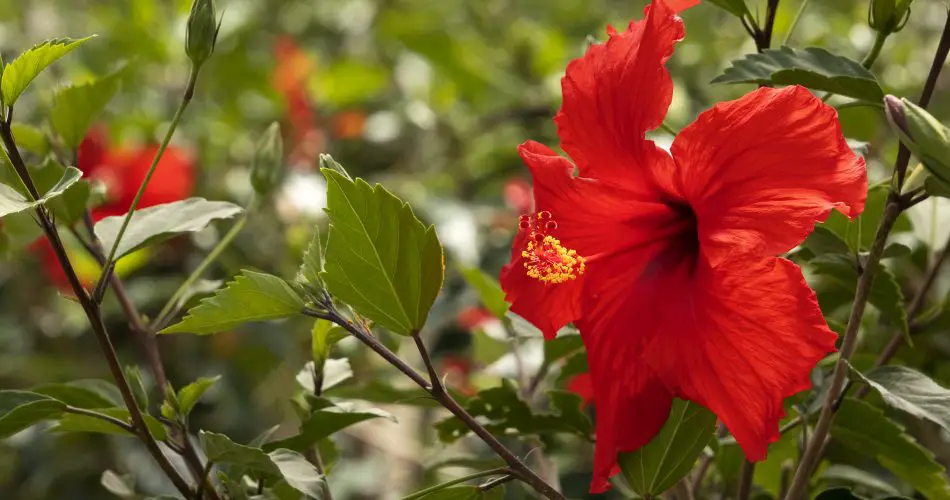
This plant, also known as hibiscus or hibiscus, is an ornamental plant that brings joy and beauty to gardens and balconies thanks to its unmistakable red flowers , but also orange, yellow or white.
Growing it is not difficult at all if you follow a few simple tips to always have it leafy and full of flowers.
Let’s find out how to do it together.
NB: In case of problems or if the plant seems sick, contact a professional.
Bright light
More light, for this plant, means more flowers!
Place your hibiscus in a sunny spot in your garden or balcony. In fact, this plant loves sunlight, even direct sunlight.
If you keep it in partial shade, the hibiscus will be able to survive but its flowers will be less abundant.
Light terrain
Light soil ensures that your hibiscus roots are in better health.
Ideally, you should mix universal soil with fine sand or bark: in this way, the roots will breathe better and stagnant water will be less frequent. Also, hibiscus grows best if the pH is slightly acidic.
NB: You can add some terracotta fragments to enhance the drainage effect.
Water at room temperature
A secret to always having a hibiscus in shape is to water it with water that is neither too cold nor too hot. Ideally, you should use water at room temperature.
In fact, especially in summer, the temperature difference between the room and the water used for irrigation can damage the plant, weakening it and prematurely interrupting flowering.
Before watering, therefore, leave the water in a bucket or watering can for a couple of hours.
Frequent fertilization
Hibiscus usually blooms from spring to early fall, with continuous blooms.
This long flowering often needs a little help to always be abundant and not interrupt: frequent fertilization is a good solution.
Choose fertilizers or fertilizers that promote flowering, such as potassium-based fertilizers. Fertilize once a week, or according to the specific directions of the fertilizer you choose.
Repel aphids
Among the parasites that usually infest our plants, aphids are undoubtedly the ones we find most frequently in hibiscus.
It is important to periodically check the plant for these unwanted guests between the leaves.
If you find them, you should remove them as soon as possible to prevent them from causing damage to the plant.
You can use specific products, but also various natural remedies such as yellow soap and neem oil.
In both cases you have to dilute the product (a few flakes for yellow soap, about 15 drops for neem oil) in 500ml of water and spray the mixture on the leaves.
Repeat the process every 3 days until you’ve cleared the infestation.
If you want to keep them away, here’s a video with the whole procedure to keep them away:

Protect in winter
In the winter months, hibiscus does not bloom but still manages to survive until spring.
You usually don’t have to do anything except stop fertilizing and water more rarely.
Of course, if temperatures drop a lot (below 0), it must be covered with a nylon sheet or, if stored in a pot, taken indoors.
High humidity
This plant is native to tropical and subtropical countries where the environment is quite humid. That’s why it’s ideal to store it in a place where the humidity is high enough .
A secret is to sprinkle a little water every day on the leaves to ensure an optimal moisture level.