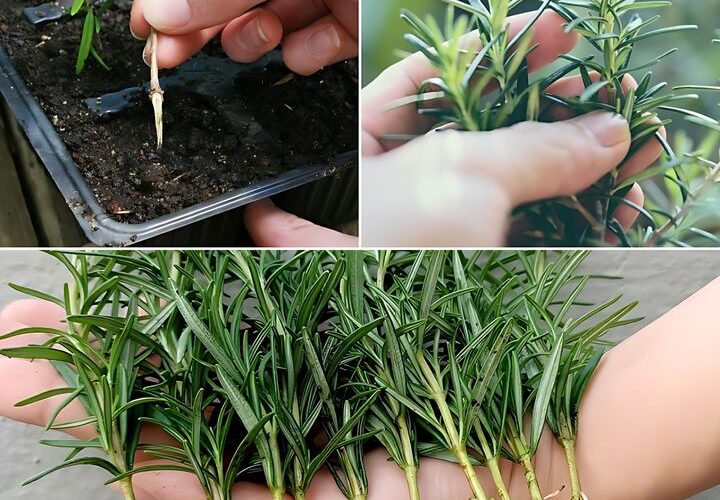
Necessary materials:
Rosemary sprigs (cuttings) or seeds
Small pots for cuttings
Larger pots for mature plants (with drainage holes)
Well-drained substrate mix (with sand or perlite)
Rooting hormone (optional for cuttings)
Watering can or spray bottle
Clear plastic bag or plastic dome (for cuttings)
Organic fertilizer
How to Grow Rosemary from Cuttings
1.Select and Prepare the Cuttings:
Choose healthy stems, without flowers (4-6 inches).
Remove the leaves from the bottom 2 inches.
(Optional) Dip the cut ends in rooting hormone.
2.Plant the Cuttings:
Fill small pots with well-drained mix.
Insert the cuttings 1-2 inches deep.
Water the soil gently.
3.Create a Humid Environment:
Cover the pots with clear plastic bags or domes.
Place in a bright location with indirect light.
4.Care for the Cuttings:
Keep the soil moist, but not waterlogged; Spray if dry.
Check for roots after 4-6 weeks.
Transplant the rooted cuttings to larger pots.
5.Transplant and Continuous Care:
Use larger pots with well-drained mix.
Place in a sunny location (6-8 hours of sunlight).
Water when the top of the soil is dry.
Fertilize every 4-6 weeks during the growing season.
How to Grow Rosemary from Seeds
- Prepare and Sow the Seeds:
Start indoors 8-10 weeks before last frost.
Fill trays or pots with seedling mix.
Scatter the seeds, cover lightly with soil (¼ inch deep), sprinkle gently.
7.Germination:
Place in a warm, bright location or under grow lights.
Keep the soil moist, but not waterlogged.
Germination takes 2-4 weeks.
8.Transplant the Seedlings:
Transplant seedlings with true leaves to larger pots with well-drained mix.
Place in a sunny location.
9.Caring for Seedlings and Mature Plants:
Water when the top of the soil is dry.
Ensures 6-8 hours of sunlight.
Fertilize every 4-6 weeks during the growing season.
Prune regularly to encourage bushy growth.
Tips for Success:
Provides 6-8 hours of direct sunlight per day.
Allow the soil to dry slightly between watering.
Avoid overspray; prefers dry conditions.
Maintain temperatures above 4°C (40°F).
Monitor for pests and treat naturally if necessary.