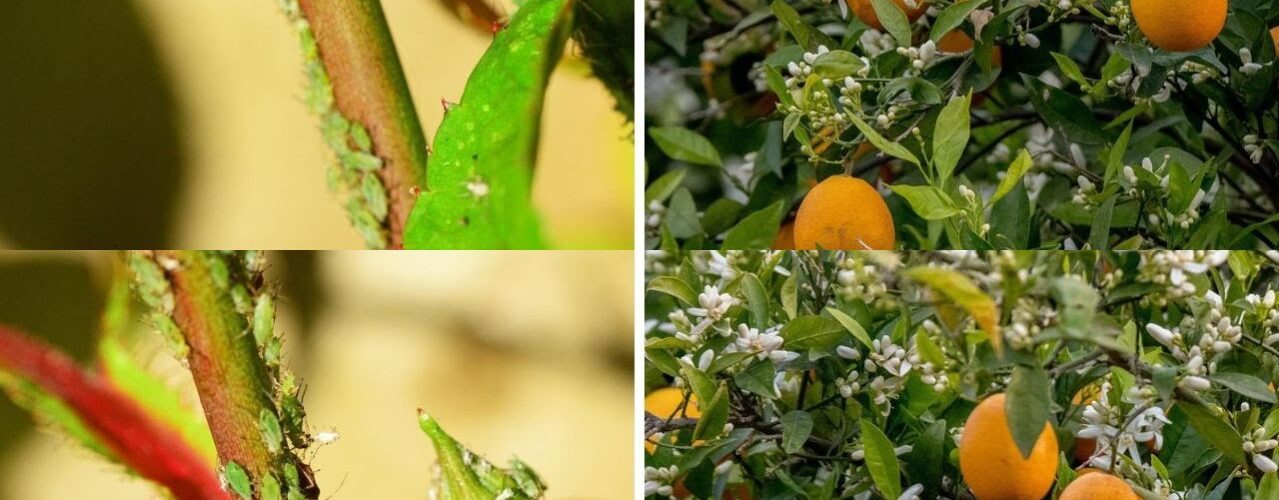

Identification and monitoring of aphids in almond trees
Before starting to treat aphids, it is essential to know how to identify them and control their presence in your almond trees.
Aphids are small insects, usually green, yellow, or black, that feed on plant sap. They can cause damage by injecting their mouthparts into leaves, stems, and fruits to extract the sap. This can lead to weakened plants, distorted leaves, deformed fruits, and the spread of disease.
To monitor the presence of aphids in your almond trees, regularly examine the leaves, especially the underside, where aphids tend to congregate. You can also use sticky traps to capture aphids and get an idea of their population. If you find aphids on your almond trees, it’s time to take steps to get rid of them.
Natural methods to eliminate aphids from almond trees
If you want to avoid using chemicals to treat aphids, several natural methods can be effective.
Here are some of the options you may want to consider:
- Natural predators: Introducing natural aphid predators, such as ladybugs and lacewings, can help reduce aphid populations. You can buy these beneficial insects from a specialized supplier or create an attractive habitat for them in your garden by planting flowers that attract them.
- Water spray: You can use a strong jet of water to remove aphids from the leaves and stems of your almond trees. This can be an effective method for minor infestations, but make sure you don’t damage the plants with too much pressure.
- Insecticidal soap: You can make your own insecticidal soap by mixing a small amount of non-detergent liquid soap with water. Spray this solution on aphid-infested areas to remove them. Be sure to rinse the plants thoroughly after application to avoid damage.
Use of chemical products for aphid control.
If natural methods are not enough to eradicate aphids from your almond trees, it may be necessary to use chemicals.
Here are a few options to consider:
- Oil-based insecticides: Oil-based insecticides, such as neem oil or horticulture oil, are milder options for controlling aphids. These products work by suffocating and dehydrating insects. Be sure to follow the manufacturer’s instructions for proper and safe application.
- Systemic insecticides: Systemic insecticides are absorbed by the plant and transported to its tissues, killing aphids when they feed on the sap. These products can be effective for persistent infestations, but they can also have negative effects on beneficial insects and the environment. Use them with caution and follow the manufacturer’s instructions carefully.
- Contact Insecticides: These chemicals work by killing aphids in direct application. Although they can be effective in rapidly reducing the aphid population, they can also harm beneficial insects and typically require several applications to completely eliminate the infestation. Again, follow the manufacturer’s instructions for proper and safe use.
Preventive measures to protect almond trees from aphids
In addition to actively removing aphids from your almond trees, it is essential to put preventive measures in place to reduce the risk of new infestations.
Here are some tips to help you:Tree CareA healthy almond tree is less likely to be attacked by aphids. Be sure to prune the tree regularly to promote good air circulation, water it properly, and fertilize it with a balanced fertilizer to ensure healthy growth.Companion plantsPlanting certain plants near almond trees can help repel aphids. Plants such as mint, calendula, and nasturtium are known to ward off these pests. In addition, plants that attract beneficial insects, such as ladybugs and lacewings, can also help keep the aphid population in check.Crop rotationIf you grow other aphid-susceptible plants near your almond trees, practice crop rotation to prevent pests from taking root in a certain area. This can help reduce the risk of infestation.
By combining these different strategies, you can protect your almond trees from aphids and preserve the beauty and productivity of these precious trees. Remember to take a proactive approach by regularly monitoring aphids and applying treatments as needed to prevent infestations from getting out of control.
It’s important to take seriously the threat that aphids pose to your almond trees. By identifying and monitoring aphids, using natural methods and chemicals responsibly, and taking preventative measures to protect your trees, you can ensure the longevity and prosperity of your almond orchard. So don’t wait for aphids to invade your trees: act today to eliminate them and preserve the health of your precious almond trees.