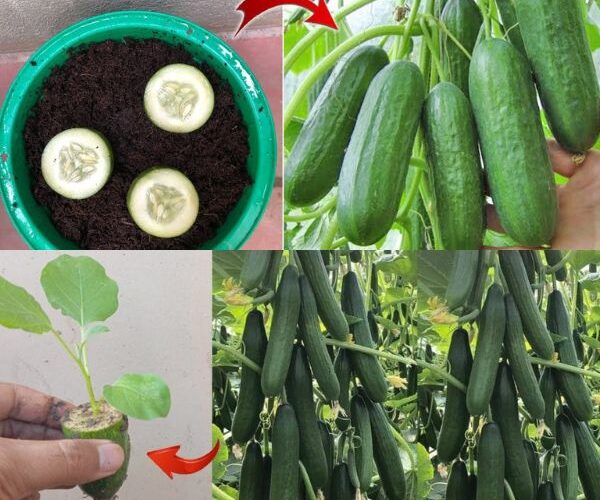

Cucumber is an annual deciduous vegetable plant. Native to Asia, this summer vegetable is rich in water and fibre beneficial for good intestinal transit. To reap the benefits of cucumber and enjoy an organic harvest, consider growing it in your vegetable garden. To do this, discover the 6 important things to consider in order to plant cucumbers successfully.
Cucumber is a refreshing vegetable. It can be eaten raw in a salad or with other raw vegetables. To successfully grow this vegetable plant and get a crisp and juicy harvest, you must first successfully complete the planting stage.
What are the 6 important things you need to know for successful cucumber planting?
For successful cucumber planting, these 6 factors should be taken into account.
- Respect the planting period of cucumbers.
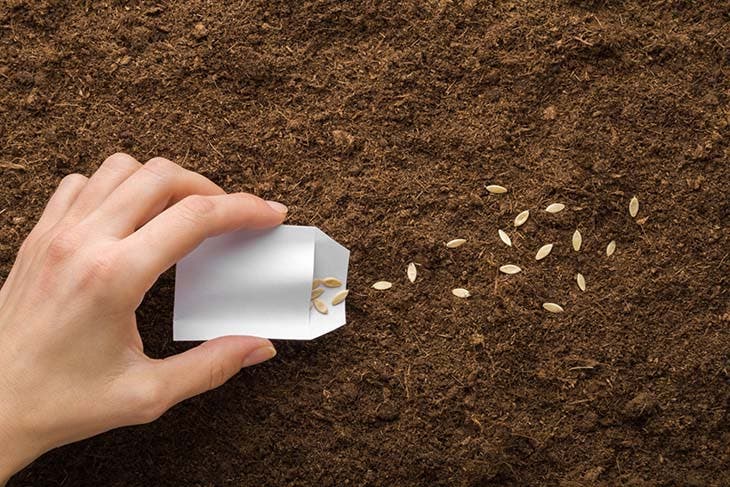
Cucumber seeds – Source: spm
The cucumber appreciates being exposed to the sun and likes a mild climate. That said, the ideal time to plant cucumbers is between March and May. If you want to sow the seeds in March, you should do so under a heated shelter. Only after the seeds have germinated, you can transplant the seedlings into the open ground. But this should be done only at the end of frost, i.e. from mid-May. In this case, make sure to maintain a space of one meter between the plants.
Since cucumbers do not like cold and frost, you can sow them on the spot, that is, directly at the place where they will be harvested, only from mid-May. Plant up to 3 seeds per hole, making sure to maintain a one-meter gap between plants.
- Choosing the right soil for growing cucumbers
Cucumbers prefer well-drained, deep, loose, i.e. light, soils that have been previously worked. Cucumber also appreciates humus-rich soil, which means soil rich in plant remains and therefore rich in humus.
If you’ve chosen to start sowing indoors, fill the pots with good potting soil. The latter is characterized by its ability to retain water and nutrients, while also being draining, to allow air to circulate around the roots. Plant up to 3 seeds per pot and cover them with about 2 cm of potting soil.
- Keep Cucumber Seeds Warm to Promote Germination
To germinate, seeds need heat. In addition, to successfully sow cucumbers in the ground, it is important to wait until the end of frost, so that the seeds have enough heat and sun. As for potted seedlings, it is advisable to arrange the pots on a tray and place it on top of an appliance that gives off heat, such as a refrigerator. Then cover the tray with cling film, to retain heat. Keep in mind that seedlings need a temperature of around 20°C.
- Conserving Moisture for Successful Cucumber Seed Germination
Seeds also need moisture to germinate. In addition, if it is convenient to cover the pots with a transparent film, it is not only to retain heat, but also to conserve moisture. That said, remember to check the soil every day and water it as needed. Avoid overwatering, however, as this can rot the roots and cause young plants to wilt.
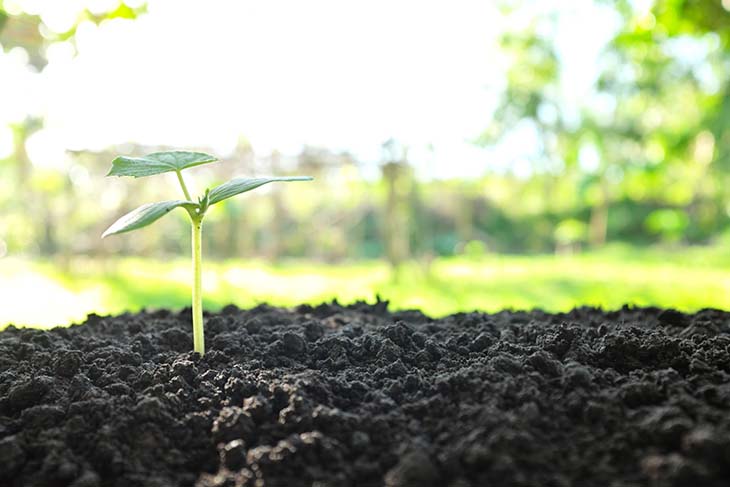
Young cucumber plant – Source: spm
- Providing Light Exposure for Young Cucumber Plants
Cucumber seeds need light as soon as they begin to germinate. To do this, it is advisable to remove the transparent film covering the pots and place the tray under a fluorescent bulb, as the light from the window may not provide enough exposure to the young plants. Keep in mind that even seeds sown on site need full sun exposure, as well as being protected from the wind.
- Know When to Prune and Repot Young Cucumber Plants
Transplanting seedlings refers only to plantings done indoors, in pots. When young plants reach about 3 cm in height, prune those that seem weak to you, to keep only vigorous plants in each pot. When the plants you’ve kept reach 5cm in height, transplant them to the ground, in a sunny spot in your garden.
What vegetables should not be planted next to cucumber?
While there are many vegetables that are favorably associated with cucumbers, there are also other unsuitable plants that can prevent them from growing, including: melons, brassicaceae (kohlrabi, cauliflower, kale…), sage, fennel, potatoes.
Taking into account these 6 factors, you will be able to plant cucumbers, to obtain healthy and vigorous young plants, which will later give an abundant harvest.