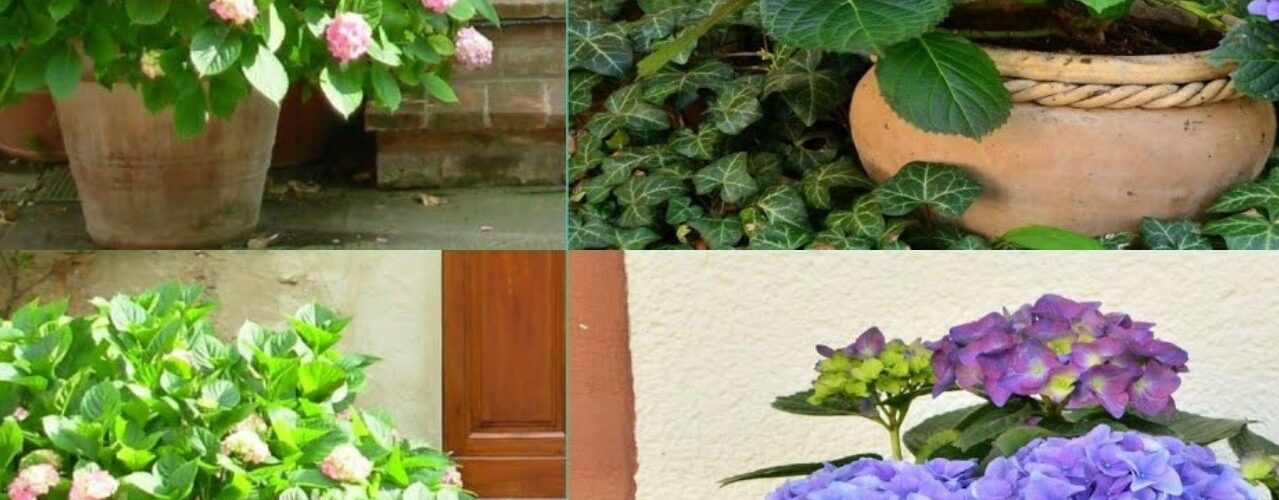

The hydrangea is arguably one of the most beautiful flowering shrubs to have in your home, you don’t need to have a garden or outdoor space to dedicate to it.
With its bright colours, the hydrangea is a plant that lends itself very well to growing in pots.
To get a great plant , you have to start by choosing the variety you like best, then determining the type of pot and soil that best suits its needs. There are certain types of hydrangeas that require a large pot. It is advisable to use clay or gravel at the bottom, but not a saucer, as this can cause excessive water stagnation.
When buying a hydrangea, the first thing you should think about is finding a nice place where it can receive light but also shade.
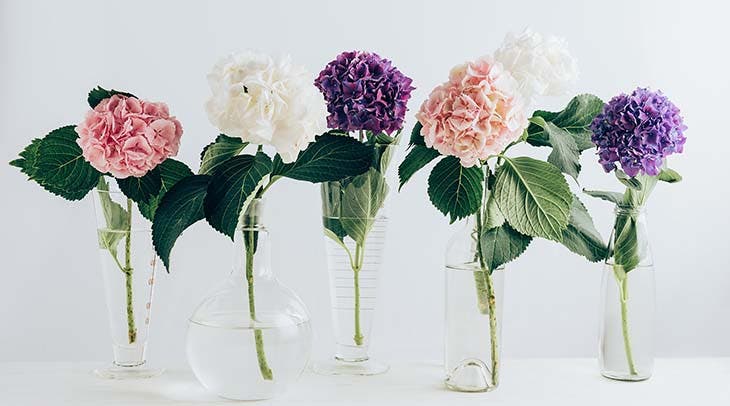
In fact, like many other plants, hydrangeas do not like direct sunlight, but they thrive in light. A nice shaded area is ideal! Hydrangeas grow well in acidic soil, i.e. soil with a pH between 6.5 and 4.5. Their beautiful colours often depend on the acidity of the soil: those that tend towards pink or maroon colours prefer a high pH of 6 or even 7, while those that tend towards blue colours prefer a very acidic pH, between 4 and 5. Depending on the colour of your hydrangea, try to improve and change the soil.
In winter it won’t give you many problems, but in summer you will have to be careful with the heat, as this plant doesn’t like high temperatures. If you decide to keep the plant indoors, make sure to keep it away from any heat source in the winter as well.
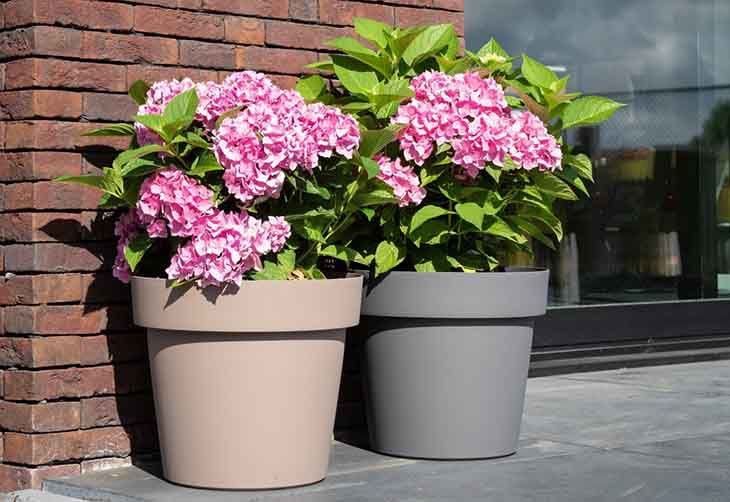
You will need a large pot with a diameter of at least 40 cm and place expanded clay on the bottom.
You can now take the plant out of its pot. You will notice that it has thick roots. Cut the roots before putting the plant in its new pot!
This stage is very important, otherwise the plant will have difficulty spreading its roots and will quickly perish. Do not place the plant too deep, but rather a few centimeters above the ground (to prevent the roots from rotting when watering).
The first watering should be abundant, then you will need to adjust it according to the season. In summer, to fight against the heat, consider watering once a day. However, be careful not to water the leaves to avoid fungal diseases that could affect your plants.
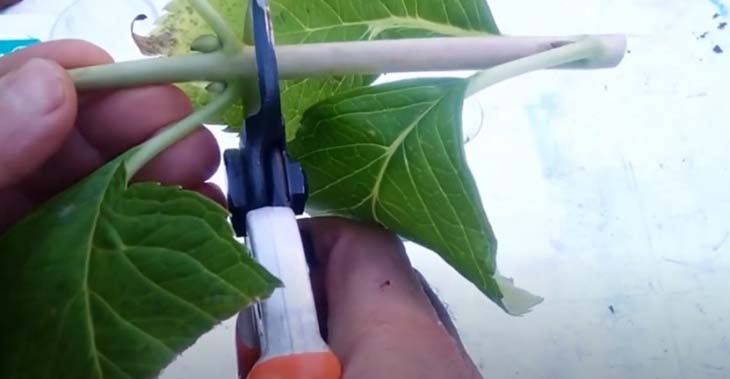
The first node to cut when you want to make a hydrangea cutting.
As for fertilization, it is recommended to use a liquid fertilizer, which will be added to the irrigation water at least once a week.
Cultivation, however, is done by cuttings and is quite simple.
How to take cuttings?
Cuttings from herbaceous plants can be taken from the fresh green growth of the plant (not in flower), between June and August, or they can be taken during the dormant period, which takes place between October and December.
In this case, make a semi-woody cut.
In summer, do the following: cut the bud to a height of about 30 cm, then cut the bud again once you have identified the first node (where the two leaves grow at the bottom); remove these two leaves as well and gather all the others together with one hand so that you can cut the tops of the remaining leaves. At this stage, your sprout should look more or less like this and is ready to be placed in a glass with 2-3 cm of water:
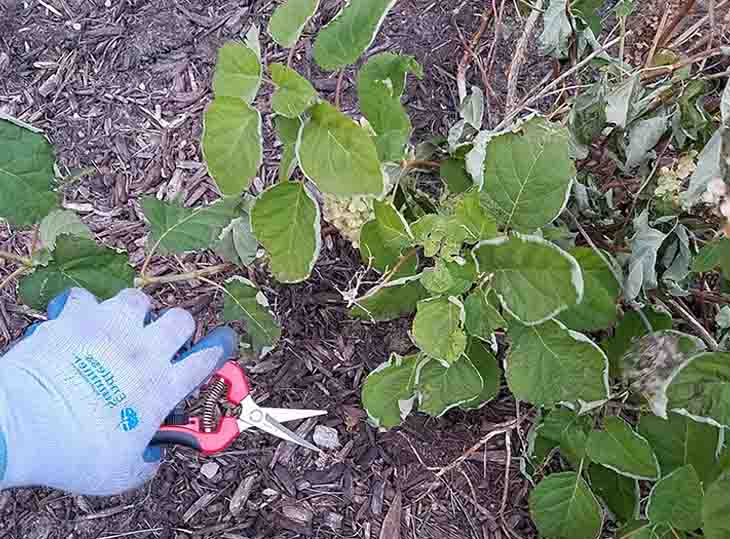
Here is a tip to help your cutting root better:
Use half an effervescent aspirin tablet! Don’t forget to change the water every two days (replacing the aspirin as well), for a period of at least 40 days. After a few months, you will notice some small roots developing; then it’s time to prepare a pot. Always remember that cuttings reproduce a plant identical to the mother plant.