
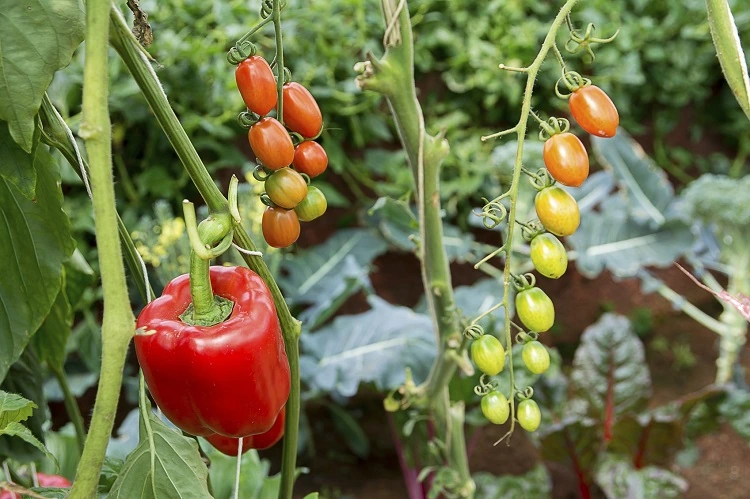

Do you want to have a harvest of tall, healthy, pest-free and extremely delicious tomatoes in your garden? Well, you’ve come to the right place! Did you know that planting different crops next to each other can be very beneficial for the harvest? Some plants and flowers not only act as pest repellents and thus protect their fellows… They also provide nutrients to the soil and thus stimulate growth and prevent diseases! Today we’re going to talk about our beloved tomatoes and how to help them become juicier and tastier! Without further ado, let’s talk about mixing crops in the garden and find out together what to plant with tomatoes and what not to plant!
What to plant with tomatoes?
Many of us love gardening and find solace and joy in this wonderful activity. However, much of it is associated with removing pests, fighting mold, whitefly, hornworms and many more… Which in itself is tedious, but sometimes unavoidable. To keep your tomato plant healthy and see it grow to full capacity and bear delicious fruits… You have to do this work manually, which can be tiring and stressful. However, if you use companion plants to grow, you will see that the work is done by itself. No more worrying about checking your tomatoes every 30 minutes! So here are the lists of what you can and cannot plant next to your tomatoes! However, here is a tip. If you have potted tomatoes, do not plant other plants or you will overcrowd them. Plants need as much space as possible and in small spaces this can be harmful. So, let’s see together what to plant next to tomatoes!
Tomato Companion Plants
- garlic
- alliums
- dill
- asparagus
- eggplant
- flower bands
- basil
- bee balm
- borage
- nasturtium
- carrots
- celery
- chives
- cucumbers
- cilantro
- pumpkins
- Fenugreek
- geraniums
- okra
- beans
- corn
- mint
- mustard
- barley
- oregano
- parsley
- petunias
- leeks
- sage
- worry
- thyme
What are the benefits?
Like all living things, plants need help and support. In fact, this method of companion planting in a garden is very beneficial. But why? The benefits are pest and disease control and pollination, which is extremely important and only increases crop yield. The right companions will make your tomatoes thrive. Here’s what to plant with tomatoes:
- Salad varieties benefit from the shade provided by tomatoes.
- Cucumbers and squash can be used as living mulch around tomato plants. The large leaves of these climbing plants can help retain soil moisture.
- Basil increases yield by about 20%, enhances flavor and repels mosquitoes and flies.
- Garlic, on the other hand, repels mites.
Plants to avoid
- dill
- Red beet
- brassicas
- fennel
- corn
- black walnut
- Peppers
- after
- potatoes
- Rosemary
What are the damages?
But what vegetable should you not plant next to tomatoes and especially why? Now that we have talked about the benefits of some herbs, let’s talk about the disadvantages. So here’s what can happen if you plant the following plants next to your crops:
- Cabbage and its entire family should be avoided because it retards growth.
- Fennel secretes a substance through its roots that is bad for other plants.
- Black walnuts have a very negative influence and can actually produce a chemical called junglone that also stunts growth.
- Dill attracts the tomato plant’s biggest enemy, which can devour it in less than 2 days: the hornworm. Don’t let their cute appearance fool you, they are big pests.
Companionship with plants: why associate crops with the garden?
In short, this method has been around for centuries and has proven its positive effect. By the way, we have already talked about it, but here are some other advantages of companion planting:
- Improve the soil. For example, plants like beans attract nitrogen and transfer it to the soil. You don’t need horse manure fertilizer if you have beans in your garden!
- Attract pollinators. Different plants attract different types of insects that can help vegetables grow and taste good.
- Provide support. Some types of vegetables can serve as physical support for others. Pole beans, for example, planted with corn, use the corn as a trellis.