
With the arrival of summer and sunny days, watering plants is a must. In addition to keeping plants hydrated and cool, water also transports nutrients from the soil to the plant cells. To water plants, some people turn to ice cubes. This simple trick quickly gained popularity. Find out why it is useful to put ice cubes in the pot of your flowering plants.
There are several possible techniques for watering plants. You can choose the traditional watering can technique or use ice cubes. In fact, putting ice cubes in the pot of flowering plants has several advantages.
Why is it important to water flowering plants with ice cubes?
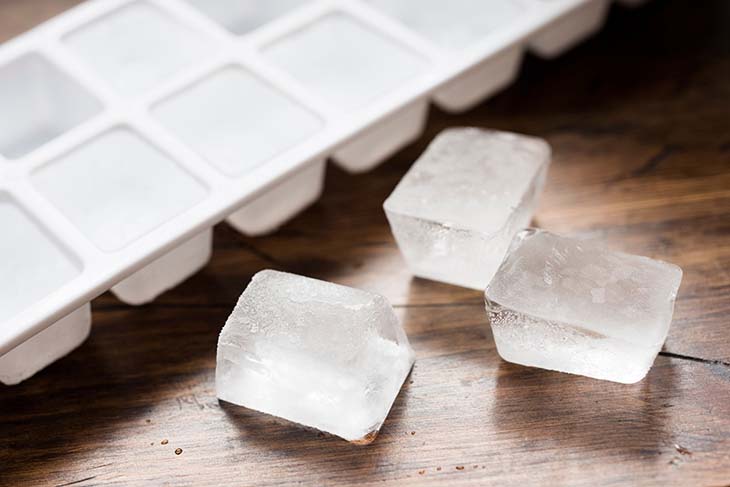
Ice cubes – Source: spm
Watering your plants with ice cubes helps prevent overwatering. In fact, even when it’s hot, it’s important to provide the plant with the amount of water it needs, without overwatering. Excess water can drown the plant’s roots and cause them to rot. That said, by using ice cubes, the water will be released slowly and gradually, and the plant will be able to better absorb the water it receives and be well watered. Ice cubes also allow you to better control the amount of water you provide to your flowers, especially since one ice cube corresponds to 30 ml of water. By providing your plants with the amount of water they need, you avoid the formation of stagnant water in the saucer or pot. To overcome this inconvenience, it is also recommended to choose a drained pot to allow the water to flow easily. Make sure it has drainage holes and place a layer of clay pebbles on the bottom.
Watering flowering plants with ice cubes is also effective in preventing overflow and water leaks, especially when watering hanging plants. In fact, by placing ice cubes on the ground, the flowing water infiltrates well into the soil and hydrates the roots, without the risk of overflow.
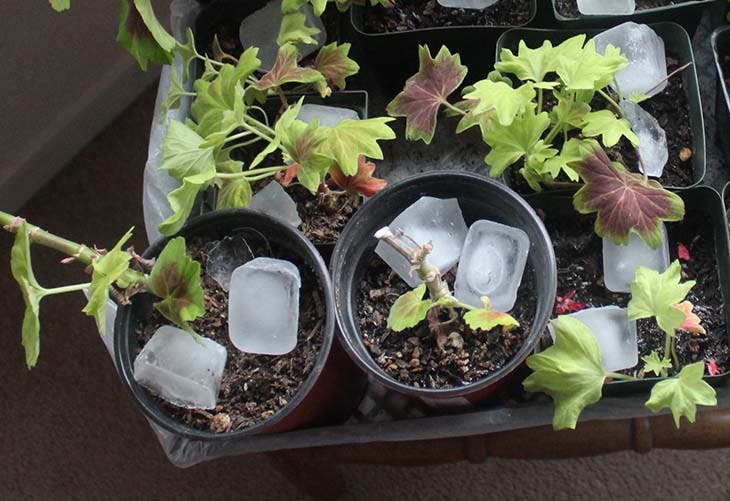
Watering plants with ice cubes – Source: spm
What precautions should be taken when watering flowering plants with ice cubes?
To be successful with this type of irrigation and to take advantage of the benefits of this technique, it is important not to place the ice cubes too close to the roots, stem or leaves, so as not to attack them with the cold of the ice cubes.
Also, make sure you choose the right amount of ice cubes to properly hydrate your flowers. If, for example, you only use 2 or 3 ice cubes to hydrate a large pot of flowers, this could be insufficient and therefore not hydrate all the flowers properly. Avoid watering your plants with ice cubes during a heat wave, to avoid causing thermal shock, which could damage your plant’s root system. Also, keep in mind that it is not recommended to use ice cubes to water plants that are sensitive to cold or temperature variations.
How to know if a plant needs watering?
Not all plants have the same water needs. In fact, tropical plants appreciate humidity and therefore need to be watered regularly , unlike succulents that can survive in arid and dry climates. These have the ability to store water, thanks to their thick and fleshy leaves. That said, to find out if your plant needs watering, stick a pencil into the soil and then pull it out. If you notice that there are pieces of soil attached to the wood of the pencil, that means that the soil is still moist. On the other hand, if the pencil is clean, it means that the soil is dry and needs to be watered.
Thanks to ice cubes, you can control the watering of your flowering plants to avoid overwatering. However, it is advisable not to place the ice cubes too close to the plant, and to avoid this watering technique for plants that fear cold or temperature fluctuations.