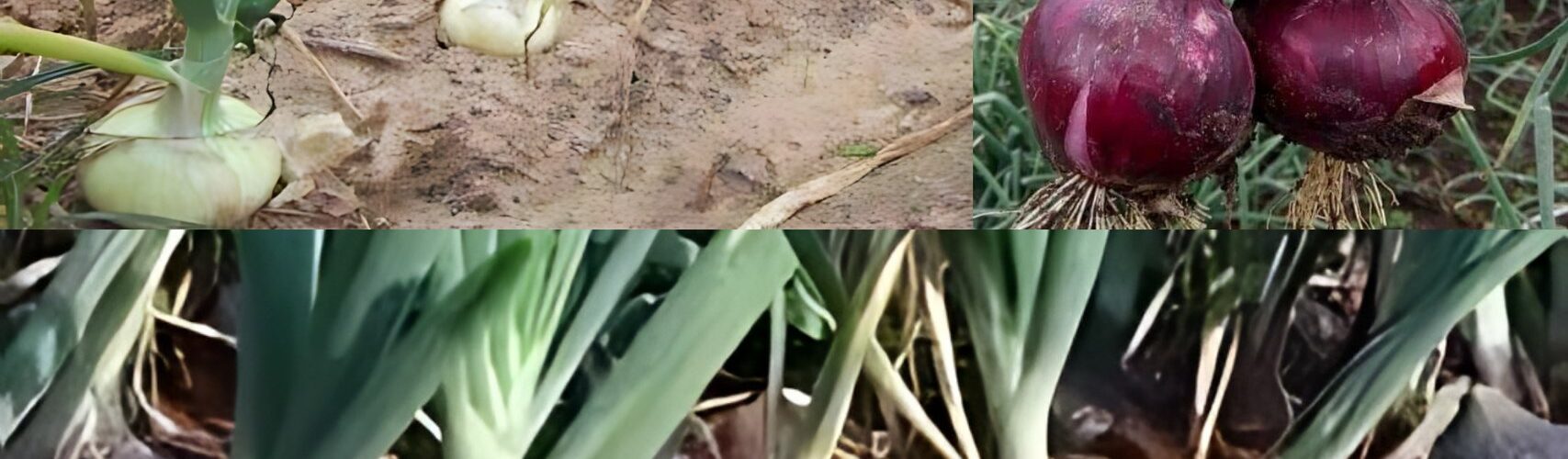
- Understanding the ridge planting method:
- The basics: onions are planted on ridges or ridges rather than on flat ground. The ridges are separated by shallow trenches.
- Benefits:
- Greater onion growth.
- More exposure to sun and light.
- Improved plant immunity.
- Easier maintenance.
- Protection against pests such as onion fly.
- Preparation and Planting:
- Timing: Plant in spring when the soil is between +5 and +10°C, usually in late April.
- Soil preparation: Make sure the soil is well drained and has a pH of 6.0 to 7.0. Add fertilizers such as superphosphate, dolomite flour or nitroamofoska.
- Bulb selection and preparation: Choose bulbs 15 mm in diameter. Warm them for 14 days before planting, without exceeding 40°C.
- Creating ridges: Form ridges 15 cm high at a distance of 30 cm from each other.
- Planting process: Plant seedlings 3 cm deep and cover with soil. Water immediately afterwards.
- Care and Maintenance:
- Watering: Maintain constant soil moisture, about 1 inch per week, adjusting according to conditions.
- Fertilization: Fertilize three times during the growing season with urea, potash and diluted superphosphate.
- Weeding and loosening: Regularly weed and loosen the soil around the ridges.
- Harvesting:
- When to harvest: Stop watering about a month before harvest, usually in late summer or early September.
- Harvesting process: Fold the tops of onions when 25% of the leaves turn yellow. Remove bulbs after a few days and allow them to air dry.
- Additional tips:
- Spacing: Space onions 2-4 inches apart with 18 inches between rows.
- Planting depth: Plant so that tops are slightly above the ground.
- Pest control: Cover onions with floating covers or use diatomaceous earth to control pests.
The Chinese method of planting onions on ridges is simple and effective, providing larger, healthier onions with better storage. Share this method with friends and maximize your onion harvest!