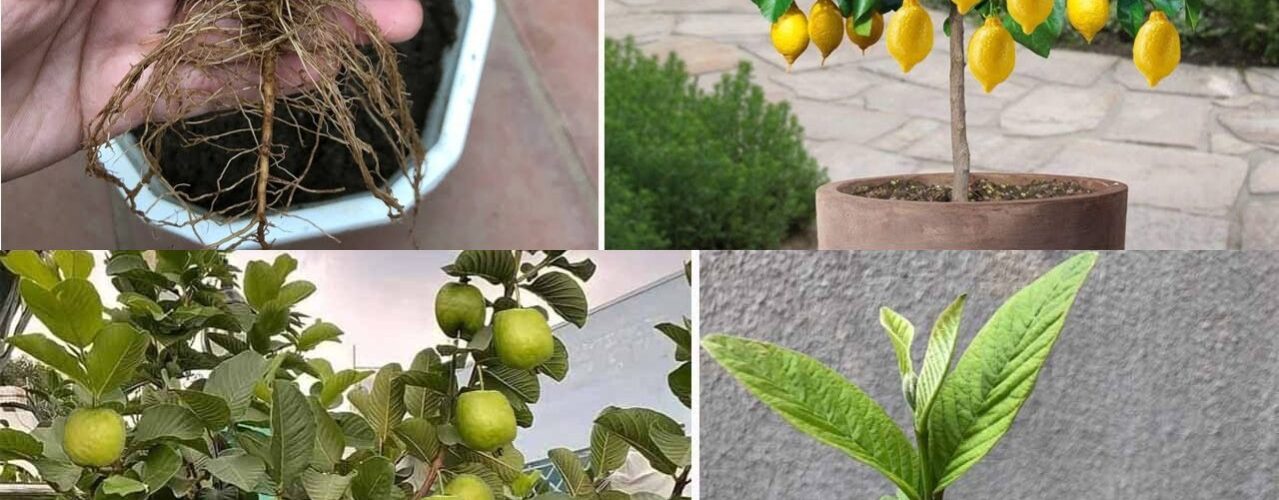
Citrus fruits are packed with vitamins, potassium, phosphorus, magnesium, etc. While they cannot make up a balanced meal on their own, they do provide many benefits in addition to your diet. At the same time, they tend to be high in sugar, so you should monitor the amount of these fruits you consume.
Some citrus fruits are easier to grow than others, and luckily, two of the best can grow in your garden. By growing them yourself, you can enjoy the difference in freshness and quality and protect your body from the chemicals associated with non-organic growing.
Lemon certainly falls into the category of “superfoods”, whose pulp, juice, but also the peel are used for their many properties. Growing your own lemons can be very convenient and you should seriously consider this option.
How to grow them?
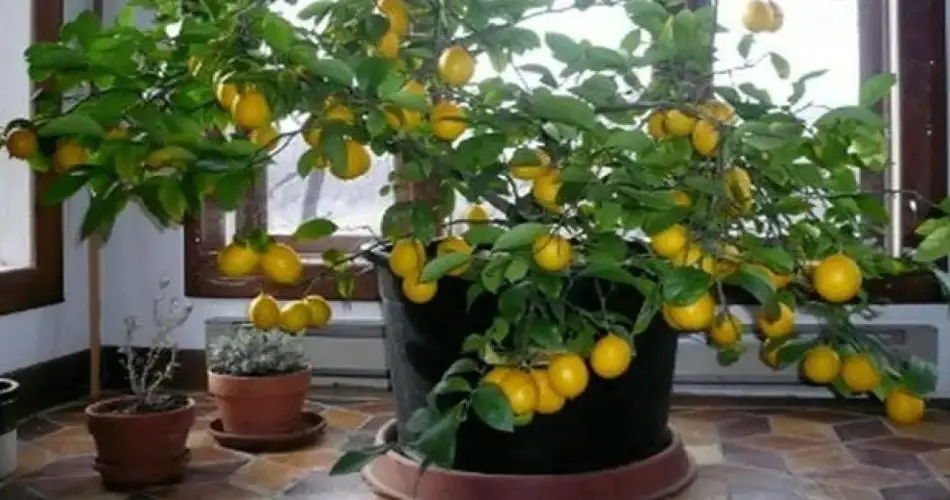
We recommend buying a baby lemon tree (2 or 3 years old) for safe results. Choose a clay or plastic pot (with lots of holes in the bottom) a little wider than the root ball of the tree. When the tree is mature, it needs a pot 30 to 38 cm high and 43 to 51 cm in diameter. Place your tree in the pot and fill the drainage container with stones to improve air circulation. Then fill your pot with soil. Some soils are specially prepared for growing citrus and we recommend that you favor them for best results.
Next, make sure your tree gets 8 to 10 hours of daylight and water it regularly (being careful not to drown it). Lemons take 6 to 9 months to ripen. When they have the color of ripe fruit and are firm to the touch, they are ready.
You can also grow a lemon tree from seed.
To grow your own lemon tree, you need to obtain the following:
- An organic lemon, knowing that non-organic lemons often contain seeds that do not germinate.
- Fertile potting soil, preferably with peat, vermiculite, perlite and natural fertilizers.
- A pot 15 cm high by 15 cm wide.
- A seedling pot measuring 30 cm high by 60 cm wide.
- A sunny indoor location and, if possible, light cultivation.
Follow these steps to grow your lemon tree:
- Moisten the potting soil without soaking it.
- Fill the smaller pot with soil up to 2.5 cm from the rim.
- Cut the lemon and remove a seed. Clean it from the pulp. The best way is to suck it until it is clean.
- Don’t delay sowing the seed because it should always be moist at the time of planting. Plant it a little more than a centimeter deep in the center of the pot.
- Gently spray water onto the soil covering the seed using a bottle fitted with a sprayer.
- Cover the jar with plastic wrap and seal the edges with strong tape, then poke small holes in the top with a pen tip.
- Place the pot in a warm, sunny location.
- Spray water occasionally, just enough to ensure the soil never dries out.
- After two weeks, when the seed begins to germinate, remove the plastic wrap. If your tree needs more light, you can add a grow light.
- Care for your plant by keeping the soil moist, making sure it receives 8 hours of light a day, and giving it moderate doses of organic fertilizer.
- Check that your plant is not attacked by insects or diseases. Remove brown and dead leaves when necessary. Use pesticides if you have no other option.
- When the plant outgrows the small pot, replant it in the larger pot following exactly the same procedure as with the small pot. Keep in mind that large plants need more water than small ones.
Mandarins
They are very rich in antioxidants, calcium, magnesium and fiber, and are fairly easy to grow in a home.
How to grow them?
If you want to grow trees indoors, it is best to choose baby trees, such as the lemon tree. The success rate is better this way than using seeds. Prepare the pot in the same way as we indicated for the lemon tree and give your mandarin tree natural light.
This tree can be grown at home without risk because it usually does not exceed 1.80 metres in height. Water it regularly with caution and replant it in a larger pot when its roots grow upside down or break the drainage holes. Harvest your mandarins when they turn orange because with each passing day they lose flavour.
Tip: Be careful, when picking your mandarins, to leave the small bud at the top of the fruit on the tree.