Everyone knows that it is possible to fight against indoor pollution naturally by simply… using plants! At least, it seems to be taken for granted in the collective consciousness. But what about in reality?
Hydrocarbons, heavy metals, pesticides, etc. are all dubious compounds that pollute the water we drink, the soil in which our fruits and vegetables grow, but also the air we breathe, which is more inside us. Paints and cleaning products or cosmetics, but also our linen, or our furniture, are not in vain. Most of them release volatile organic compounds (VOCs), sometimes very harmful, capable of causing disorders ranging from simple eye or skin irritation to the development of respiratory problems such as asthma. If the harmful effects of substances such as benzene are proven, we sometimes lack evidence to affirm the toxicity of some of these molecules. However, one thing is certain: wherever we are, we absorb more or less every day through the atmosphere, water and food. And we do not always know what harmful consequences this could have in the long term. So we can also try to expose ourselves as little as possible, starting by acting directly where we have the opportunity: in our homes. Fortunately, our beloved plants have the ability to absorb all these unwanted molecules to provide us with a much healthier environment… But can we really count on them?
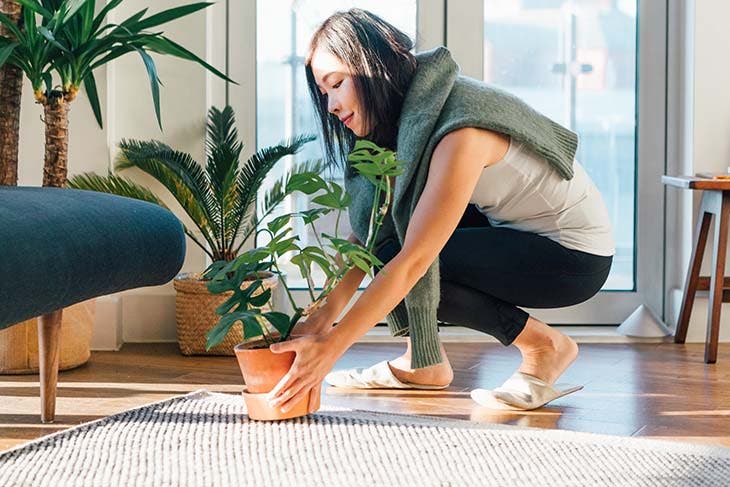
Putting plants at home – Source: spm
Never two without three?
Plants capable of absorbing toluene, others xylene or even ammonia… What a blessing! Such marketing arguments are common among florists, on the Internet or in newspapers. So most of us seem to take it for granted. Unfortunately, a very serious opinion from Ademe published in 2013 complicates things a little. Indeed, the vast PHYTAIR project, launched in order to respond to new health challenges, reported rather disappointing results. This project began in 2001 and continued until 2012, with the aim of completing 3 phases of experimentation. The first phases, which were carried out in the laboratory, clearly concluded that plants had a positive impact on air quality for the three pollutants studied (benzene, formaldehyde and carbon monoxide). The significant role of the substrate on which potted plants develop, with its complex of microbial and root interactions, was clearly highlighted. However, the last phase, which involved testing the plants under real conditions (particularly in terms of ventilation) in the MARIA house, revealed insignificant absorption rates. So much so that the Ademe (French Agency for the Environment and Energy Management) considers that the term “decontaminating plants” is not scientifically approved taking into account the levels of pollution commonly found in homes.” A situation that leaves no real hope… the last phase, which involved testing the plants under real conditions (particularly in terms of ventilation) in the MARIA house, revealed insignificant absorption rates. So much so that the Ademe (French Agency for the Environment and Energy Management) considers that the term “decontaminating plants” is not scientifically approved taking into account the levels of pollution commonly found in homes.” A situation that leaves no real hope… the last phase, which involved testing the plants under real conditions (particularly in terms of ventilation) in the MARIA house, revealed insignificant absorption rates. So much so that the Ademe (French Agency for the Environment and Energy Management) considers that the term “decontaminating plants” is not scientifically approved given the levels of pollution commonly found in homes.” A situation that leaves no real hope… So much so that the Ademe (French Agency for the Environment and Energy Management) considers that the term “decontaminating plants” is not scientifically approved given the levels of pollution commonly found in homes.”A situation that leaves no real hope… So much so that the Ademe (French Agency for the Environment and Energy Management) considers that the term “decontaminating plants” is not scientifically approved given the levels of pollution commonly found in homes. A situation that leaves no real hope…
A chimera from outer space
If the news is not new, it seems to have been hard to swallow, given the scant media coverage at the time (and even today). This is perhaps not so surprising when we know that this popular belief about “decontaminating plants” was born from a prestigious NASA report. In the 1980s, young researcher Bill Wolverton, hired by the famous American space agency, studied the effects of indoor plants on air quality. The experiment consisted of placing potted plants in small enclosures into which controlled doses of pollutants were injected – in this case, formaldehyde, benzene or trichloroethylene. After 24 hours, analyses measured the amount of pollutant remaining in the enclosures.
Results obtained in the experiment of B. Wolverton
Table 4. Chemicals removed by indoor plants in a sealed experimental chamber over a 24-hour exposure period
| Formaldehyde | Benzene | Trichloroethylene | ||||||||
| Initial (p/m) | Finals (p/m) | % removed | Initial (p/m) | Finals (p/m) | % removed | Initial (p/m) | Finals (p/m) | % removed | ||
| Fragrant dragon tree Dracaena fragrans ‘Massangeana’ | twenty | 6 | 70 | 14 | eleven | 21.4 | sixteen | 14 | 12.5 | |
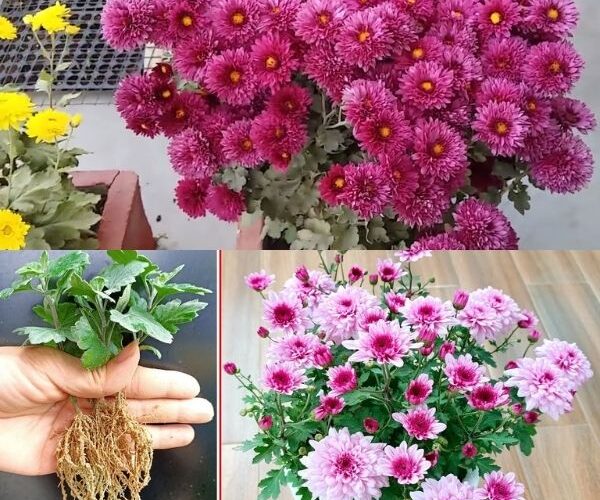
| Flower shop Chrysanthemum Chrysanthemum grandiflorum | 18 | 7 | 61 | 58 | 27 | 53 | 17 | 10 | 41.2 | |
| Gerbera Gerbera jamesonii | sixteen | 8 | fifty | Sixty-five | twenty-one | 67.7 | twenty | 13 | 35 | |
| Warneckii Dracaena Warneckii | 8 | 4 | fifty | 27 | 13 | 52 | twenty | 18 | 10 | |
| ficus | 19 | 10 | 47.5 | twenty | 14 | 30 | 19 | 17 | 10.5 | |
| Controlled trial | 18 | 17.5 | 2.8 | twenty | 19 | 5 | twenty | 18 | 10 | |
The average of the results obtained for the different plants tested indicated a reduction of 21.8% in the concentration for trichloroethylene, 44.8% for benzene and 55.6% for formaldehyde. Spectacular! At least if we refer only to these data. But it is necessary to take into account the conditions of the experiment, which do not exactly reflect reality. The small size of the enclosures used, whose volume (maximum 0.9 m³) incomparable with that of a standard living or working space, forced the confinement of air pollutants, which could not avoid coming into contact with the plants. . In the ventilation conditions of a classic room, our plants do not “capture” undesirable substances either. In addition, in the experiment, each plant was faced with only one source of pollution,
Less pollutants, more ventilation
But if we can hardly rely on plants to clean the ambient air in our offices or homes, what can we do to protect our health? The PHYTAIR project reveals that “aeration and ventilation are still much more effective than purification by plants.” This is why you should not hesitate to open the windows every day in every room of the house, even in winter, to evacuate carbon monoxide and other pollutants generated by auxiliary heaters. Of course, the benefit will only be greater if we try to change our habits to introduce as few questionable substances as possible into our environment. To do this, avoid aerosols (deodorants, scented sprays, insecticides, etc.) and reduce the use of cleaning products to a minimum. Prefer natural materials such as white vinegar, baking soda, Marseille soap or olive oil… Safe values (more) and in some cases less expensive! In other words and as always, there does not seem to be a panacea to protect our health and our environment. We are the main actors in our daily lives, which reflects our way of being and our practices.

A green wall – Source: spm
A perspective for the future?
Commonly used for water treatment, biofilters intended to remove air pollution are beginning to flourish, particularly in the form of green walls. However, the mechanism does not really involve the plants themselves, and this is where it seems so clever! Because, as indicated above, it is precisely the rhizosphere with all its procession of microorganisms that plays a determining role in the degradation of pollutants. Thus, ambient air is sent directly to the substrate of the plants, thanks to an appropriate ventilation system. If the method has yet to be tested, it has already conquered the largest cities such as Montreal, Madrid, Paris or Bangkok and suggests a promising horizon.