In the bustling ecosystem of your garden, inviting and caring for bees is an invaluable step in fostering a thriving environment. While nectar-rich flowers play a critical role in attracting these essential pollinators, providing a water station for bees is equally vital. In this guide, we’ll dive deeper into the importance of a bee water station, explore multiple methods for creating one, and offer information on installing one to help both novice and experienced gardeners.
The importance of a water station for bees:
Bees, like all living things, need water to hydrate and maintain the humidity of the hive. Providing a dedicated water source in your garden not only meets their basic needs, but also helps prevent bees from venturing into potentially harmful or inconvenient places, such as pools or bird baths. By offering a water station, you’re not only creating a welcoming space for bees, but you’re also contributing to the sustainability of your local ecosystem.
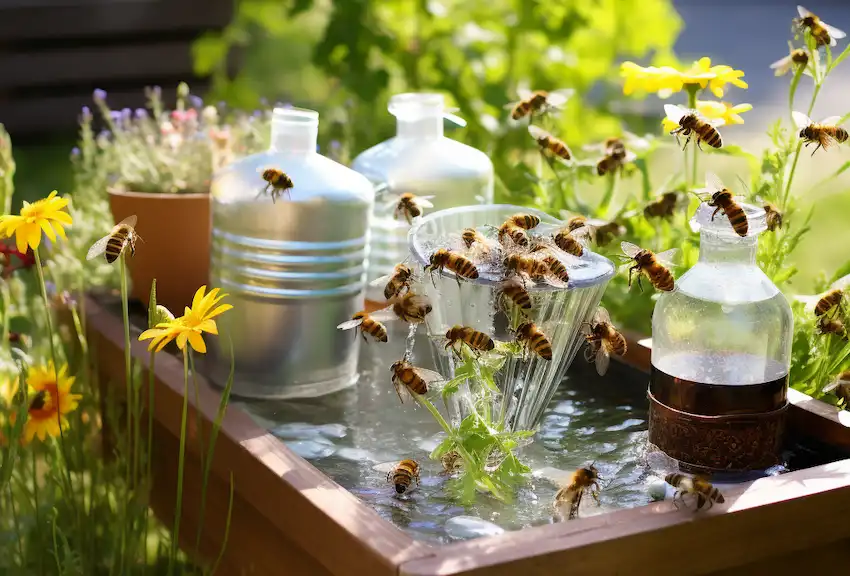
Where and how to install a bee water station:
Selecting the right location for your bee water station is crucial. Choose an area that receives plenty of sunlight and is away from heavy foot traffic. It should be easily accessible for the bees but safe from potential predators.
Methods for creating a water station for bees:
1. Shallow bowl with stones:
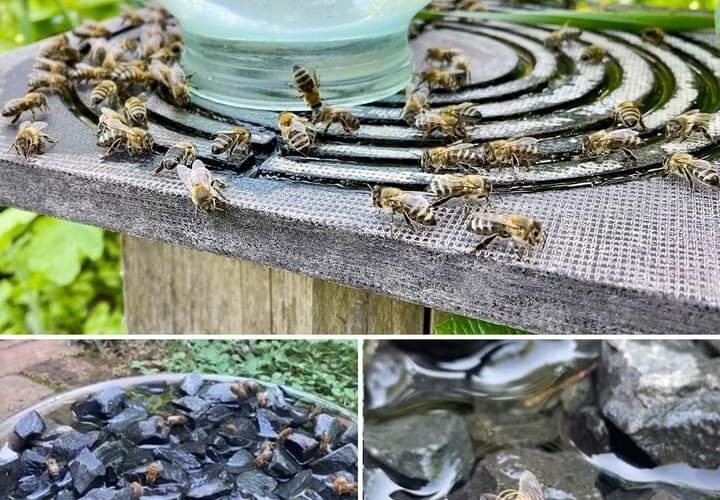
A simple method is to use a wide, shallow container filled with water and rocks. Rocks provide a landing platform for the bees, ensuring they have a safe place to perch while drinking water. Make sure the water level is shallow to prevent drowning.
2. Wooden Platform with Trenches:
Another effective approach is to build a wooden platform with shallow trenches and an inverted jar filled with water. Carve narrow, shallow trenches in a piece of wood and place an inverted jar filled with water in the center. When bees land on the wood, they can access the water in the jar through the carved trenches.
3. Clay Plate with Corks or Sponges:
Using a clay saucer or plate and placing corks or sponges partially submerged in water is an ingenious method. The corks or sponges act as floating islands on which the bees can land while they access the water.
4. Add flavor with sugar water:
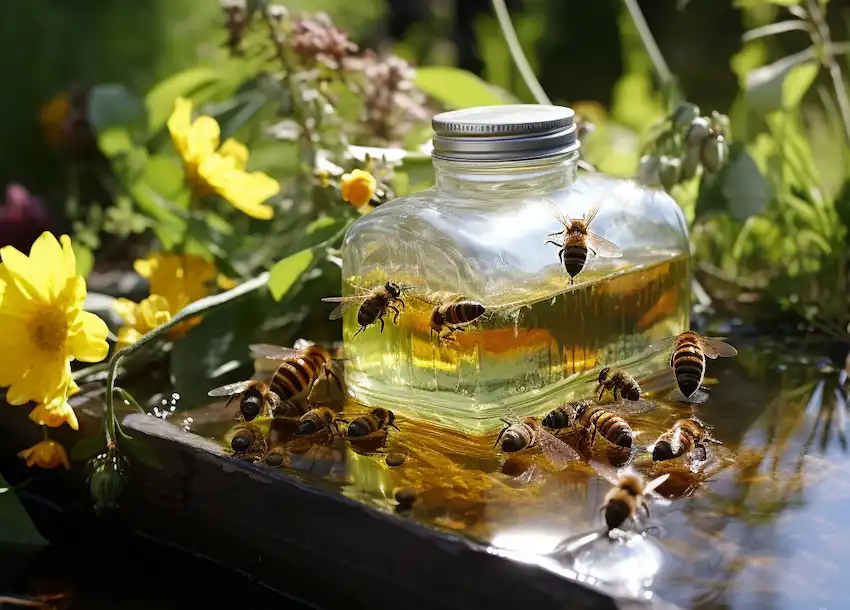
While plain water is sufficient, adding a touch of sweetness with a mild sugar solution (mixing 2 tablespoons of sugar per 1 cup of water) can attract bees more effectively. However, make sure the concentration is light to avoid possible harm to the bees.
By incorporating a bee watering station into your garden, you are not only helping these hardworking pollinators but also contributing to the biodiversity of your ecosystem. Experiment with these methods to create a haven for bees, promoting harmonious coexistence between your garden and these essential creatures.