
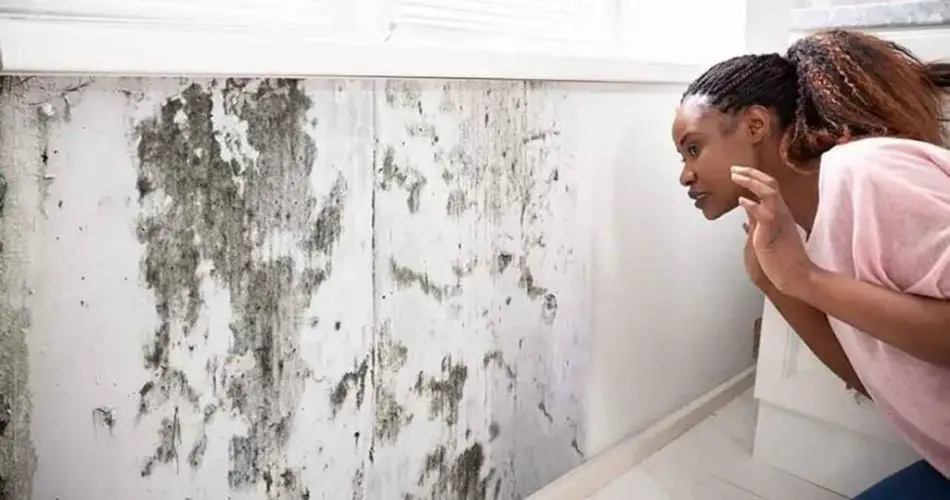
The presence of mold in the home is always a problem related to excess humidity. And it is not a problem to be taken lightly.
Read also:
- These are the most beautiful colorful flowers of this season: the ranking
- Cleaning blinds: here’s the trick to cleaning them quickly
- If you see lizards on the walls of your house, this is what you should do
Mold often forms in places with high humidity or where there is a lot of water flow and not much ventilation, such as the inside of washing machines.
For those who are not sure, its smell is very similar to that of wet clothes left in the washing machine for some time.
It is humidity that brings mould into the house . The most likely places where there is a risk of mould forming are the bathroom, where a lot of condensation is created, basements, but also attics. We can also find it on walls, in cupboards or in cellars.
Eliminating mold is essential if we do not want the problem to worsen or put our health at risk .
What do we risk with mold in the house?
Health can be seriously compromised if we do not intervene immediately when we notice the presence of mold in the house. Sometimes we notice it by sneezing. When we smell the smell of mold in the air, it means that spores have attacked surfaces suitable for development. It is best to go in search of dark spots and specks because they must be removed as soon as possible to prevent them from spreading .
These are the health risks when spores have already attacked surfaces:
Allergies: Spores trigger inflammation of the airways and allergies in most cases.
Asthma.
Conjunctivitis : which manifests with red, swollen eyelids and abundant tearing.
Fatigue : that is, joint pain and muscle stiffness, feeling of tiredness , exhaustion and weakness.
Dermatitis: Skin problems such as peeling, rashes, and itching .
Difficulty concentrating: Mold can cause potential negative effects on memory, dizziness, and headaches .
No to bleach
The first remedy that is usually thought of for removal is the use of bleach. But this is wrong, and the reason is simple. Although bleach is used for many household tasks, it is not the most suitable product for removing mold as it does not attack in depth. This would only lead to a superficial cleaning of the affected surfaces, leaving the spores anyway. And the mold forms again after a short time. Bleach works well on non-porous surfaces, so tiles , etc. We avoid using it on porous and delicate surfaces, such as stucco, wood, granite and marble . Not only will we not have a deep cleaning but, being a chemical product, it only risks damaging the surfaces irreparably.
Here’s what to use to get rid of mold on walls and other surfaces.
White vinegar against mold in the house
So, foolproof bleach is not so foolproof when we have mold at home. There is a completely natural and therefore safe-to-use ingredient that can remove it effortlessly.
This is white wine vinegar. To clean surfaces with vinegar, you should accompany it with baking soda and lemon juice . All three should be boiled together to create a mixture that will be an excellent odor neutralizer .
To remove mold, we rub this paste on the affected surfaces, such as the shower or bathtub . You can also spray vinegar on the surfaces to be treated. However, remember to let the room air out after treatment.
Like baking soda, white wine vinegar has disinfectant and degreasing properties . Simply mix it with water and treat the affected surfaces. However, remember that it is important to let fresh air circulate after using these products, even if they are natural.
Baking soda, vinegar and lemon are absolutely ecological and safe products to use, both for the toilet, the environment and our health, but if they do not solve the mold problem in a short time, it is advisable to call a specialist.