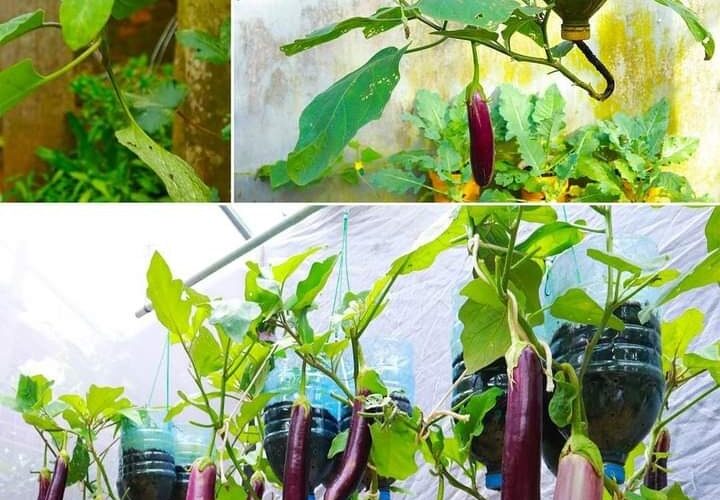
The benefits of growing eggplants upside down

Growing eggplants upside down is an innovative gardening approach that has several advantages. This method is especially beneficial for those with limited gardening space. Here’s why you should consider it:
- Space Efficiency : Perfect for urban environments, inverted growing utilizes vertical space efficiently. This is a huge help for apartment dwellers or anyone with limited space.
- Improved Air Circulation : Hanging plants allows for better air circulation around the leaves and fruits. This can reduce the risk of fungal diseases, which are common in damp, stagnant areas.
- Less exposure to soil-borne pests and diseases : Growing above ground limits contact with soil-borne diseases and pests, contributing to healthier, more robust eggplants.
- Ease of maintenance : This method eliminates the need for stakes or support for plants, simplifying maintenance and reducing physical effort.
- Reduced weeding and soil maintenance : Since the plants are not in the soil, weeding is virtually eliminated and soil maintenance is significantly reduced.
- Efficient irrigation : Watering from above ensures that water and nutrients reach the roots directly, which is essential for eggplant growth.
- Aesthetic Appeal : Upside-down eggplants add an interesting visual element to any garden space, combining practicality with aesthetic charm.
The method: growing eggplants upside down
Here is a complete guide to setting up your upside-down eggplant garden:
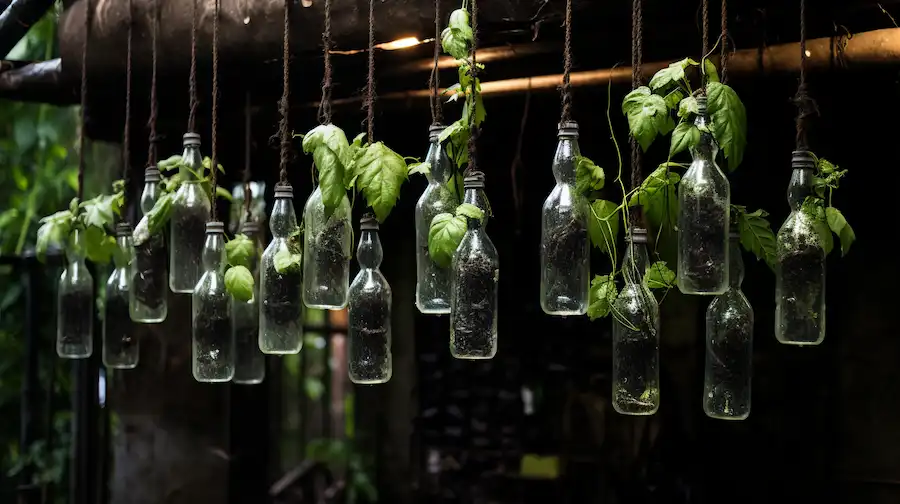
Necessary materials:
- Used plastic bottles (2 liters or larger, larger sizes recommended)
- Eggplant seedlings
- Scotch tape
- Drill
- Knife
- strong thread
- High quality soil or compost
Step by step guide:
- Prepare the bottle : Clean the plastic bottles and remove the labels. Use a knife to cleanly cut the bottom of the bottle.
- Smooth the edges : Cover the cut edge with tape to avoid sharp edges. Then, punch four evenly spaced holes around the bottle to thread the thread through.
- Plant the seedling : Invert the bottle so that the mouth is facing downwards. Carefully insert the eggplant seedling, making sure that the root ball of the plant is firmly seated inside the bottle.
- Add soil : Fill the bottle with soil or compost, leaving some space at the top for watering.
- Secure with twine : Thread the twine through the prepared holes, creating a stable support. Tie it securely.
- Choose the right spot : Hang your planter in a sunny spot, as eggplants thrive on sunlight.
- Regular watering : Check your hanging eggplant plants periodically, making sure the soil is consistently moist but not waterlogged.

By following these steps, you can successfully create an upside-down eggplant garden that saves space and offers a unique and rewarding gardening experience. Regular monitoring of water and nutrient needs is key to growing thriving, productive eggplants. Enjoy the process and the unique look it brings to your garden space!