
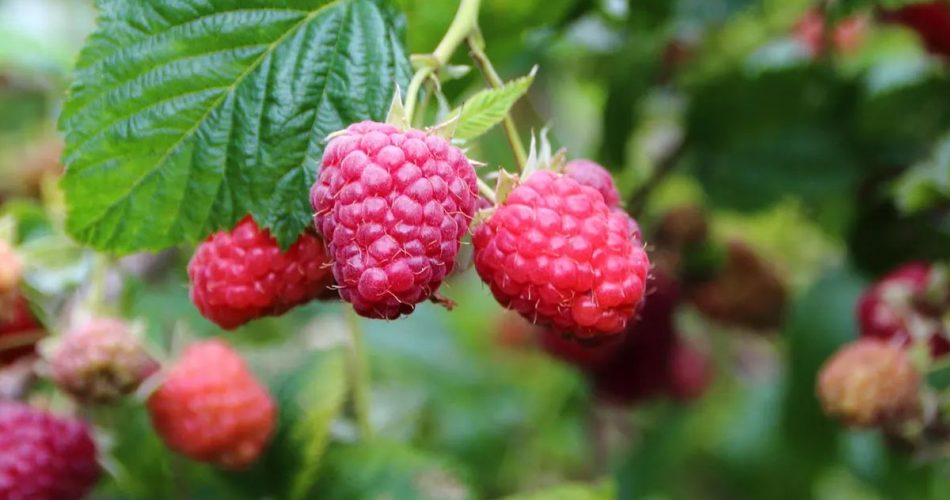
Growing your own raspberries is easy and the plants will reward your efforts with many harvests of beautiful, delicious raspberries.
- Choose a location in full sun with rich, well-drained soil.
- Choose plants that grow well in your area.
- Improve the soil.
- Plant raspberries 1-1.5m apart and install a system of poles and wires to support them.
- Water raspberries regularly throughout the summer. Reduce watering during winter.
- Feed raspberries in the spring until early July.
- Harvest regularly to maintain plant production.
Raspberries are easy to grow and give an impressive harvest. A few bushes will give you enough fruit to eat, save and share. Berries are a fantastic source of antioxidants, vitamins and fiber. They are also delicious. And, when you grow your own, you’re sure to harvest a berry at the peak of its freshness.
Here are 7 secrets on how to grow your own raspberries in your garden:
1) Choose the right place to grow raspberry plants
Raspberries grow best in full sun (at least 6-8 hours of sun per day), in rich, well-drained soil. Read plant descriptions carefully when purchasing your raspberry variety and select plants that will thrive in your area, ask your nursery or neighbors for advice if you are unfamiliar with your area. Raspberries are self-fertile, so it is not necessary to plant different varieties for cross-pollination.
Due to their growth habit and need for strong support, the best place to grow raspberries is along the property fence. Do not grow raspberries in the same garden bed where tomatoes, peppers, eggplants or others have grown. These plants can harbor diseases that will affect raspberries.
2) How to plant raspberry plants
Plant raspberries 1 to 1m50 between the bushes. Many raspberries are sold as bare root plants. To plant a bare root raspberry, first soak the roots of the plant in warm water for an hour. Then dig a hole twice as wide and deep as the length of the roots. Create a 50:50 mix of soil and potting soil or compost to add nutrients and organic matter to help your raspberries thrive.
Make a mound of this mixed soil in the hole and place the roots over the mound, spreading them out. Fill in around the roots, tamp the soil firmly so it is level with the surrounding soil, and water thoroughly. To plant raspberries in containers, dig a hole as deep and twice as wide as the root ball. Place the plant in the hole and fill around the root ball. In any case, water well after planting.
Immediately after planting, cut the canes (stems) 8 cm above the soil line. New growth will emerge from beneath the soil. You can plant raspberries any time the ground is not frozen, but late spring is best. Apply 2 inches of mulch around the plants to help keep the soil evenly moist throughout the growing season.
3) How to stake raspberries
Raspberries need solid support to grow in a (somewhat) orderly manner. The easiest way is to install a pole and cable system. Build T-posts with two crossbars, one at the top and one in the middle of the post. Place T-posts every 1.5-2 m along the raspberry row. Run cables between the crossbars to create a trellis system. This will keep the plants above the ground and slightly contained.
4) How to water raspberry bushes
Raspberries should be watered evenly throughout the summer. Check regularly and water whenever the top inch of soil feels dry. Drip irrigation or a soaker hose system is ideal for consistent humidity. Do not water during winter as this can rot the roots.
5) How to prune raspberries
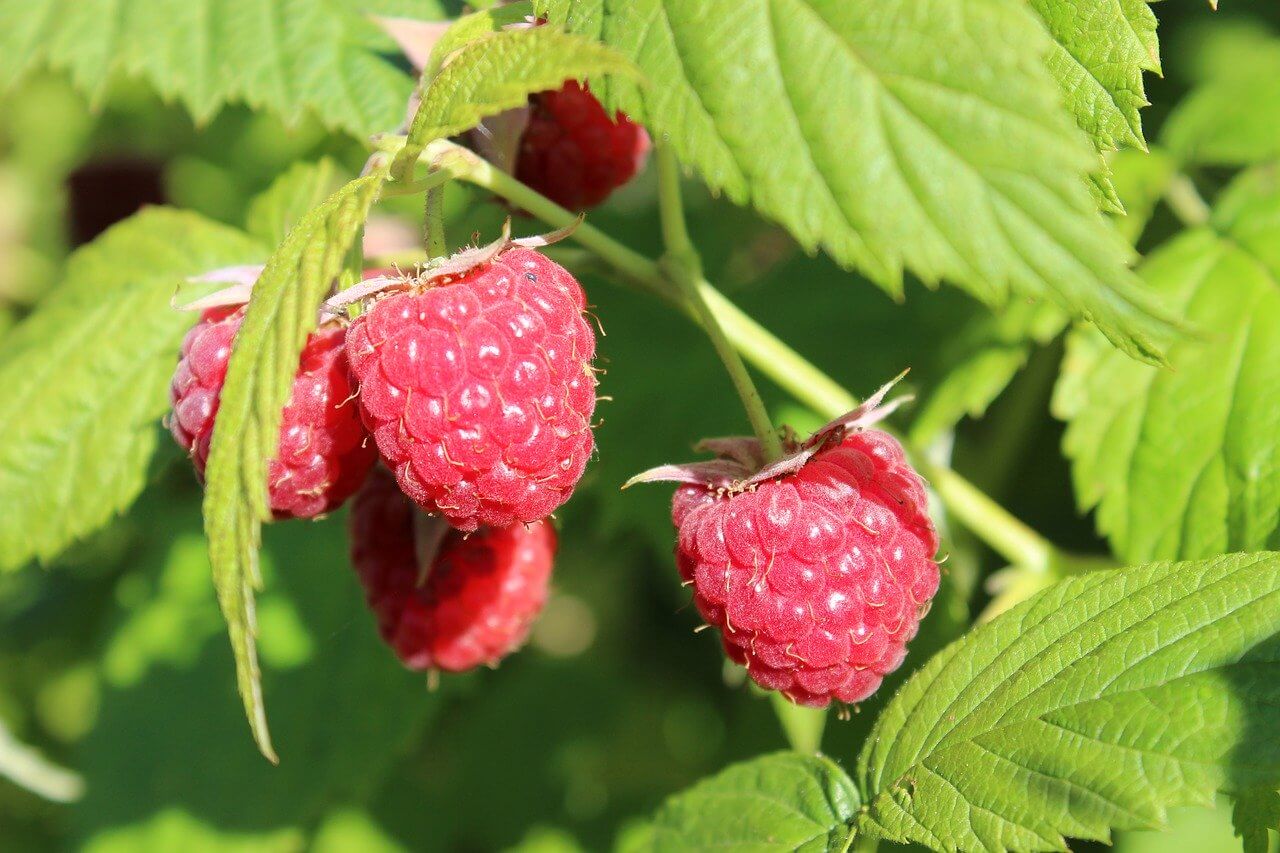
Raspberries produce fruit in the spring on second-year branches (called floricanes) or in the fall on first-year branches (called primocanes). Here’s how they differ: First-year branches bear fruit only on the ends of the branches, while second-year branches bear fruit all over the branch. In the spring, prune first-year branches to 1m – 1.2m tall. Prune second-year branches to the ground after they set fruit.
6) How to feed raspberries
A great way to ensure your raspberries grow and perform at their best is to use soil and fertilizer together to create a nutrient-rich growing environment. Fertilize bushes with edible organic plant nutrition that gives plants an instant boost. Feed them every 7 to 14 days during the growing season, following label directions. Then, stop feeding in early July so your plants can begin to enter their dormant period for the season. Begin fertilizing established raspberries in the spring after pruning.
7) How to harvest raspberries
Raspberries are easy to remove from the plant one at a time when they are fully ripe. Unwashed, the berries will keep in the refrigerator for 3 to 5 days. Once the fruits begin to ripen, you will need to harvest daily so that more raspberries can appear.
Up to you !