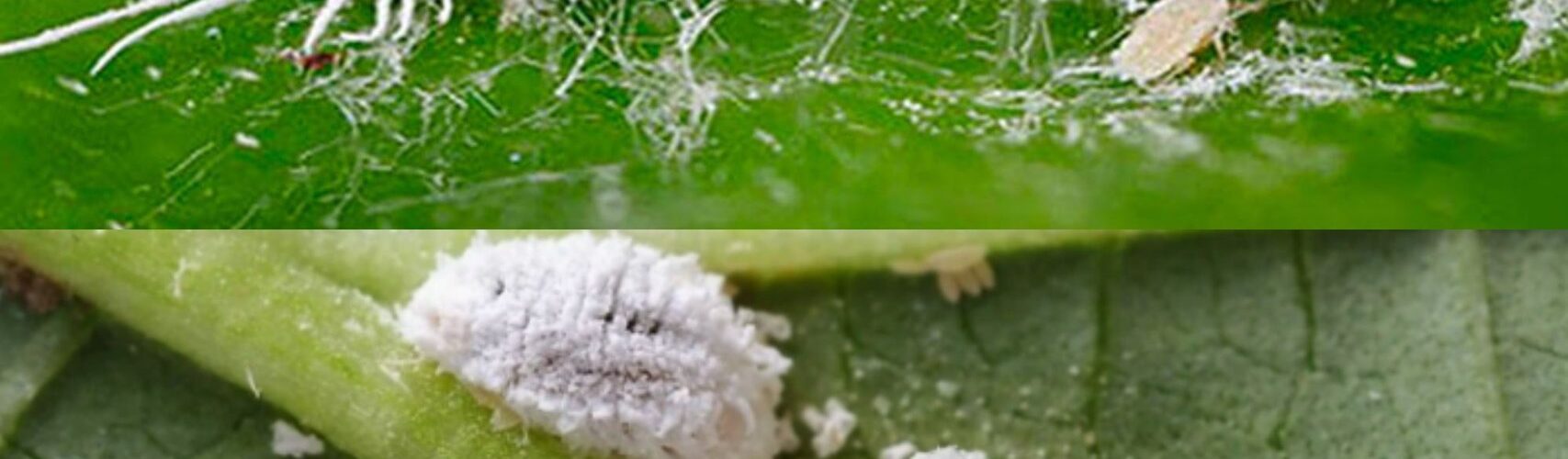

Mealybug is a formidable enemy of plants and it is not always easy to find it . It is a close relative of aphids , which are also decidedly dangerous to plants.
This insect reproduces by incubating eggs and feeds on plant sap, putting its health at serious risk and, if not treated in time, the plants end up dying.
In fact, a mealybug attack, in the long run, leads to the structural weakening of the plant. In this article we are going to tell you how to eliminate mealybugs from plants .
Why does mealybug attack plants?
Mealybug, as we have said, is a terrible enemy for most of our plants. This parasite is capable of colonizing many species of plants, from ornamental plants, succulents, apartment plants, gardens and fruit trees .
To land on the affected plant, these fearsome insects prefer the crevices of the leaves that are not exposed to the sun, or even better if the plants are in environments with little humidity and ventilation.
They start from a small colony, until they invade the entire leaf structure of the plant , feeding on its sap . At this point the mealybug produces honeydew , which is the sugary substance that attracts parasites and fungi .
The greatest damage is caused by the female scale insect: they pierce the leaves in correspondence with the lymphatic channels on which they feed. For this reason it is very important to intervene promptly to eliminate these parasites .
But they are microscopic, so how do we recognize an attack before it’s too late? There are alarm bells that we must pay attention to. The first symptom is the yellowing of the leaves, the appearance of spots and the wrinkling of the foliage.
The presence of ants should not be underestimated , as they are eager for the honeydew produced by the cochineal.
Natural remedies against cochineal
Mealybugs love to breed in the warm summer months, so these are the periods when plants are most at risk.
Even the domestic environment presents all the ideal conditions for the insect. We pay attention to watering the plants during the summer and try to clean the leaves and stems frequently .
These are preventive methods against cochineal. But what do we do when we notice an attack?
One of the most used is white oil that is vaporized on the leaves, creating a patina that suffocates the parasites. However, it is an oily substance of mineral origin similar to paraffin. It is very important not to spray it on the plants in summer because it would cause a drastic decrease in the transpiration of the leaves, causing their death.
Cochineal: home remedies
Let’s move on to home remedies to get rid of cochineal before it’s too late. Among the most effective are alcohol and Marseille soap .
Alcohol dissolves the waxy substances of which the protective membrane of the mealybug is made , and at the same time disinfects the holes caused by the insect, protecting the plants from attack by other viruses or bacteria.
The positive effects of these natural, therefore chemical-free, treatments will be seen after a while, but they will come. However, remember to remove visibly damaged parts of the plant before proceeding with any treatment.
Alcohol kills cochineal
Let’s see together in the dictation how to eliminate mealybugs thanks to DIY methods.
With alcohol it is possible to prepare a solution by diluting a spoon in a liter of water. Then it should be sprayed on the aerial parts up to 3 times a day every 2 days , preferring the hottest hours. However, in the case of a delicate plant, we spray at night. To obtain faster results, we can eliminate the insect by using a cotton ball soaked in alcohol, rubbing it directly on the affected parts. After these treatments it is good to rinse the plant.
Liquid Marseille soap must be diluted with water: exactly 25 cc of soap for each litre of water. This solution is also really effective as it prevents parasites from breathing! So it is a completely natural insecticidal action. Simply spray the liquid directly on the scale insects in the evening and proceed with 2-3 sprays every 3-5 days .