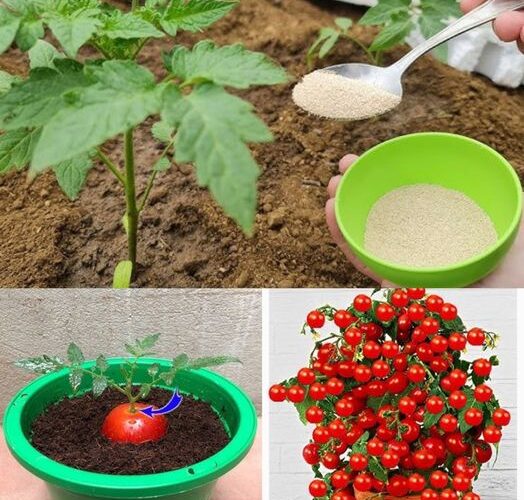
If supermarkets had preserved the taste and aroma of traditional tomatoes, there wouldn’t be such a proliferation of urban gardens. Not so many people would be encouraged to rent a plot of land to grow their own vegetables. But let’s look at how to grow giant tomato plants in the home garden.
Huge tomatoes in the garden, crazy: 6 tricks for strong and lush plants

1. Always plant in a new location
Tomatoes are extremely susceptible to disease. Especially those that grow on the ground. For example, tomato blight and blossom end rot are caused by problems in the soil. Each growing season, we place the tomato plants in a new area of the garden. Crop rotation is a key factor in maintaining soil and plant health.
In addition, tomatoes feed on soil substances, which means that moving them to a new location will also provide them with fresh nutrients. As a general rule, tomato plants should not be planted in the same place for at least 3 years. If you grow in pots or containers instead, be sure to change the soil every season.
2. Provide support before planting

Whether you use cages, stakes, or trellises, plants need support! When it comes to growing tall tomatoes, plant support is a major key to keeping them healthy. We grow our tomatoes in homemade supports by placing them in place before planting. Not only does it support the plant from the start, but it also prevents you from damaging and crushing the roots when you try to transplant them into the ground later. So install the support before or during planting, not weeks after!
3. Plant deep
Tomatoes need to be planted deep in the soil . Planting tomatoes deep in the soil helps the plants develop additional roots to absorb more nutrients and moisture. The practice of deep planting is beneficial for two reasons.
On the one hand, it helps protect plants from the dangers of Mother Nature. A deep root structure is less likely to dry out. It also provides plants with more support, allowing them to withstand wind and storms. But deeper planting also allows more roots to grow from the trunk – roots that are vital for supplying the plant with nutrients and water as it grows.
How deep? We plant our tomatoes 15-20 centimeters deep in the soil. And don’t worry if you bury some of the lower leaves when transplanting. New roots will also grow from there and will not harm the plant.
ALSO READ: The mussel, octopus and bread soup so good that it makes a slipper. Only 430 Kcal!
4. Prepare the compost

One of the biggest secrets to growing large tomatoes is feeding the plants at the time of planting. We fill the hole with a compost mixture, a few crushed eggshells, a few teaspoons of coffee grounds and onion skins.
5. Use organic mulch
Mulch is another important factor in growing large tomatoes as it plays a major role in the health and production levels of the tomato plants. Mulch helps maintain proper moisture and controls weeds that deprive plants of the vital nutrients they need for strong growth. It also helps prevent diseases that are transferred from the soil to the foliage. Helps regulate temperature. It also helps prevent soil and nutrient erosion during heavy rains.
First, we spread a layer of compost with a diameter of 10-15 cm around each plant . Finally, we spread a layer of straw 10-15 cm thick. If you don’t have straw, you can use pruning residues, freshly cut grass (without seeds), dry leaves of plants and trees, etc.
6. Prune plants during growth

Last but not least, prune your tomato plants as they grow. Especially at the base of each plant. Why? Because pruning the lower branches allows air and light to circulate.
Pruning the lower part of the plants also allows for easy watering or fertilizing. After pruning, you can apply a dose of compost to give their growth the right boost. Pruning also makes it harder for insects and garden pests to walk.
Aside from that…
To obtain a good yield and grow juicy, large and good tomatoes, an excellent tip is to add a spoonful of neem oil to the root of each plant , a type of oil with important nutritional properties, whose smell is similar to that of garlic and has a moisturizing, soothing and re-epithelializing effect. Just a spoonful in the soil where the plant is located is enough to protect the plant from caterpillars, aphids and scale insects.