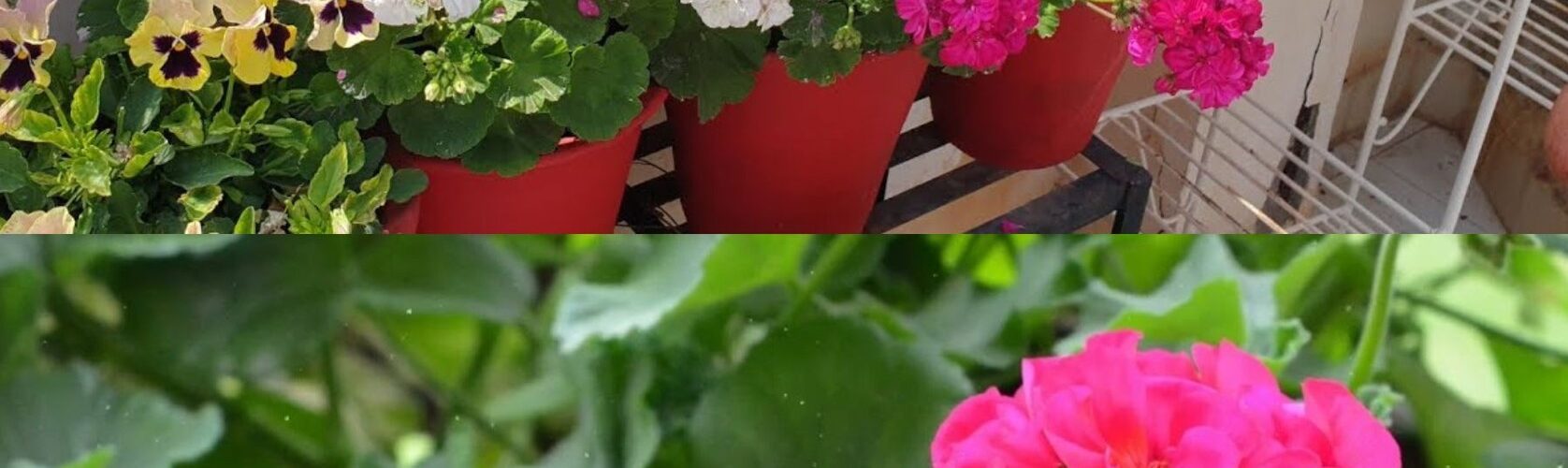
Geranium is a flowering plant in the Geraniaceae family. Its flowering produces beautiful fragrant flowers, with red, pink, purple or blue tones. Geranium can be grown in containers, in planters, or in the ground, in the ornamental garden. Whatever use you give to this floriferous plant, to decorate your interior, your garden or your balcony, it is important to prune it when necessary, to encourage its flowering and obtain beautiful flowers. Find out when and how to prune geraniums.
Trimming or pruning a plant makes it more vigorous, protects it from diseases and, above all, promotes new growth, for abundant flowering.
When and how to prune geraniums?
It is important to know when and how to prune geraniums to achieve the desired effects.
The ideal times to prune geraniums
You can prune your geraniums when you buy them, when you bring them home. This will allow them to maintain their round, bushy shape as they grow. However, if you like its original shape, this step is not necessary. On the other hand, it is important to prune geraniums as winter approaches, to allow them to stay healthy during this cold period of the year and bloom again in the spring. On the other hand, if the climate in your area is very cold to the point that the ground may freeze, it is important to dig up geraniums growing in the ground. Then plant them in pots, for indoor cultivation, sheltered from the cold. Also consider pruning geraniums in early spring to remove long etiolated branches that have grown over winter. This way, you prepare your geraniums to bloom and grow better when temperatures are milder.
The correct way to prune geraniums
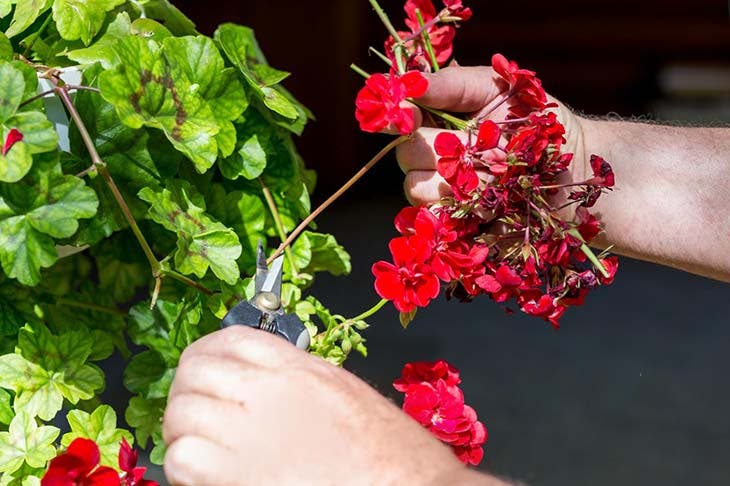
Before you begin pruning your plant, it is important to examine it first to determine where the pruning will take place. For example, where the branches are withered and dead and where there are few leaves. Then, using a sharp, disinfected pruning shears, remove any wilted flowers.
This encourages the production of new flowers, but will also clear the plant so you can better spot the branches to be pruned. Then move on to the dead leaves. Eliminating them will allow the plant to not waste its energy and reserves unnecessarily. Keep in mind that it is not a good idea to try to save dying leaves. If they have lost their green color, feel free to prune them with small shears to encourage the production of stronger, more vigorous foliage. This operation can be carried out at any time of the year, but it is more important in spring, as it helps promote flowering.
During this season, also consider pruning healthy stems. Do not hesitate to cut a stem, even if it is not withered, at its base, to encourage new shoots and therefore new flowering. If when pruning your plant you notice the presence of very long branches but that do not contain leaves or that have few leaves, remember to cut them about 5 mm from their node. You can keep the cutting to replant it and ensure the multiplication of your geraniums.
How to care for geraniums?
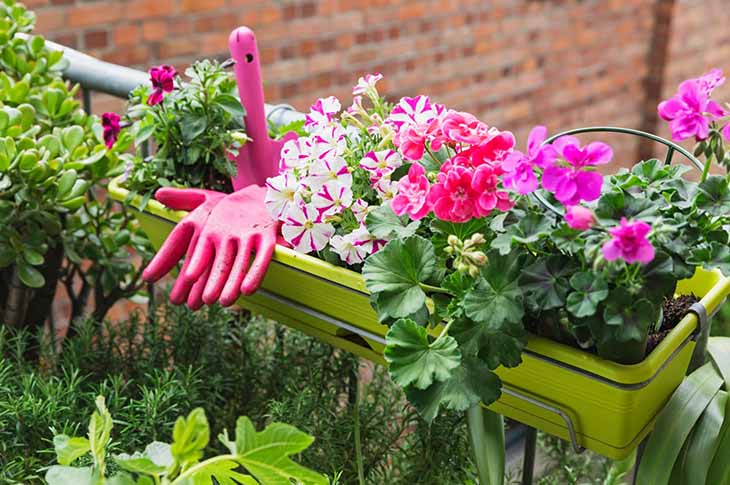
Native to South Africa, the geranium appreciates the sun. Keep your plant in the sun or semi-shade, without worrying about the heat. In fact, geranium can withstand high temperatures, but only if it is watered regularly. Of course, before watering, stick your finger into the soil to check if it is wet or not. Also give your plant time to absorb the water before watering it again to avoid overwatering and stagnation. To make your geraniums live longer, be sure to repot them into a new pot every two years.
Since this plant appreciates well-drained soil, it is advisable to place a layer of clay pebbles in the bottom of the pot to promote drainage. Do not hesitate to fertilize your plant with a special geranium fertilizer to improve flowering. For your geraniums to bloom and develop healthy, also remember to protect them from the pests and parasites that plague them such as green aphids, whiteflies or thrips.
That said, pruning your geraniums makes them more vigorous and encourages more abundant flowering, so you can decorate the flowerbeds, balconies or terraces of your home.