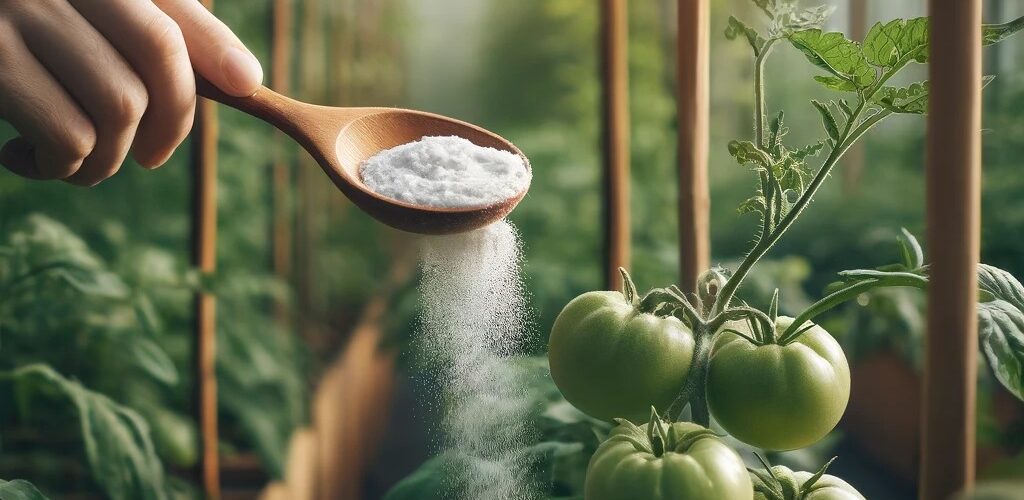

Recognized for its uses in home maintenance, baking soda is very popular for cleaning, disinfecting, degreasing and also deodorizing all surfaces in the home. But its uses don’t stop there. This multipurpose product is also useful in gardening. Find out how to use baking soda for your ornamental garden, vegetable garden, or even your vegetable garden.
Baking soda will never cease to surprise us. Useful for cleaning the house, eliminating bad odors and maintaining clothes, this biodegradable and economical product is also useful in gardening.
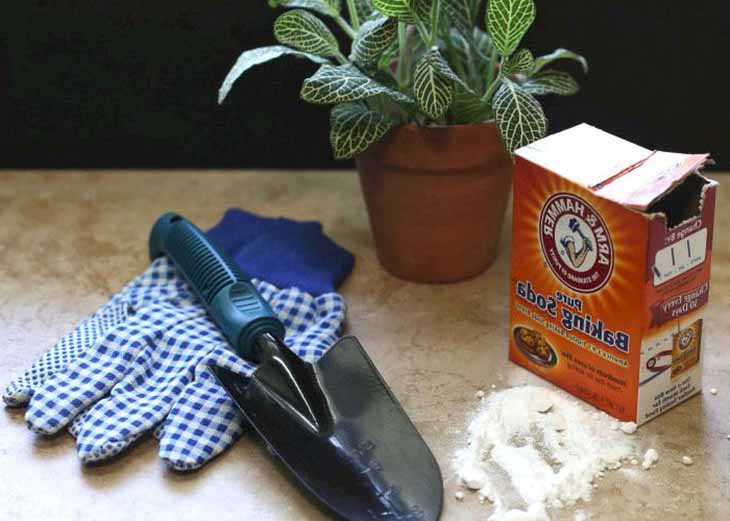
How and when to use baking soda in the garden?
- To keep pests away
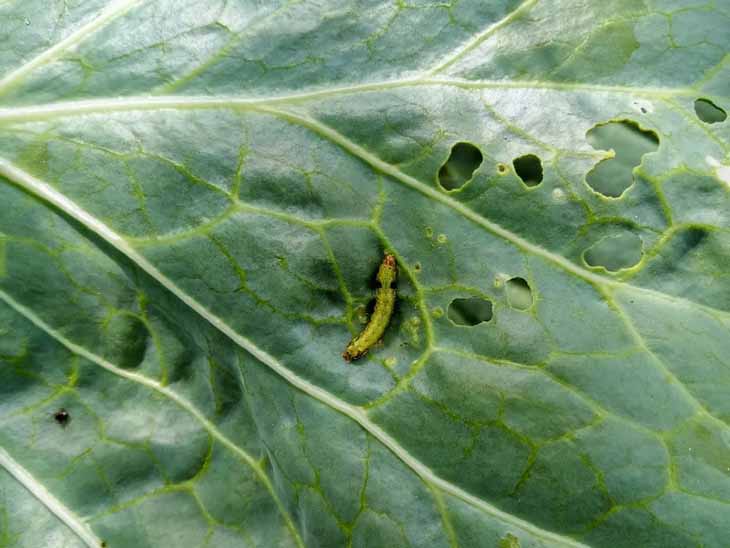
Baking soda can keep certain pests away from your plants, such as aphids, caterpillars, maggots, cutworms, and ants. To do this, sprinkle it on the floor with the help of a strainer. However, avoid touching flowers and plants with baking soda.
Another option is to fill a watering can with 500 ml of water, and add a tablespoon of baking soda and 4 tablespoons of olive oil. Then water the soil at the base of your plants with this solution.
- To prevent fungal diseases
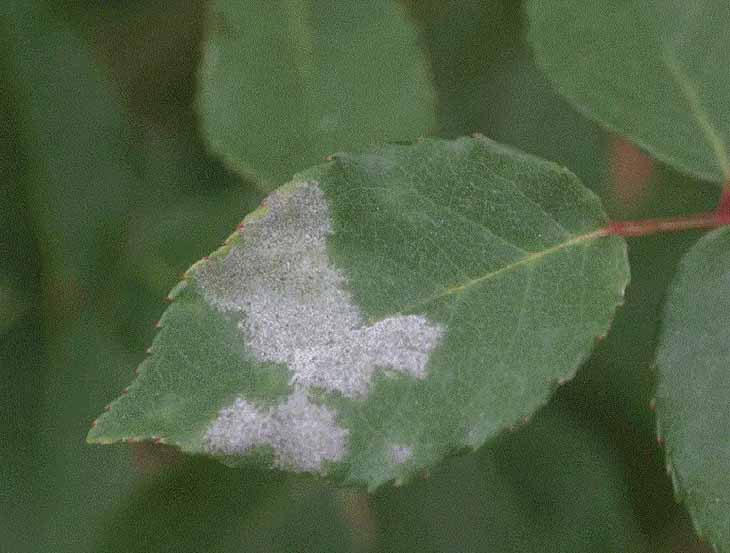
A cryptogamic disease, also called a fungal disease, is a plant infection caused by a fungus. In fact, 90% of the diseases that affect garden plants are cryptogamic diseases.
Baking soda can protect your plants from some of these diseases, such as downy mildew, rust or powdery mildew. Indeed, this product is alkaline, meaning its pH is greater than 7, so when it is added to an acidic medium it neutralizes it, thus preventing the development of these pathogens. This is called raising the pH of acidic soil.
If we take the example of downy mildew, the fungus responsible for this disease develops on acidic surfaces, such as on the surface of tomato leaves or on their aerial parts. By neutralizing this acidity, baking soda will prevent the development of late blight on tomato plants.
Please note that baking soda acts as a means of prevention, but on its own it is not sufficient if your plants are exposed to humidity favorable for fungal development.
Option 1
Mix a teaspoon of baking soda and a teaspoon of black or Marseille soap with a liter of water in a spray bottle. Spray this solution all over your plant, as soon as you plant it. Repeat the operation once a week for two months and every time it rains. In addition, rain and high humidity in general favor the development of fungi in your plants.
option 2
Mix a teaspoon of baking soda with 2 teaspoons of dishwashing liquid in a liter of water until you obtain a homogeneous preparation. Transfer the mixture to a spray bottle and spray your plants.
Keep in mind that baking soda can damage flowers , so if you have flowering plants, spray only the parts below the flowers.
- To deodorize compost
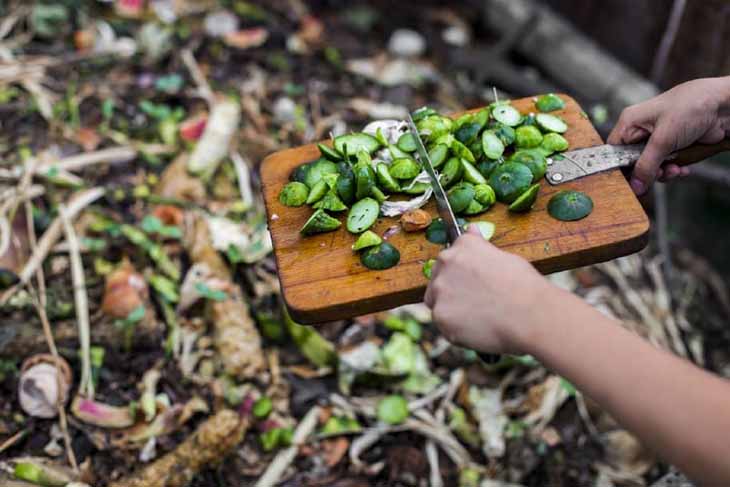
Compost fertilizes the soil and provides it with the nutrients necessary for plant development. Therefore, it is made up of plant and organic waste that can sometimes generate bad odors. To neutralize the bad odors that come from the compost, just sprinkle a little baking soda on the pile.
- To remove weeds

Baking soda is a natural herbicide. To weed your garden or orchard, simply sprinkle baking soda on surfaces where you don’t want unwanted plants growing. Just repeat this trick once or twice a year . Note that this trick is only effective for paver, patio or gravel driveways, and wall bases. Avoid spraying it on lawns and flower beds.
Please note that when used in excess in soil, that is, above a 1% concentration, baking soda can become phytotoxic and lead to deficiencies of minerals such as calcium and magnesium. . Tip: To prevent the appearance of weeds, you can install a mulch. This is a layer of thatch that keeps the soil moist and slows the growth of weeds.
In addition to baking soda, there are other natural herbicides such as nettle manure, white vinegar or starch-rich pasta cooking water, which is very effective in eliminating weeds.
From now on, you will no longer reserve your baking soda for cosmetic or household use, but you will also use it to maintain your garden and protect your plants from everything that could affect their good growth.