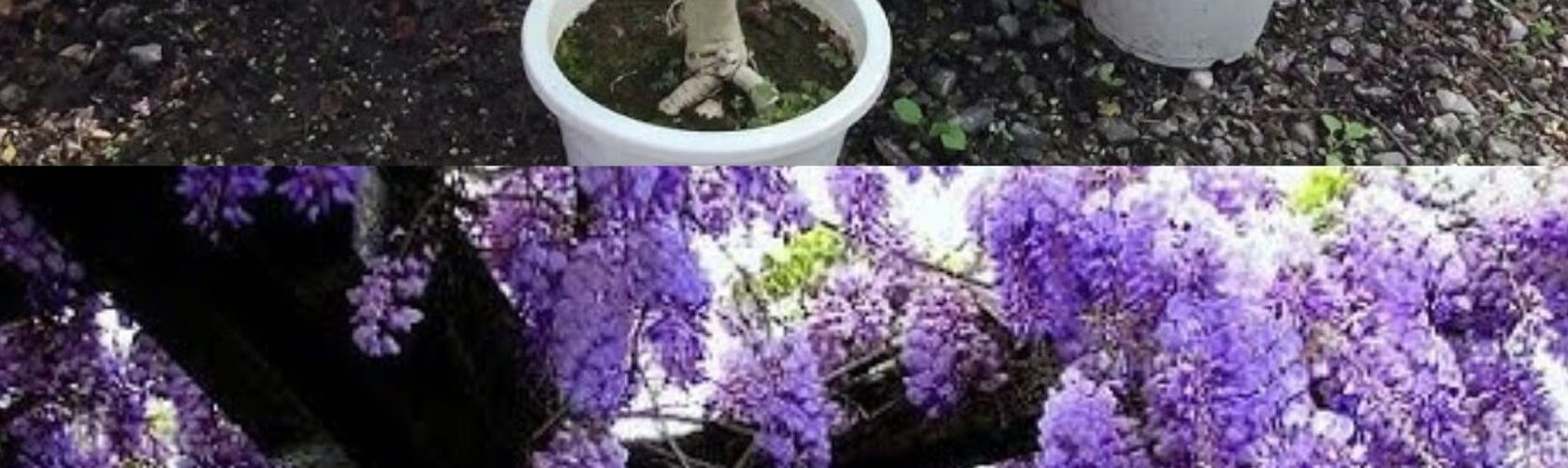
Wisteria gives us particularly lush climbing flowers, especially in spring. With nuanced colors and rich tones ranging from the lightest lilac to the darkest purple, it tends in particular to continue with its branches upwards to go over rock walls or reviews of residences and villas. Today we tell you about pruning wisteria and how it should be done correctly. Follow our advice to achieve a very lush and prosperous flowering.
Pruning Wisteria: How to Do It Correctly
Pruning wisteria is essential for vigorous flowering. Therefore, it is advisable to proceed at least twice a year: at the beginning of spring and in summer. For the pruning job to be done well, to have such lush flowering, it is necessary to proceed correctly. The branches must be cut so that two out of every four buds remain, so that the two buds develop completely, giving the flowering in all its maximum splendor. Remember that the cut to prune the plant must be made obliquely and that it does not damage the bud. All of this will prevent rainwater from penetrating the interior of the bushes, also preserving the plant from fungal or mold attacks. To ensure that the wisteria is also stimulated to flower after summer, it is necessary to carry out a second pruning which, as I have already mentioned, must be carried out in summer. The ideal period is the month of July. In this case, your attention will be to prune the parts of the longest branches of the plant where there is no bud.
How to care for wisteria
Growing and caring for wisteria is not difficult. It adapts well to any terrain and place. It is essentially a climbing plant. Railings, walls, canopies, pergolas are his passion. Wisteria is very resistant to temperatures, especially rigid ones. If the plant is grown in a pot, it is important to limit its development in height, so it will be advisable to carry out more pruning to prevent the roots from spreading and taking the place of the containing pot. In addition, as the wisteria grows, the plant will need to be transplanted and even several times during its life. As for irrigation, in summer it will be weekly and abundant; while in winter it can also be occasional. Curiosity about wisteria is indicated by the flowering, which tends to hang.