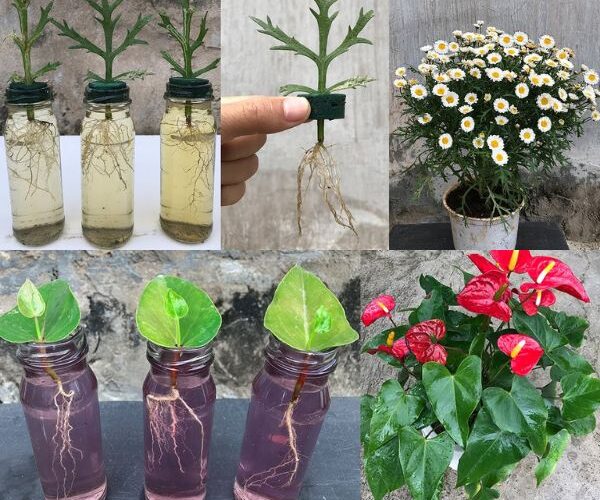
Have you ever thought that plants can also be grown without soil? It is a technique called hydroculture and it requires that plants, without soil, develop thanks to the use of water and expanded clay.
Clay is used to support the plants’ root system, which is also completely submerged in water. Naturally, water is used to feed plants.
The hydroculture technique
Plants grown with this innovative technique are very decorative, require less maintenance than traditional potted plants, and grow faster as they have considerable water autonomy .
In addition, when we use clay we make this method very clean, which allows for great water savings, since it is able to absorb a greater amount of water, releasing it more slowly than potting soil .
Finally, when we choose hydroculture, we help reduce the risk of diseases and pests harmful to plants.
This is what you need for hydroculture
For this technique, few but definitely essential materials are needed: a vase holder, a hydrovase, a level indicator, the anchoring substrate and the nutrient solution .
Let’s see in detail what they are for.
- The vase holder will be the ornamental container. It does not have drainage holes and the hydrovase is inserted inside.
- The hydrovase , or hydroculture container, is the smallest container, made of transparent plastic and with numerous holes on the surface. The hydroglass is used to contain the plant and the substrate . Alternatively, we can use classic glass vases.
- The level indicator has the function of controlling the amount of water present in the glass. The graduated scale indicates the minimum and maximum levels, indicating when it is necessary to water the plants . In the case of a clear glass vase holder, we can monitor the water level without using the indicator.
- The anchoring substrate, or clay, is the element that has the function of supporting the root system of the plant and allows the roots to aerate. As an alternative to clay we can use volcanic lapillus, since it is rich in minerals.
- As for the nutrient solution, it must be of a specific type for hydroculture. Under no circumstances should common fertilizer be used for indoor plants, as it can contaminate the water and give the roots an excessive amount of salts, poisoning them.
Plant the plant in the hydrowash
Now we can “plant” the affected plant. To begin with, the species is already in a pot of soil, it must be extracted, freeing the roots from the earth with great delicacy. After that, they should be soaked in warm water to clean them well. The container should be filled about 2 cm with expanded clay granules . At this point we place the plant and gently cover the roots with more clay, so that it stabilizes.
At this point we pour distilled water into the hydrovase for approximately one third, so that it wets the lower layer of clay. Even the outer container should be filled with a thin layer of clay, also remembering to insert the level indicator. Finally, we pour the water into the vase holder until we reach the maximum level of the indicator.