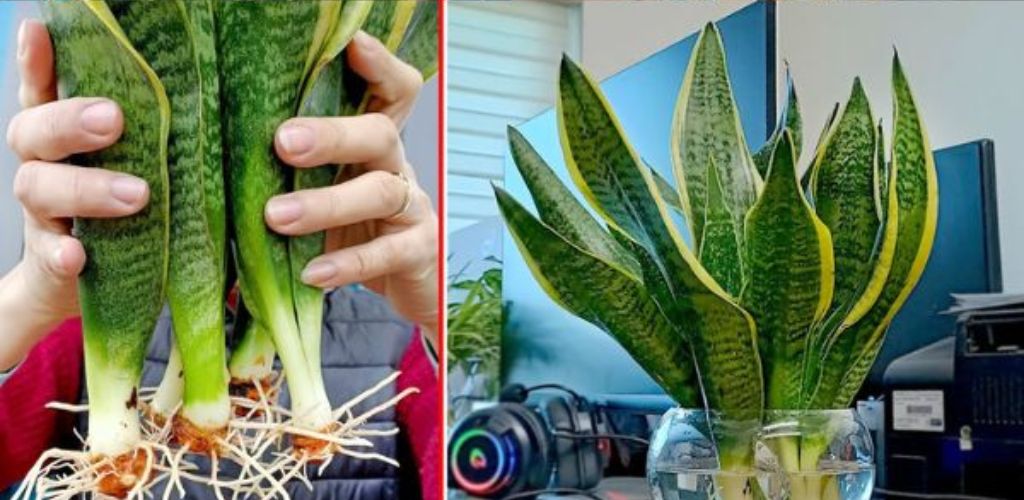
One of the hardiest plants out there is sansevieria, better known as mother-in-law’s tongue.
It is a succulent plant, much loved as a houseplant. It needs very little care and usually lives for many years, giving our home a touch of elegance thanks to the elongated shape of its leaves.
But, as hardy as it is, this plant needs some precautions, especially in the hot months. These are simple actions, but necessary to keep our mother-in-law’s tongue green and healthy.
Warning: If you have particular problems with this plant, always contact your trusted florist or gardener.
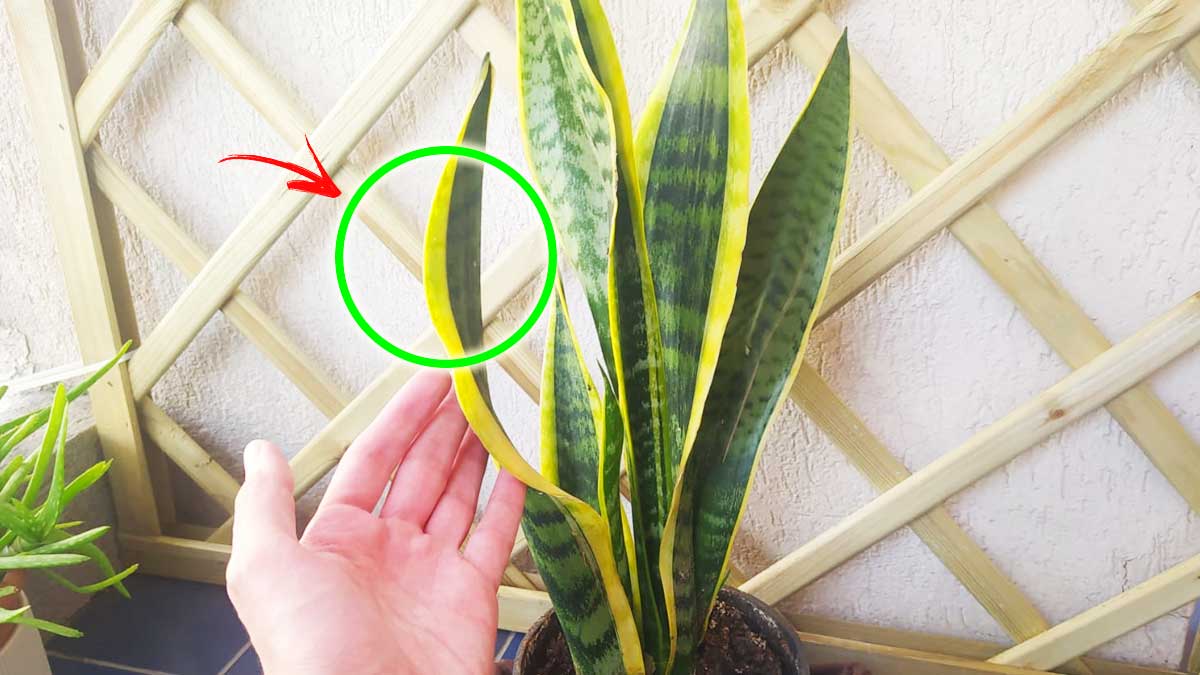
Internal or external?
If sansevieria is traditionally considered a houseplant, it is also true that in summer it can be kept on the balcony or in the garden.
The mother-in-law’s tongue, in fact, in the cold months should be kept at a temperature of no less than 10 °C. In summer, it also tolerates very high temperatures, being able to stay outside without problems.
Watch out for summer storms, though : if it rains, bring this plant indoors or protect it. Too much water could kill it.
High temperatures? Water more!
In summer, high temperatures can weaken your plants.
Despite being a tropical plant, sansevieria needs more water in hot weather. Ideally, it should be watered at least once a week or every two weeks.
The secret is to check the soil: when it seems too dry, it’s time to water your plants.
NB: Obviously, the longer you keep the plant in a sunny, warm location , the more the soil will tend to dry out quickly.
Beware of direct light
If you keep this plant outside, choose carefully where to place it.
Although she loves light very much , the mother-in-law’s tongue does not tolerate direct sunlight for long . These, in fact, especially in the hottest months, can burn the leaves of this plant causing premature death.
If you notice yellowish-brown spots on the leaves, the cause may be precisely excessive direct exposure to sunlight.
Ideally, you should place this plant in a sunny location, but where direct light doesn’t reach more than a couple of hours a day.
Parasites? No thanks!
The thick leaves of sansevieria are very resistant to attacks by insects and pests.
However, when it is hot, it can happen that the plant is affected by some infestations, especially if it is kept near other plants in the garden or on the balcony.
It is not uncommon for the plant to be attacked by mealybug: a parasite resembling a small spider mite that gives off a substance resembling a white powder (in fact, it is known as mealybug or mealybug).
In particular, in sansevieria, this parasite manifests itself with brown spots that appear on the underside of the leaves .
Getting rid of it is not difficult. You can try white alcohol vinegar: dilute 150ml in a litre of water and spray it on the leaves.
Alternatively, run it directly over the leaves with the help of a small brush or cotton ball.
Replant? That depends
Mother-in-law’s tongue transplant should normally be done in early spring, but not every year.
Ideally, this should be done every 3 years when, usually, the roots start to “get tight” in the pot and the soil has already depleted all the nutrients it had to offer.
Choose a larger pot for this plant and transplant, being careful not to break the roots.
Fertilize Regularly
Actually, fertilization is not mandatory for this plant which, even without fertilizers, can easily survive.
However, if you want a sansevieria that will grow and keep its leaves healthy, you need to choose the right fertilizer.
Nitrogen and potassium-based fertilizers are very suitable – often, for this plant, liquid fertilizers are chosen to mix with the water used for irrigation.
Many wonder, then, how often to fertilize. It depends on the type and indications of the individual fertilizers.
Usually, in the summer period, it is necessary to pay every 3 weeks. Then, in the cold months, fertilization should be discontinued .