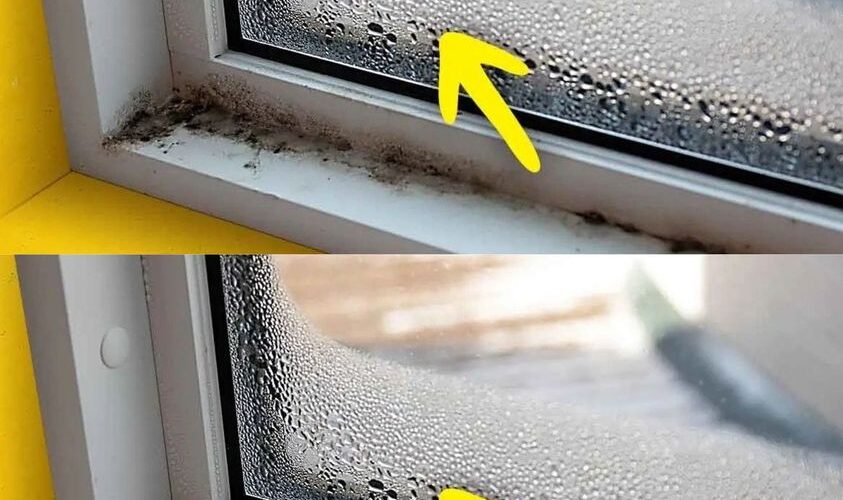
Almost half of our homes have too much humidity. In addition to unpleasant smells and property damage, it can lead to respiratory problems and other health problems. Our advice for flushing out this unhealthy water.

- Ventilate daily
Even if it’s winter and the outside temperature is around zero degrees, there’s no getting around it! Ventilating for between five and ten minutes a day is essential to renew the ambient air and eliminate excess moisture. If possible, create a draft between several windows. If the whole house needs to be properly ventilated, insist on the most humid rooms, such as the bathroom or kitchen.
- Clean the VMC
VMC (Controlled Mechanical Ventilation) is still by far the best way to constantly renew the air and thus avoid excess humidity. It can be single-flow or double-flow. In the first case, the device is content to suck the air out of the cabinet to expel it outside. While a double-flow VMC has the advantage of being able to recover the heat from the extracted air instead of throwing it outside. For optimal operation of your CMV, you should clean the vents once a year with a vacuum cleaner. Over time, dust accumulates on the grilles, with the risk of obstructing air circulation.
- Choose double glazing
If water drops run down the inside of your windows and often fog up, this is a clear sign of moisture. With double-glazed windows, you can avoid excessive temperature fluctuations and limit condensation problems. A tip: install ventilation grilles on the new joinery so that the air can circulate.
- Check the tightness
Since the bathroom is known for being the wettest room in the house, be sure to seal the seams around the tub, shower and sink. Adding a heater can help dry out the air. Install a towel radiator and if that’s not possible, there are small auxiliary heaters that you turn on before washing and turn off fifteen minutes later.
- Consider the dehumidifier
You can buy a dehumidifier in stores. You can choose between a chemical or an electrical device.
The first works on the condensation principle. It contains a sodium chloride tablet or cartridge. This absorbs the moisture to transform it into water. Then you simply empty the bin. An electric dehumidifier, on the other hand, sucks in the humid air contained in the room, dries it, cools it and then heats it to a temperature corresponding to that of the room in which it is located. The air comes out free of moisture.
- Watch the cabinets
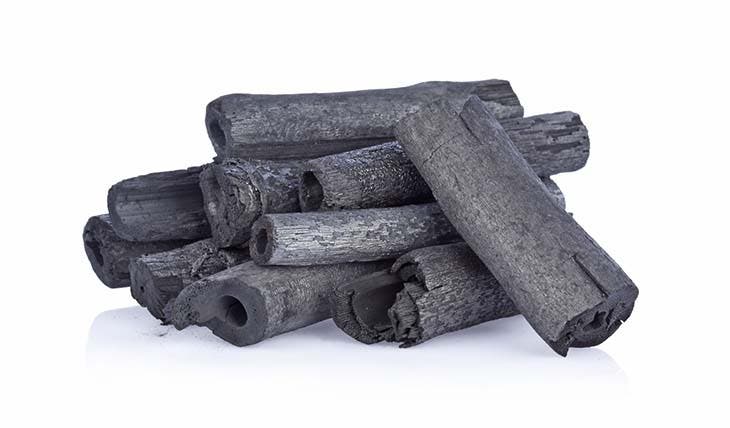
When you open your cupboards , an unpleasant musty smell comes out. It’s probably due to the humidity. To absorb it, just put a few pieces of charcoal in a box with a lid with holes in places. A natural and effective method that doesn’t cost much.
Also, make sure that the furniture is a few centimeters away from the walls. In humid conditions, air must circulate to prevent mold from forming.
- have a green thumb
Certain species of plants that live in tropical environments have the power to dehumidify the ambient air. They draw water from the air to feed, thus reducing the abundant humidity in your home. For example, the Boston fern is best in this role. It should be placed in a bright place, but without direct sunlight. If your living room has little light, a Spathiphyllum is just as effective.
With the naked eye
To maintain a healthy interior, the humidity level must be between 40% and 60%. If your home is above this average, you do not need a meter, certain signs are not misleading: presence of fog on the windows, musty smell, peeling wallpaper or skirting boards, appearance of yellowish spots on the walls …