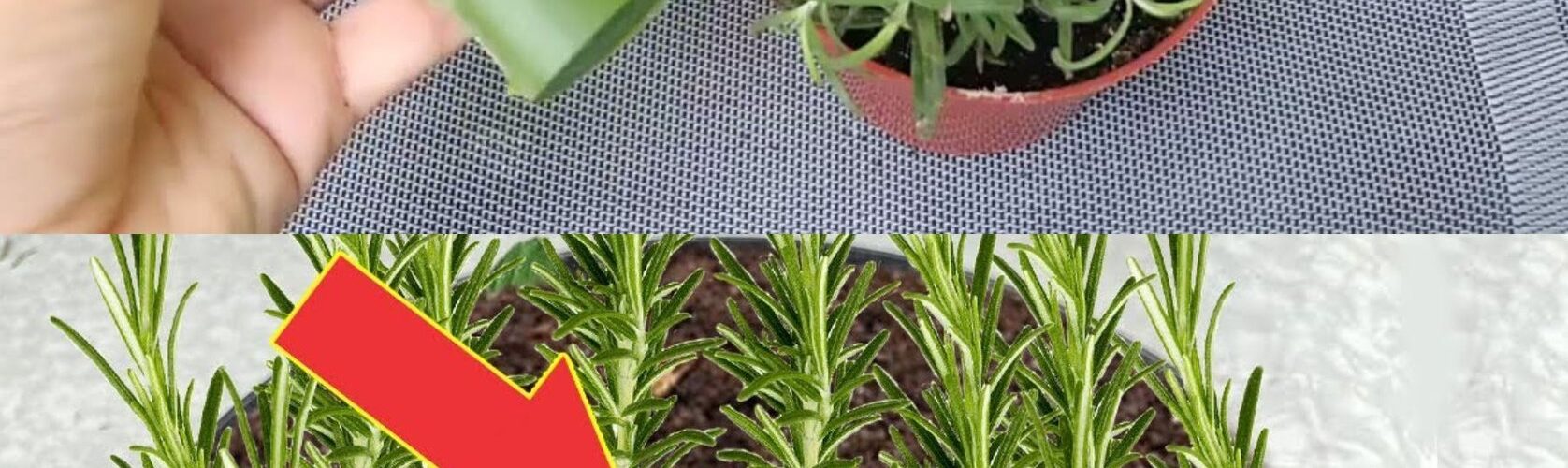
Rosemary is an evergreen shrub with needle-shaped leaves and bright blue flowers. Rosemary flowers are evergreen and are present in spring and summer, filling the air with a pleasant fragrance. This beautiful plant, mainly used to season dishes, is also commonly used as an ornamental plant in the landscape.
Rosemary’s scientific name is Rosmarinus officinalis, which translates to “sea spray,” as its gray-green foliage resembles fog against the cliffs of the Mediterranean, where the plant is native.
Rosemary plant care is easy if you provide it with well-drained soil, sandy soil, and at least six to eight hours of sunlight. These plants thrive in warm, humid environments and cannot withstand extremely cold temperatures. Rosemary does not tolerate winters below -1°C. It is often best to put them in containers, which can be placed in the ground and easily moved inside a greenhouse or house during the winter.
Rosemary prefers to remain somewhat dry, so terracotta pots are a good choice when selecting suitable containers. These pots allow the plant to dry faster. Wash rosemary plants thoroughly with water when the soil feels dry to the touch, but allow the plants to dry out between watering intervals. Even indoors, rosemary plants will require plenty of light, at least six hours, so place the plant in a suitable, draft-free location.
Rosemary pruning:
Pruning rosemary will help make a bushy plant. Trim the twigs as you would a houseplant, pruning rosemary is done after flowering stops. The general rule of thumb for cutting rosemary is to take no more than a third of the plant at any time and make cuts just above the leaf joint. Cut twigs can be dried like any other plant by hanging them upside down in a cool, dry place.
Rosemary cuttings:
Rosemary plants are usually propagated by cuttings, as it can be tricky to prepare rosemary seeds for germination. Successfully growing plants from rosemary seeds is only possible when the seeds are very fresh and when planted under optimal growing conditions.
Get new rosemary plants from cuttings from existing evergreen plants. Cut stems about 5cm long and remove the leaves from the bottom two-thirds of the cutting. Place the cuttings in a perlite and peat moss mixture, then water until roots begin to develop. Once roots have developed, you can plant the cuttings as you would a rosemary plant.
The plants are prone to root entanglement and should be repotted at least once a year. Yellowing of the lower foliage is an early indication that it is time to repot your plant.