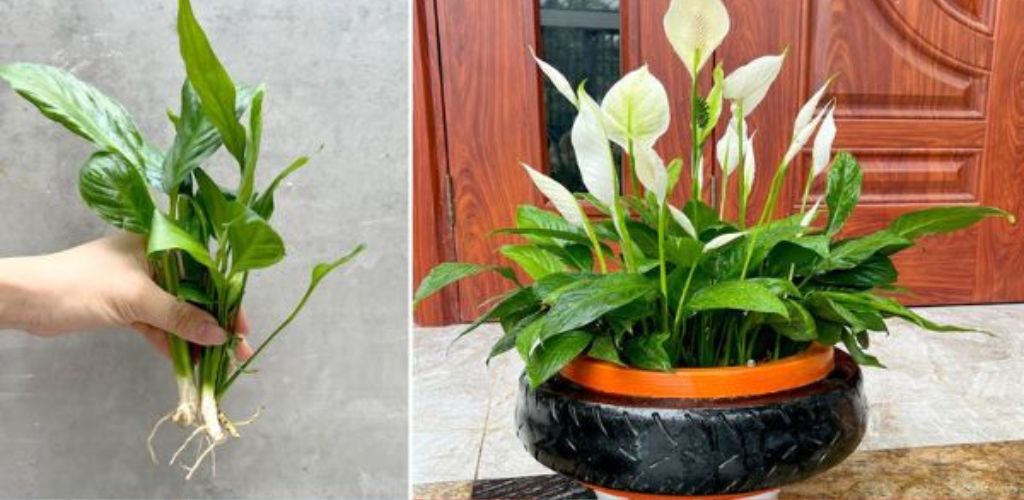
The peace lily is a plant that gives off a refreshing tropical vibe with its lush green leaves. As for its white flowers, they symbolize peace, purity, innocence, and prosperity. The beautiful foliage and fragrant flowers make spathiphyllum a popular houseplant. However, you need to learn how to properly maintain it and find the ideal location for it to flourish.
Also called moonflower, the peace lily is easy to grow and is a beautiful addition to any houseplant collection. Here’s everything you need to know about its maintenance.
The peace lily, a tropical plant that never ceases to seduce…
Peace lilies or spathiphyllum are tropical plants with long lanceolate leaves that thrive in the forests of Central and South America, where they benefit from diffuse sunlight and constant humidity. In order for your peace lily to be healthy, it is essential to reproduce these conditions at home. In fact, NASA has revealed that the peace lily is one of the best houseplants for purifying the air. Thanks to their green leaves, these plants absorb polluted air and rid it of toxic gases such as carbon monoxide, benzene, and formaldehyde.

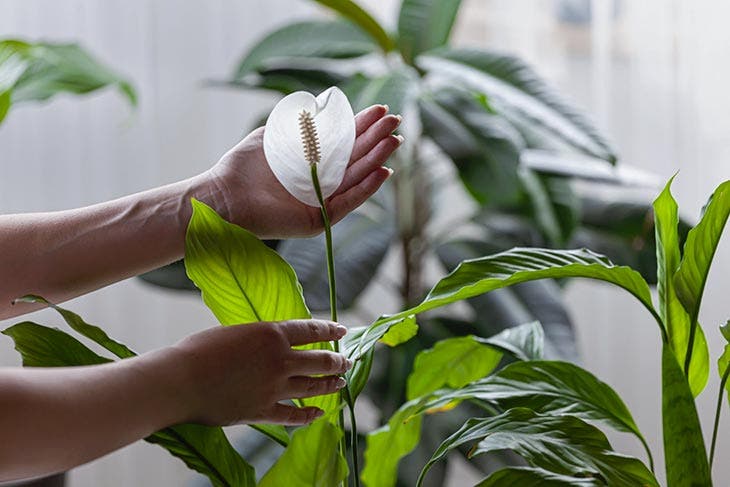
Peace Lilies: Maintenance and Ideal Location
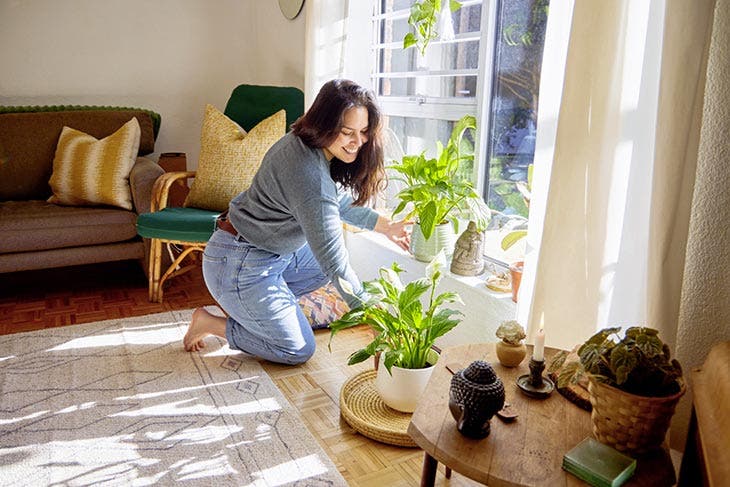
The peace lily or spathiphyllum is a versatile and hardy houseplant that can fit perfectly into your home if you give it the right location. However, if placed in the wrong place, it will develop pale and unhealthy foliage, fungal or bacterial diseases. In fact, there are many places in our home where we could place this magnificent plant, but before doing so we must take into account certain factors.
- Proper lighting: It is best to place peace lilies in a place that receives intense, indirect light. A north-facing window would be perfect, as the plant will be exposed to the morning sun. Don’t place them in places exposed to direct sunlight all day, as this could dry them out.
- Watering : When it comes to watering, keep the soil slightly moist to the touch, but don’t overwhelm it with water, as you risk destroying the roots. It is true that these types of plants can withstand periods of drought, but their leaves will begin to develop brown tips if they lack water or moisture.
- Humidity: These plants appreciate high humidity levels. By spraying their leaves or placing their pot in a moistened gravel tray, the conditions needed for them to thrive can be replicated.
In addition, the large leaves of spathiphyllum tend to accumulate a lot of dust and this can interfere with photosynthesis. Wipe them gently with a damp paper towel.
The Dangers of the Peace Lily
- Keep it away from children: The latter are curious and don’t know what’s good or bad for them. So, it’s no wonder they try to touch your plant. The latter contains calcium oxalate which can cause skin irritation, breathing problems, upset stomach, or diarrhea.
- Keep the plant away from pets: The peace lily is one of the poisonous houseplants for pets. Therefore, you should stay away from the places where your pets walk. In fact, their white leaves contain toxic pollen and can cause mouth irritation if they end up in your pet’s fur or if your pet licks them.
Provide the right conditions for your peace lily to develop healthily and you will enjoy its mysterious smell with slightly spicy notes.