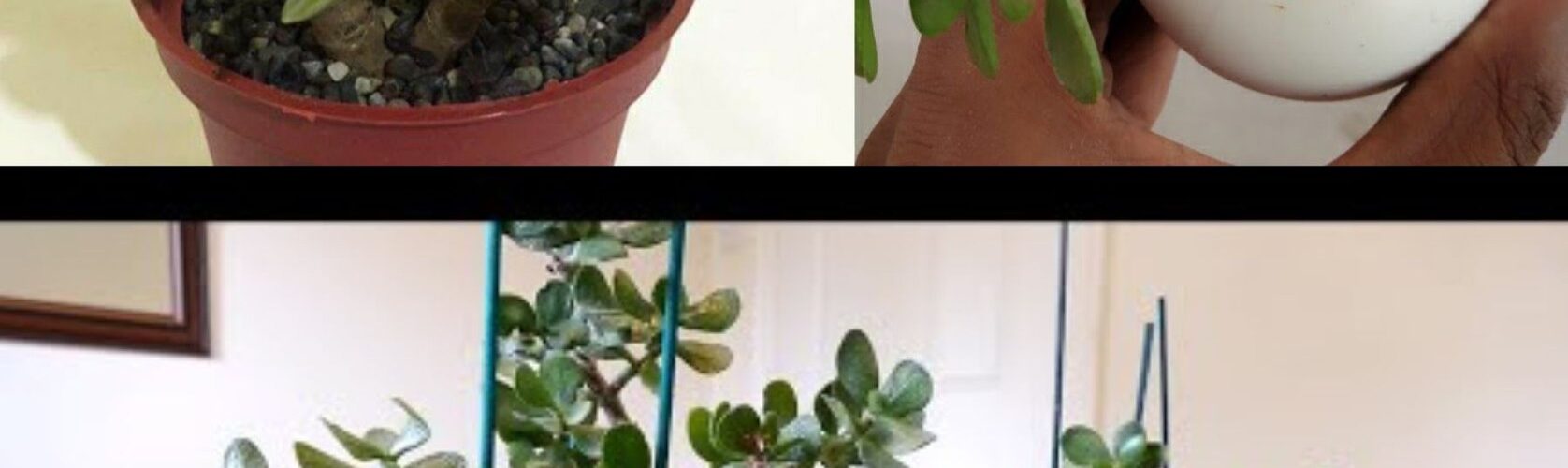
The Jade tree is an easy-to-grow succulent plant with small, rounded, fleshy leaves. Here are some tips on how to make it thrive.
It is a tender evergreen succulent and is mainly grown as a houseplant. The jade plant is characterized by its rounded, fleshy, shiny, jade-green leaves, which may develop a red tint around the edges if the plant is grown in a very bright location.
Grow the jade tree
This houseplant needs lots of light and prefers southern or western exposure. It can be moved outside to a patio when the weather is warm and sunny in the summer , but be sure to bring it inside before the weather turns cold in early fall. They need a few hours of direct sun each day to grow healthy. The succulent tolerates temperatures up to 10°C in winter.
The jade plant should only be watered when the top few inches of compost are dry . It should be transplanted every few years, preferably in spring.
In winter it needs much less water.
The ideal soil for the Jade tree should be a well-drained, peat-free compost, specific for succulent plants, or another soil-based soil with the addition of sand.
How to propagate jade tree
There are two ways to grow and propagate a jade tree . The easiest way is to take stem cuttings. That is how:
- We must use scissors or scissors to cut a section of the stem, which must have at least two nodes,
- then we peel off the leaves from the bottom of the cut, leaving some on the top,
- We put the stem in water and let it develop roots, then we put it in a pot with succulent compost or multipurpose compost without peat and perlite,
- let’s water well.
The second method of jade plant propagation involves leaf cuttings , but this is a slower process and the plants will be smaller. That is how:
- we gently take some young leaves of the plant,
- We put them in a warm and dry place for a few days so that the cut ends harden,
- then we put the leaves upright in a container with compost and water
- At this point, the plants should begin to form roots within a few weeks, after which they should be transferred to small individual pots.
Most common jade tree problems
Each plant can present different problems, from excessive or deficient watering, insects, exposure to the sun or cold.
If your Jade tree has red edges on the leaves, don’t worry, they only appear when the plant is exposed to too high light levels.
In the case of yellow leaves , however, it means that they are probably due to too much water. In this case, the advice is to reduce watering and not let the plant remain in too wet compost.
Older leaves will wilt and fall naturally, but if many of them fall off, it’s a sign that the plant is stressed, perhaps because it was moved to a different location or watered too much or too little. These two factors must be considered.
The Jade tree can also be a victim of the foliage mealybug . They are insects that look like white, fluffy spots on the underside of leaves. These should be removed by wiping the leaves with a damp cloth or cotton wool soaked in an insecticide containing fatty acids or vegetable oils. The plant can also be attacked by mites : in this case we can notice if the stems and leaves are covered with a fine spider web. Again, the problem should be solved with a spray containing fatty acids or vegetable oils.