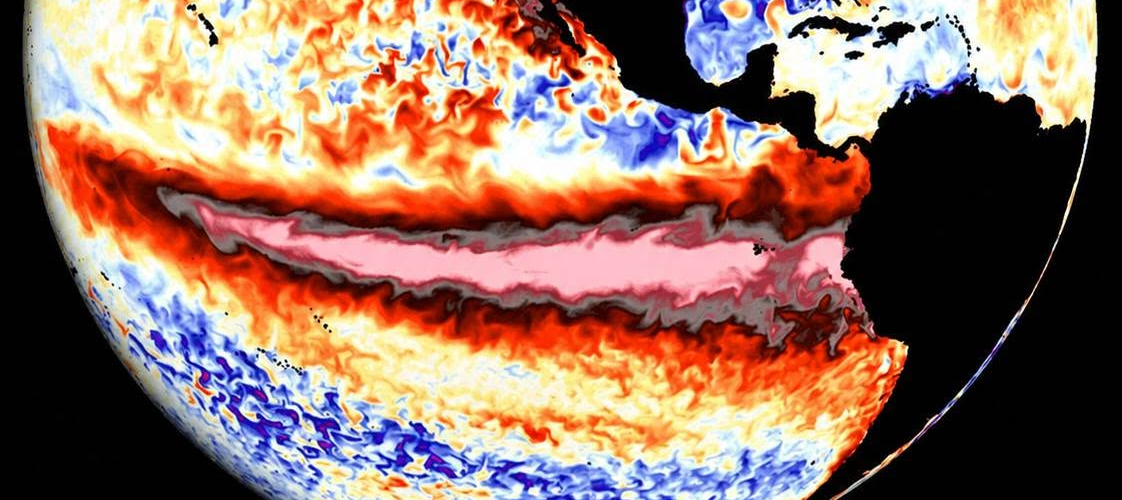
The U.S. National Oceanic and Atmospheric Administration (NOAA) officially confirmed the start of the weather phenomenon known as El Niño, after weeks of forecasts that anticipated its arrival. Experts warn that this episode could become one of the most intense recorded in the last seven decades, with significant effects on the global climate.
What is El Niño and why does it matter?
El Niño is a natural phenomenon that is part of a broader climate cycle known as ENSO (El Niño-Southern Oscillation). This cycle has two main phases: El Niño, characterized by the anomalous warming of the surface waters of the equatorial Pacific Ocean, and La Niña, which involves the cooling of those same waters.
Although it may seem like a localized event, variations in the temperature of the Pacific have chain consequences that alter atmospheric patterns throughout the planet. Among the most common effects are:
- Prolonged droughts in some regions
- Intense flooding in other areas
- Increased frequency of forest fires
- Disruptions to Hurricane Season
- Changes in agricultural yields and fisheries
It is important to clarify that El Niño is not a product of climate change, since it is a natural cyclical phenomenon. However, global warming acts as an amplifier, enhancing its effects and making the consequences more severe than in previous episodes.
NOAA’s official confirmation
In its most recent statement, NOAA noted that during the last month, El Niño conditions developed, evidenced by above-average sea surface temperatures in the central and eastern equatorial Pacific. This verification formalizes what many climate models had been anticipating for months.
The U.S. agency also indicated that there is a 100 percent probability that the event will continue through the fall, which implies several months of sustained influence on the global climate.
Are we facing a “Super Niño”?
The term “Super Niño” is used informally to refer to particularly intense episodes of the phenomenon. The equivalent technical name is that of a “very strong” event. According to NOAA’s Climate Prediction Center, the current El Niño has a 63 percent chance of reaching this category.
Moreover, the models suggest that this could be among the most intense episodes recorded since systematic measurements have existed, that is, since 1950. If this trend is confirmed, the implications for multiple regions of the planet would be considerable.
However, NOAA’s own specialists have qualified their forecasts by recalling that even the strongest events do not produce the same effects in all regions. What does happen is that an intense episode significantly increases the chances of the expected impacts materializing in each area.
The combination with climate change
One of the aspects that most worries the scientific community is the overlap between El Niño and the already established trend of global warming. Professor Adam Scaife, head of the UK Meteorological Service’s monthly to decadal forecasting area, has been emphatic in warning about the need to take potential impacts seriously.
Scaife explained that the current episode is unfolding on an already hot basis due to cumulative global warming. This means that temperatures in the affected regions could reach unprecedented levels, as the additional heat brought by El Niño adds to that already existing from greenhouse gas emissions.
Possible consequences to be taken into account
Although specific effects vary by geography, some of the most predictable consequences of an intense El Niño include:
- South America: above-average rainfall in parts of Peru, Ecuador, Argentina and southern Brazil, along with droughts in parts of Colombia, Venezuela and northern Brazil.
- Central America and the Caribbean: reduction in Atlantic hurricane activity, but increased risk of drought.
- North America: Wetter winters in the southern United States and drier in the north.
- Asia and Oceania: increased risk of droughts and fires in Indonesia, Australia and parts of Southeast Asia.
- Africa: Significant alterations in rainfall patterns in the east and south of the continent.
What can be done
Faced with this scenario, experts recommend that governments and communities activate contingency plans, especially in areas vulnerable to floods, droughts or fires. Early preparation, proper management of water resources and the protection of agricultural production will be essential to mitigate the effects of the phenomenon during the coming months.
Although it is not possible to stop El Niño, understanding its evolution and anticipating its consequences is key to reducing the human and economic losses it may generate in different regions of the world.