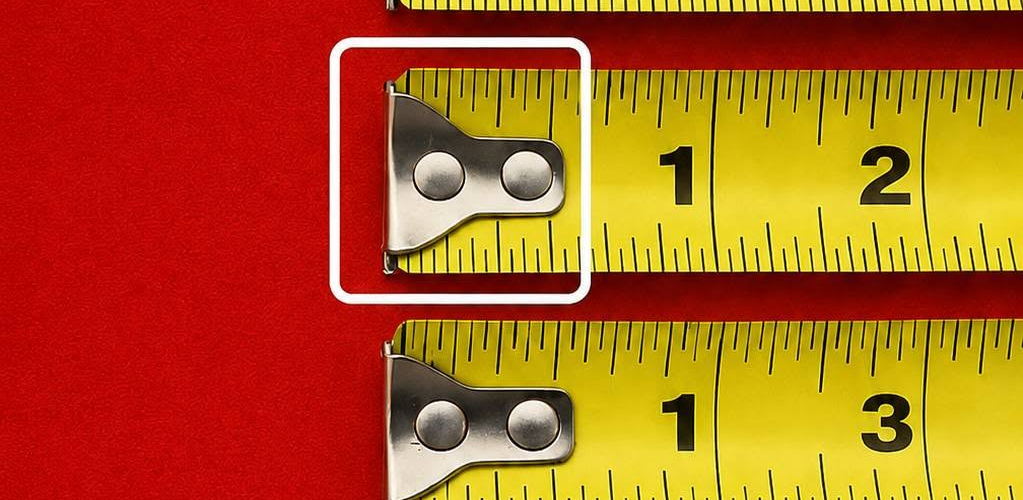
The metal tape measure, also known as a tape measure or huincha, is one of the most common tools in workshops, construction sites and domestic toolboxes. Construction professionals and DIYers alike use it daily to take measurements quickly. However, there is a detail of its design that confuses many people: the small metal hook at the tip, which seems to be loose or poorly placed. Far from being a failure, this movement responds to an engineering decision designed to improve the accuracy of each measurement.
The Loose Hook: A Common Misperception
It is common that, when wearing a new flexometer or when checking a used one, the user notices that the metal part at the end moves slightly back and forth. The first reaction is usually to think that the tool is defective, that it suffered a blow or that the rivet that holds the tip loosened with use.
This interpretation is completely logical, since in most objects a loose component usually indicates wear or a manufacturing problem. However, in the case of the tape measure, the opposite is true: if the hook were fixed and rigid, the measurements would be less accurate.
The Real Function of Tip Movement
The displacement of the hook is calculated to the millimeter and serves a very specific purpose: to compensate for the thickness of the metal part itself when measuring. This is known as “true zero,” and it allows the result to be accurate no matter how the tool is used.
There are two basic ways to take a measurement with a tape measure:
- External or thrust measurement: when the tip is rested against an edge and the tape extends outwards. In this case, the hook is moved inwards to compensate for its own thickness.
- Internal or tensile measurement: when the tip is hooked on the end of a surface and the tape is pulled. Here, the hook moves outwards, also compensating for its thickness.
In both cases, the hook clearance is exactly equal to the thickness of the metal part, so the “zero” always matches the actual point from which it is measured. If the tip were fixed, one of the two measurements would always have an error of between one and two millimeters.
Other details of the tape measure that go unnoticed
The movable hook is not the only hidden feature of this tool. Most modern tape measures include elements designed to make work easier, although few people make the most of them:
The notch or groove of the hook
At the end of the metal hook there is usually a small opening or groove. This is used to hook the head of a nail or screw, allowing measurements to be taken without the need for someone else to hold the tape on the other side. It is especially useful when working alone.
The serrated bottom edge
The bottom of the hook often features a rough or jagged surface. This texture allows you to lightly mark a surface without the use of a pencil, which is handy for making quick signs on wood or drywall.
Black markings every 16 inches
On ribbons manufactured according to the imperial system, highlighted marks appear every 16 inches. These indicate the standard spacing between studs of timber structures used in construction, a key reference for carpenters.
The red numbers
Some models display certain numbers in red, usually every 19.2 inches or every certain number of centimeters, which also correspond to structural divisions common in lightweight construction.
How to Care for Your Tape Measure to Keep It Accurate
Since proper operation depends on the hook maintaining its exact movement, it is advisable to follow some recommendations to extend the life of the tool:
- Prevent the tape from retracting all at once: Letting the spring pull sharply on the hook can damage the rivet and upset the true zero.
- Do not expose to moisture: oxidation can affect both the flexibility of the tape and the mobility of the hook.
- Clean the tape periodically: wiping it with a dry cloth after using it in dusty or sawdust environments helps it to roll up properly.
- Do not bend the tape: Marked folds shorten the life of the metal and can lead to measurement errors.
A small piece with a big impact
What at first glance seems like an oversight by the manufacturer is actually a perfect example of engineering applied to an everyday tool. The movable hook of the tape measure demonstrates how a seemingly minor detail can make the difference between a correct measurement and an error that ruins an entire project.
The next time you pick up a tape measure and notice that little play on the tip, you’ll know that it’s not a flaw, but an ingenious solution designed to ensure accuracy in any situation. Understanding how the tools we use every day not only improves the results of our work, but also allows us to appreciate the design behind the simplest objects.