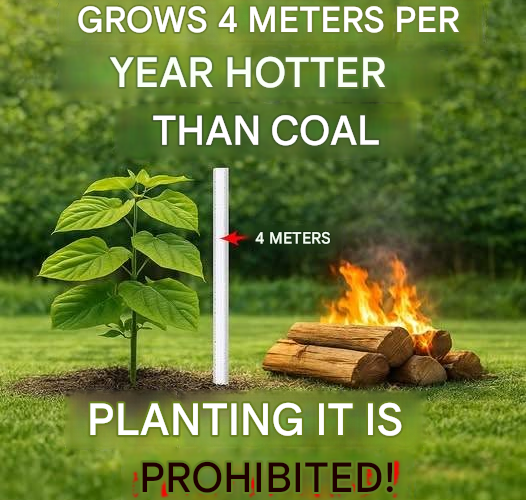
Paulownia, scientifically known as Paulownia tomentosa and popularly called empress tree or Kiri tree, is one of the most talked about forest species today. Its ability to grow up to four metres per year, produce usable timber in approximately five years and resprout from the stump after harvest have made it an attractive alternative for commercial forestry. However, its cultivation is restricted or outright banned in several countries for environmental and biological reasons that should be thoroughly understood.
Origin and general characteristics of paulownia
Paulownia is native to central and western China, where it has been cultivated for centuries for its wood and ornamental value. It belongs to the Paulowniaceae family and is characterized by its large, heart-shaped leaves and striking tubular violet flowers that appear in spring. The tree can reach between 15 and 25 meters in height in optimal conditions.
Its most distinctive feature is the speed of growth: under adequate irrigation, drained soils and temperate temperatures, it can add between three and four meters in height per year during the first seasons. This rate places it among the fastest-growing woody species on the planet.
Properties of wood
Paulownia wood is highly valued in markets such as Japan, where it is traditionally used to make furniture, musical instruments, storage boxes, and architectural elements. Its main characteristics are:
- Lightness: it is one of the lightest woods in the world, with a density close to 0.28 g/cm³.
- Fire resistance: it has a high ignition point compared to other softwoods.
- Dimensional stability: it deforms little with changes in humidity.
- Ease of work: it is easily cut, sanded and glued.
As for its use as a fuel, dried paulownia has a competitive calorific value. Although the claim that it “burns hotter than coal” needs to be qualified, its pellets and firewood offer efficient and clean combustion, with low ash content, which makes it interesting for energy biomass.
Agronomic and environmental advantages
Beyond wood, paulownia has been promoted by a number of benefits attributed to its biology:
- Ability to regrow from the stump, allowing for multiple harvests without the need for replanting.
- High carbon dioxide capture rate, up to ten times higher than that of other forest species in the same area, according to various studies.
- Large leaves that, when falling, contribute organic matter to the soil.
- Deep roots that can help stabilize soils and extract nutrients from lower layers.
- Honey flowers that favor pollinators such as bees.
Why its cultivation is restricted in several countries
Despite its virtues, Paulownia tomentosa has been listed as an invasive alien species in countries such as the United States, where it appears on official lists of harmful plants in eastern states, and in several European nations that have tightened its regulation. In Spain, for example, its inclusion in the catalogue of invasive alien species has generated debate among forest producers and environmental authorities.
The reasons behind these restrictions are mainly ecological:
- Mass seed production: A single tree can generate millions of seeds per season, dispersed by the wind over great distances.
- Colonization of disturbed areas: it quickly establishes itself on roadsides, riverbanks, burned areas and abandoned land.
- Displacement of native flora: its rapid growth allows it to compete advantageously with native species for light and nutrients.
- Difficulty of eradication: when resprouting from the stump and roots, its control requires repeated interventions.
It is important to note that not all paulownias present the same risk. There are sterile commercial hybrids, such as certain clones of Paulownia elongata or Paulownia fortunei, developed specifically for forest production with little or no seed dispersal capacity. In some countries, these cultivars have special authorizations under controlled conditions.
The debate between productivity and caution
The case of paulownia illustrates a frequent tension in modern forestry: on the one hand, the search for highly productive species that can supply the demand for wood, biomass and carbon credits; on the other, the need to protect ecosystems against species with invasive potential. The decision to grow it legally depends on factors such as the region, the cultivar chosen, the distances to natural areas and the regulations in force.
Before planting paulownia for commercial purposes, it is advisable to consult local legislation, opt for certified varieties and follow good management practices. Understanding both its advantages and risks is the best way to harness its potential without compromising biodiversity.