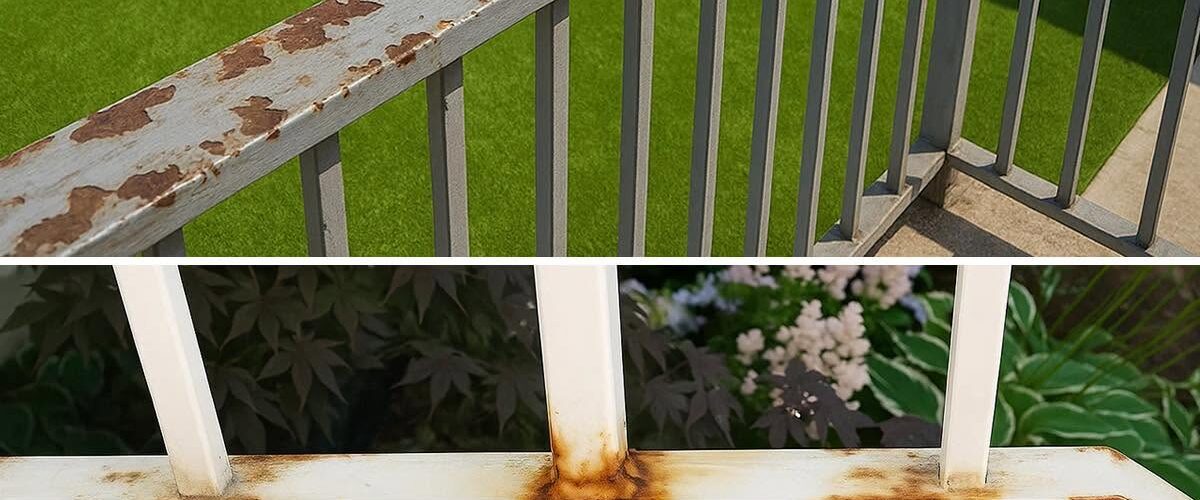
Rain brings with it moisture problems in the home, and is also capable of lifting paint and causing rust stains to appear on metal surfaces, especially those of windows and exterior doors.
Rust is a reaction that occurs when iron in metals comes into contact with oxygen and water, causing surfaces to corrode. In this article we suggest 4 tricks to remove rust from doors and windows.
Rust is not only an aesthetic problem, but it can weaken objects making them less performing. In the case of doors and windows, if not solved in time, the rust problem can negatively affect the operation of objects.
1. Remove rust with aluminum foil
As bizarre as it sounds, this method is one of the most effective against rust.
Cut pieces of aluminum foil and make balls about 3 centimeters in diameter, then soak them in water for 1 minute. Rub the balls on the rusty metal parts and see how they will be as good as new.
2. Remove rust with lemon
The acidity of lemon is perfect for removing rust on metal objects. Pour the lemon juice into a bowl, add half a tablespoon of salt and mix.
Apply to the areas affected by rust and leave on for a couple of hours, then scrub with a toothbrush.
3. Remove rust from metal with Coca Cola
It is not just a refreshing drink: Coca Cola, as well as other similar drinks, are among the best allies to eliminate rust from metal.
Pour the drink over the rust-affected areas and leave it on for a couple of minutes, then rub with a thin sandpaper to remove the rust.
4. Remove rust from metal with baking soda
Pour 4 tablespoons of baking soda into a clean container and add 100 ml of water. Apply the solution to the rusty surfaces and leave it on for 5 minutes.
Finally, use a toothbrush to scrub and remove the rust and then wipe it with a clean cloth.
Now that you know how to remove rust from doors and windows, apply the methods outlined above right away to make them look like new again.
Share article
Important: This website does not give medical advice, nor does it suggest the use of techniques as a form of treatment for physical problems, for which medical advice is required. If you decide to apply the information contained in this site, you do not assume responsibility for it. The intention of the site is to be illustrative, not exhortative or didactic.