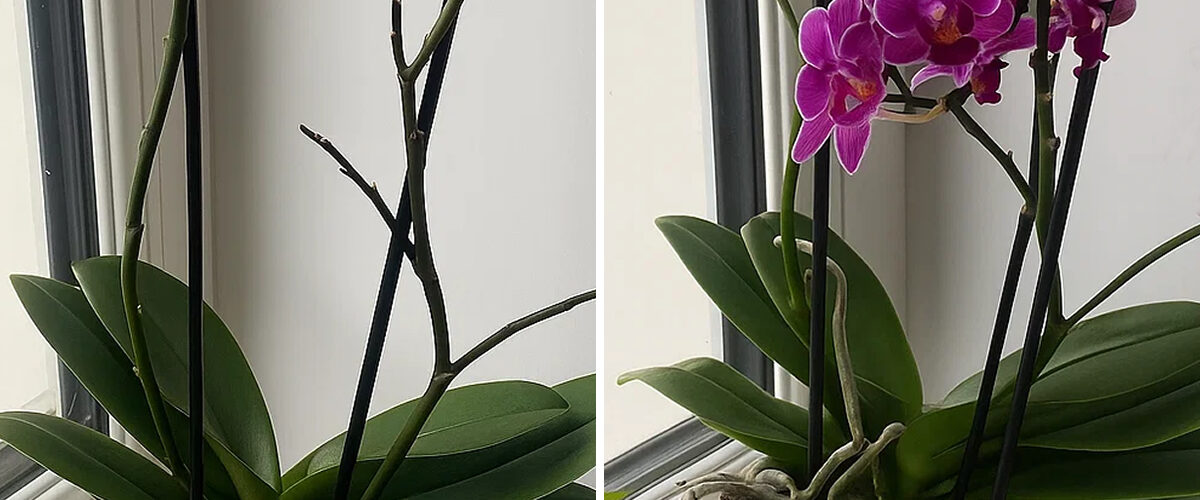
If you also like orchids, you will surely have bought one, or received it as a gift, and helplessly witnessed the loss of its wonderful flowers. Orchids are as beautiful as they are difficult to care for, but how do florists always have orchids in bloom?
In reality, there is no specific trick, or a magic formula, but a set of cares and tricks that are essential to have a healthy plant and, consequently, full of flowers.
As a general premise, we must take into account that, in general, orchids do not accept direct exposure to sunlight. They do not look good outdoors either, especially in places subject to a temperature that can fall below 15°C and rise above 30°C, and in environments that are too dry.
It is also important to know that orchids bloom in spring, after the winter rest period. If during the winter we have an orchid without flowers, we have to wait. If we buy a flowering plant during the winter, it is sure that it comes from a greenhouse with artificial conditions and that it will therefore suffer the home environment.
In any case, if we have an orchid without flowers and we want it to bloom, we must follow the precautions we suggest below.
1. Find a brightly lit spot
Most orchids love lighted corners, but without direct sun. The more ambient light, the higher the chances of them blooming during the next active period. The ideal place is near a window.
2. Maintain proper substrate moisture
Orchids are generally marketed with a pine bark substrate, as their roots need very good drainage and a minimal chance of waterlogging. They are tropical forest plants, parasitic, which grow on trees and live on environmental humidity. They need a lot of moisture but not a wet substrate.
During the winter they should be watered little, but if the weather is dry and if we have the heating on, it should be done more frequently (never more than once a week).
Look at the container against the light, if the moisture of the substrate is still visible, it should not be watered. If, on the contrary, it is dry, we will put water, always distilled.
In very dry places, it is advisable to put a humidifier, or spray water on the leaves of the orchid every day. It is also good to avoid placing the plant in places that are too humid, such as busy bathrooms.
3. Fertilize frequently
The flowering of the orchid requires a specific fertilizer for this type of pante, which we can find in specialized stores. Without fertilizer, flowering is unlikely. It is usually marketed in the form of a liquid, to be added to the watering water.
The orchids that come from the greenhouses are already abundantly fertilized, but after a few months we must be the ones to start taking care of them using a fertilizer as well.
4. Ensure proper temperature contrast
To bloom, orchids need a great temperature contrast in the weeks leading up to the arrival of spring. Usually this contrast is about 10°C between the minimum night and the maximum daytime, always respecting the limits of 15°C and 30°C.
To get the correct temperature, you can also move the plant from a warmer place to a cooler one over a 24-hour period.
Share article
Important: This website does not give medical advice, nor does it suggest the use of techniques as a form of treatment for physical problems, for which medical advice is required. If you decide to apply the information contained in this site, you do not assume responsibility for it. The intention of the site is to be illustrative, not exhortative or didactic.