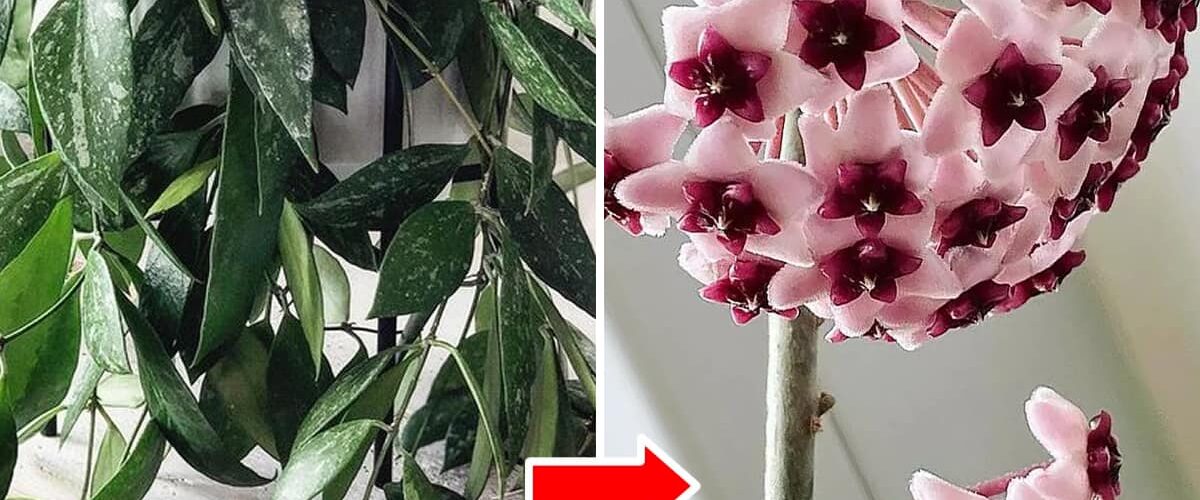
The wax flower (Hoya carnosa) is a wonderful climbing plant whose leaves, thick and waxy and fleshy in appearance, help it retain water. It is a type of plant very close to succulents, which grows up to one meter in height and is native to China and Japan.
Many people feel attracted to this plant because of its leaves, which vary from one species to another. In some cases, it is difficult to distinguish these plants from each other, unless they are flowering.
As indoor plants they are easy to maintain, last a long time and bloom consistently year after year. Below we list the essential care of the wax flower.
Wax flower care
Light
Most plants belonging to this family do not tolerate direct and intense light and their leaves suffer from direct exposure to the sun.
It is a plant that grows in woods, among trees and shrubs, and therefore used to receiving little intense and indirect light. This condition must be replicated at home.
Many botanical gardens and hoya growers grow this plant under a shade cloth that blocks 50-80% of direct sunlight.
Potting soil and watering
The wax flower does not need much space, being an epiphytic plant (i.e. a vegetable that lives on another plant, without feeding at the expense of it). It is not usually necessary to transplant a hoya.
However, it is advisable to change the soil every 2 to 3 years. Use clay pots, which are more porous and therefore more easily remove excess water from the potting soil.
This is especially important since the wax flower does not like stagnant water. It needs regular watering, but you need to let the soil dry out well to prevent the plant from rotting.
Humidity and temperature
The wax flower does not tolerate cold temperatures, below 10°C: for this reason you have to be careful during the winter.
As far as humidity is concerned, this plant is used to living in contexts with high humidity, typical of subtropical and tropical areas. Despite this, it adapts well to drier contexts.
Main Wax Flower Problems and Solutions
Below we list the most common wax flower problems:
- If the leaves of the wax flower are burning or turning red, it could be a sign of excess light. Move the plant away from the sun’s rays.
- If the leaves are rotting, it is possible that they are not getting enough water, or that the roots are dying. Check the roots, and also check for any mealybugs.
- If the leaves begin to look flaccid, the roots may have died due to too much or too little water.
- If the wax flower doesn’t bloom, it probably doesn’t get the right amount of light. However, some leaves may need some type of “stress” to stimulate flowering (i.e. cold or dry periods).
- If the shoots fall off before flowering, perhaps the plant’s potting soil has been too dry or too wet for a long period of time.
If the wax flower has been dry for too long, try not to overload it with water when watering it. Add water little by little to ensure that the soil can moisten well.
Share article
Important: This website does not give medical advice, nor does it suggest the use of techniques as a form of treatment for physical problems, for which medical advice is required. If you decide to apply the information contained in this site, you do not assume responsibility for it. The intention of the site is to be illustrative, not exhortative or didactic.