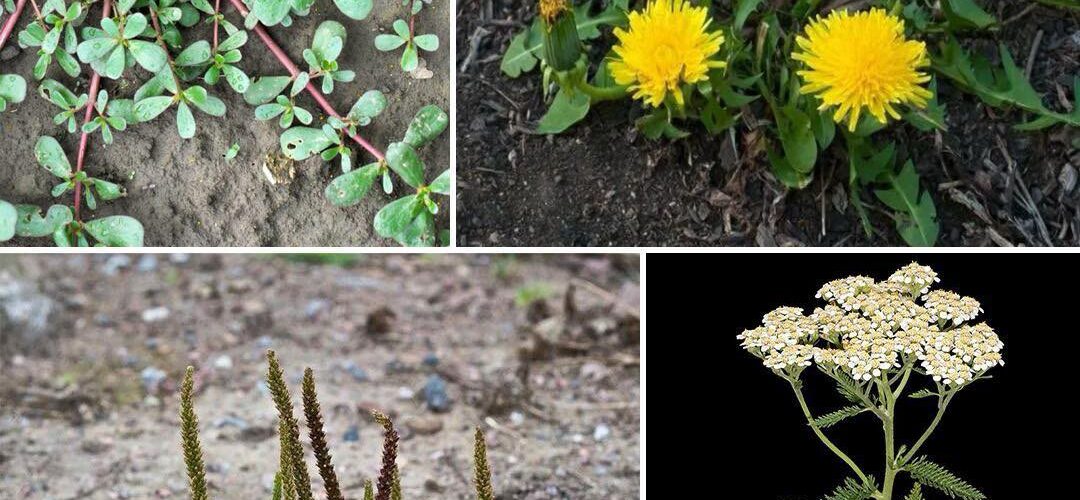

What if the plants you reject as weeds in your garden are actually nature’s hidden treasures? Many of these “annoying” plants are packed with health benefits and can be used in many ways. Below, we’ll show you four plants — dandelion, fat purslane, large plantain, and yarrow — that you’ve probably seen growing everywhere and explore their incredible potential.
Dandelion (Taraxacum officinale)
It is often considered an annoying lawn usurper, even though dandelion is full of nutrients and medicinal properties.
Benefits:
- Rich in vitamins: High content of vitamins A, C, K and several B vitamins.
- Liver detoxification: It helps the liver health by stimulating the production of bile.
- Digestive aid: It acts as a natural diuretic, aiding digestion.
- Skin health: Its anti-inflammatory effect can help with skin problems such as acne or eczema.
- Blood sugar control: It can help maintain blood sugar balance.
- Bone health: It contains calcium and vitamin K, which are essential for strong bones.
Uses:
- Tea: Dry the leaves and roots and then brew them for cleansing tea.
- Salads: Young dandelion leaves are excellent in salads, full of nutrients.
- External use: Crush the leaves into a paste and apply to minor skin irritations.
Purslane (Portulaca oleracea)
This simple plant, which can be found in pavement cracks and gardens, is a real nutrient bomb.
Benefits:
- Omega-3 fatty acids: It contains more omega-3s than most leafy greens, which is good for the heart.
- Rich in antioxidants: It contains vitamin E, beta-carotene and glutathione.
- Anti-inflammatory: It helps to reduce inflammatory processes in the body.
- Moisturizing effect: Due to its high water content, it is excellent for summer dishes.
- Weight loss supporter: It is low in calories and rich in fiber, so it helps digestion and a feeling of fullness.
- Heart health: It contains magnesium and potassium, which support the cardiovascular system.
- Wound healing: It contains compounds that promote faster healing of wounds.
Uses:
- Bluntly: Washed thoroughly, it is excellent in sandwiches or salads, it has a crispy and slightly sour taste.
- In the form of juice: Blended with other greens, it can be used to make a refreshing drink.
- Toasted: It can be lightly fried with garlic and olive oil as a garnish.
Plantain (Plantago major)
This often overlooked plant is extremely versatile and can provide a solution to many health problems.
Benefits:
- Wound healing: It helps treat wounds, burns and insect bites.
- Respiratory Health: It relieves cough and helps to dissolve mucus.
- Digestive aid: Reduces the symptoms of diarrhea and constipation.
- Antibacterial effect: When applied externally, it helps fight infections.
- Detoxification: It stimulates the elimination of toxins through the urine.
- Joint support: Its anti-inflammatory properties relieve joint pain.
- Immune strengthening: It is rich in vitamins C and A, supporting the immune system.
Uses:
- Fomentation: Fresh leaves can be crushed and placed directly on wounds or stinges.
- Tea: Its dried leaves can be boiled to make a drink with a calming effect.
- Oil extract: Soaked in olive oil, it can be used to make a natural balm.
Yarrow (Achillea millefolium)
Yarrow is a small plant, but it has an extremely powerful effect, from treating wounds to relieving fever.
Benefits:
- Wound care: Due to its astringent effect, it helps to calm bleeding and heal wounds.
- Antipyretic: As a natural diaphoretic, it helps reduce fever.
- Menstrual health: It can help control excessive menstrual bleeding.
- Digestive support: Relieves bloating and cramps.
- Stress reduction: It has a mild calming effect, helps to relax the nerves.
- Antimicrobial effect: When applied externally, it helps fight infections.
- Circulation support: It improves blood circulation and heart health.
- Colds and flu: It relieves the symptoms of colds, such as nasal congestion.
Uses:
- Tea: Dried flowers and leaves can be boiled to make a digestive or antipyretic drink.
- Fomentation: A cloth soaked in yarrow tea can be used to treat wounds or bruises.
- Tincture: The tincture made from the plant can be used to relieve cold symptoms or menstrual complaints.
These “weeds” are much more than just plants – they are true allies for health and well-being. If we recognize their value and incorporate them into our everyday lives, we can discover a treasure trove among the gifts of nature. The next time you see these plants, you might think twice before pulling them out!