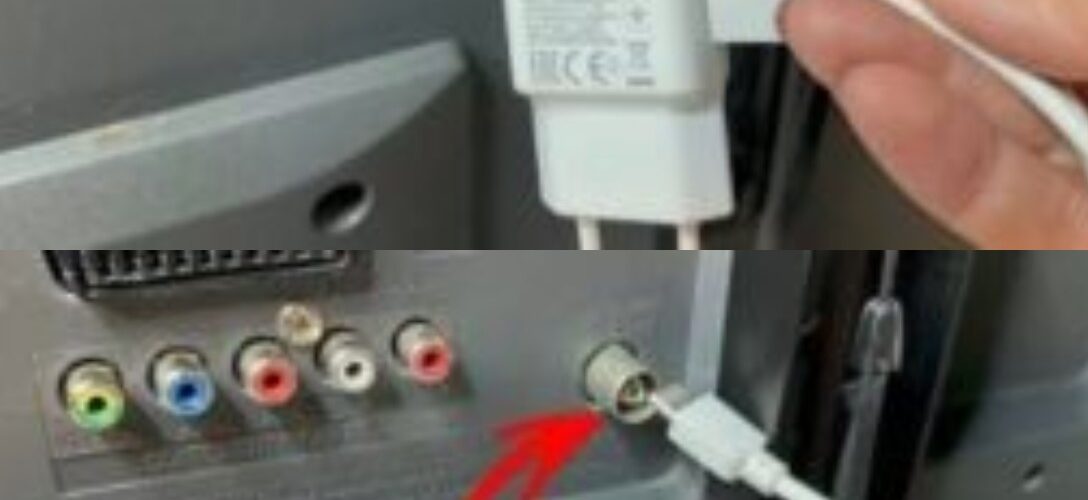
In this article, you’ll learn how to reuse an old USB charger into an efficient antenna that can pick up TV channels without subscriptions. This simple DIY project can be done with easy-to-find materials and delivers amazing results.
In addition to being an economical solution, it allows experimentation with basic concepts of electronics, encouraging practical learning and creativity. Digital television continues to be a free and reliable source of entertainment and information.
With this home antenna, you can receive local signals without depending on paid services, ideal for those looking to reduce expenses or for emergency situations where access to traditional television is limited.
Below is the video that shows the step by step, from the iPandaside DIY channel:
Materials Needed
An old micro USB cable
Coaxial cable (such as those used for cable television)
Red and blue electrical tape
Scissors or pliers
Steps to follow
Prepare the USB cable:
Cut off the micro USB end.
Strip the wire to expose the inner strands.
Keep only the red and black conductors. Cut out the others.
Peel about 5 cm from the red and black wires.
Prepare the coaxial cable:
Peel about 10 cm from the outer covering.
Untangles and joins the copper mesh (opleti) into a single bundle.
Cut the aluminum foil (screen).
Peel 5-6 cm from the center conductor.
Cable connection:
Attach the center conductor of the coax to the red USB cable.
Secure with red electrical tape (represents the positive).
Attach the copper mesh to the black USB cable.
Secure with blue electrical tape (represents the negative).
Final assembly:
Make sure connections are well insulated.
Connect the makeshift antenna to the adapter or receiver you use to watch TV.
Insert the adapter into your TV and check the channel reception.
Additional tips:
Avoid the use of broken or badly worn wires to ensure good conductivity.
Make sure the splices are firmly secured and insulated to avoid interference.
If your TV is near a window, you may be able to get a better signal by pointing the antenna outward.
This type of home antenna may not be as effective in areas with low coverage, but it can be great in urban areas.
If you want a more durable antenna, consider protecting the connections with shrink tubing.
Be sure to try different orientations and locations to find the best reception.
Do not connect this type of antenna to power sources; Its use is only to capture television signals.
This project is a practical, economical and ecological way to take advantage of old materials to improve the television experience. With a few steps and accessible materials, it is possible to build an antenna that picks up many channels without having to pay for subscriptions.