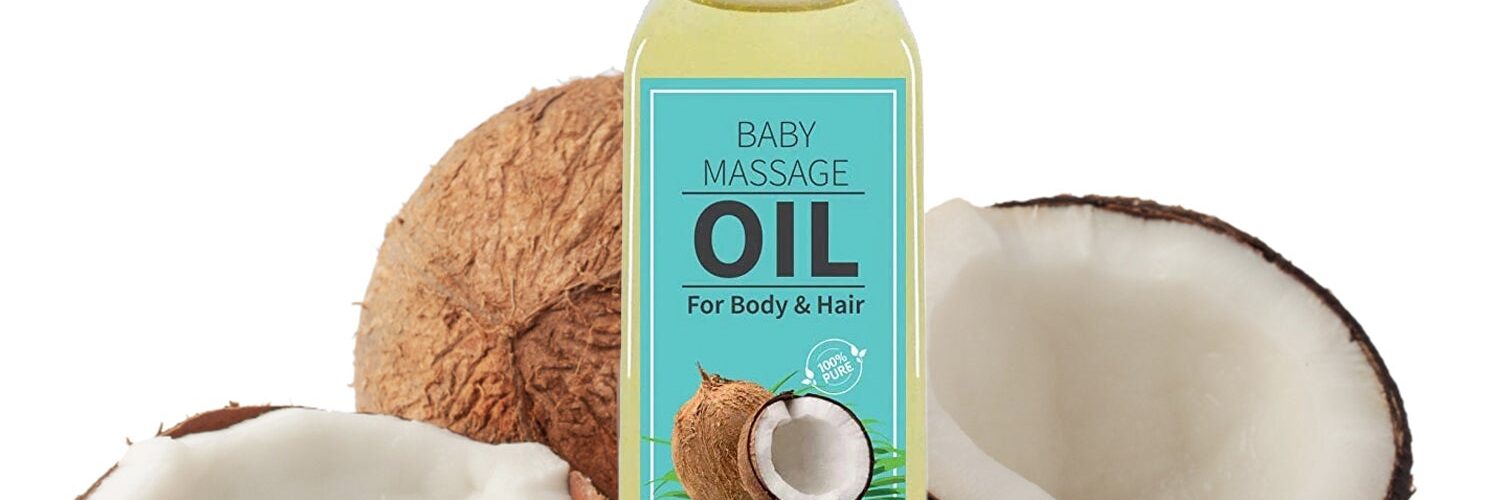
Coconut oil is one of the most nourishing oils you can apply to your baby’s skin. The molecular structure of coconut oil is rapidly absorbed into the cell structure of connective tissues. This means that it can restore damaged skin and has lasting effects, unlike most creams and lotions designed to “treat” external problems .
We can use coconut oil to calm the baby and help him sleep, help get rid of the baby’s diaper, get rid of pimples, treat eczema in children, soothe insect bites, get rid of head lice, relieve teething pain.
1.Coconut oil for baby massage:
A good massage of the baby’s body using coconut oil soothes the baby’s crying, helps to relax, and most importantly, helps them sleep. Using coconut oil for massage is a good option, as it has antibacterial properties and is easily absorbed into the skin . Be sure to use good quality coconut oil.
How to use: You can mix equal amounts of virgin coconut oil with olive oil and massage your baby’s body with it. Or add a few drops of lavender oil to coconut oil and massage your baby’s body with this mixture to calm him down and help him sleep.
- Coconut oil helps to get rid of diaper rash:
Most babies suffer from diaper rash due to urine absorption and diaper quality. The moisturizing and antifungal properties of coconut oil help prevent the occurrence and spread of diaper rash that acts as a barrier between dirty diapers and infected skin.
How to use: Apply a layer of oil to the diaper area of your baby every time you change it. Gently massage the coconut oil into the groin and into the folds of the skin.
- Coconut oil helps to treat acne:
Acne is a condition in which a baby’s skin appears as small pimples especially on the face . Acne in an infant is common among babies up to one month of birth, but it is normal for him to get rid of this disease on his own. Despite this, we still tend to look for effective natural ways on how to remove it quickly, and fortunately, coconut oil is a great home remedy in treating this condition, it provides antiseptic properties for your child and it also contains a high amount of vitamin E for healthy skin growth and repair skin damage, and it also contains lauric acid is an antimicrobial saturated fat that can get rid of acne in children.
How to use:
1: Prepare coconut oil You need a small amount of oil to cover the affected areas of your baby.
2: Clean the affected area with mild soap and leave it to dry. It is important that you clean your child’s affected skin properly before applying the oil and make sure the skin is dry because applying oil to clean skin will make the condition worse. The dirt will be trapped with oil and create more infection on your baby’s skin.
3 : Use any ointment or medicine prescribed by the doctor, if the doctor gives you medicine for acne, apply it according to the instructions. If there is none, proceed to the next step.
4: Apply a thin layer of coconut oil to the affected area.
5: Leave it on your baby’s skin for 20-25 minutes .
6: Get rid of excess oil with a warm towel, you can use this recipe twice a day to get the best results.
- Coconut oil helps to treat eczema:
Eczema is a condition that causes dry skin, so there may also be itching. This is very common in children because their skin is very sensitive and can dry out quickly. The disorder often goes away on its own as the child grows, however it can be uncomfortable and can lead to injury if your child scratches dry areas. Using coconut oil, which is an excellent moisturizing agent, can give your baby some relief.
How to use: Massage the baby’s skin with coconut oil before bath time and once at bedtime to provide enough moisture and hydration to the skin. By using coconut oil regularly, your baby’s eczema will gradually decrease.
Coconut oil for children
- Coconut oil helps to soothe insect bites:
Children have sensitive skin, so the areas bitten by insects can turn red and cause swelling. Plus, they can turn into an infection. Coconut oil has anti-inflammatory and antibacterial properties, therefore, if you use it to treat insect bites for your child, it will reduce the risk of infection and will help reduce swelling as well.
How to use : Put some coconut oil between the palms of your hands, then rub it between your hands to warm it. Next, apply it to your baby’s skin where an insect bite is visible. Leave iton until baby’s next bathing time. You will soon notice an improvement in swelling and redness.
- Coconut oil helps to get rid of head lice:
Sometimes, if someone in your house is infected with lice, it is likely that your child will also be mistakenly infected. While it is possible to get lice out with a louse comb, this method will scratch and injure your baby’s scalp. If your child has lice, it can lead to a lot of discomfort and itching. There is also a chance that lice will interfere in the child’s ears and eyes if the infection is large. Fortunately, the antifungal and antibacterial properties of coconut oil will help control the spread of lice and prevent new infestation.
How to use: Wash your baby’s hair with apple cider vinegar. Let it stay in the hair to dry naturally, and when the vinegar becomes dry in the baby’s hair, add coconut oil to the baby’s hair and make sure all the hair is covered. Then let the coconut oil stay in the hair for as long as possible.
- Coconut oil helps relieve teething pain:
The stage a baby goes through during teething can be full of pain that can irritate the baby and can interrupt a regular feeding routine. Coconut oil has natural anti-inflammatory properties that help soothe inflammation that arises as part of teething.
How to use: Take some coconut oil on your fingers and apply it to the baby’s gums. Be sure to use pure coconut oil without any kind of chemical additive applying coconut oil will make sure the baby gets some natural relief from the pain. Since it has antibacterial properties, using coconut oil for your baby will also ensure that the child is not at risk of infection.