THE STRONGEST BULGARIAN HERB CURES 100 DISEASES – SUMAC
WHAT IS THE USE OF THE ANCIENT SUMAC – TETRA (Cotinus coggygria)?
Sumac is a beautiful plant with hairs, which is very beneficial for human health.
The trunks of the bush are highly branched, with a gray-brown crown, and young shoots are green or reddish. The leaves of the bush are ovoid in shape.
The tips of the leaves are dark green, and below they are gray-green. In autumn, sumac turns yellow, then acquires a red color, and finally turns crimson.
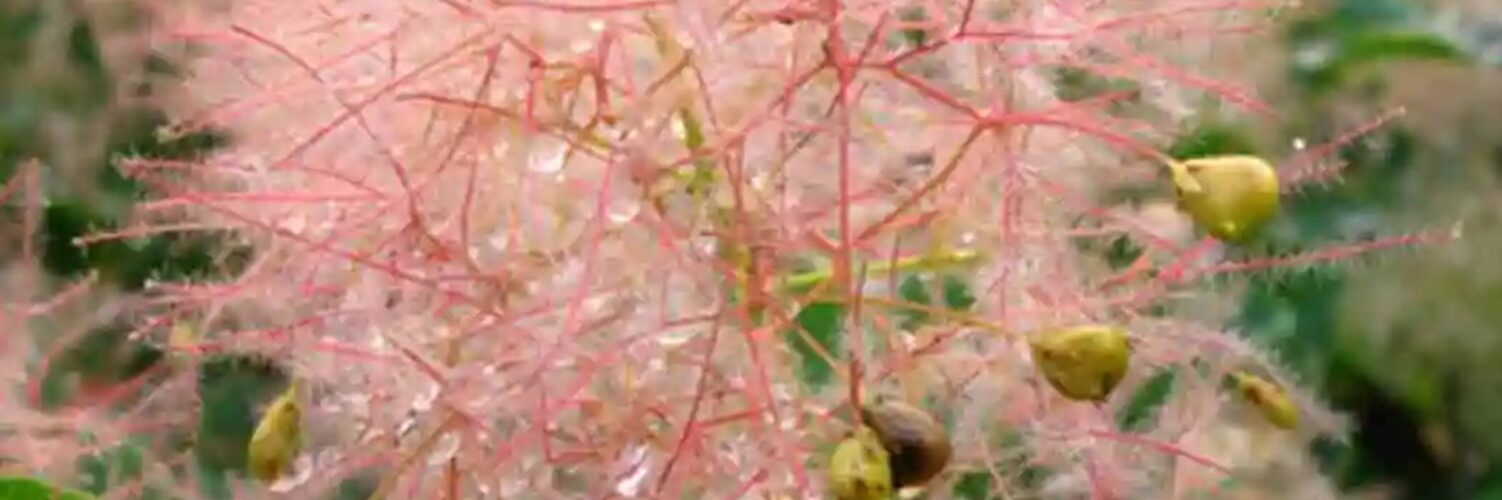
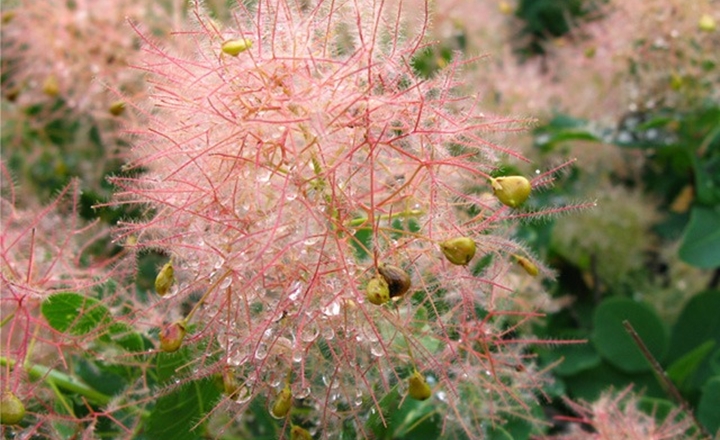
The flowers of sumac are small, clustered in an inflorescence like panicles. The inflorescences become fluffy, there are hairs on them that reach up to 30 cm. length.
Each bush can have hairs of different colors. Sumac has different colors that are formed separately – the male flowers are in one inflorescence, and the female flowers are in another.
The sumac bush has small drupe fruits that contain dried softness. The fruit is green in color and in the process of ripening acquires a red color.
This shrub blooms from May to July, and the berries ripen in late summer-early autumn.
Sumac is long-lived, grows and bears fruit for up to 100 years. It grows on rocky slopes, loves sunny and heated places that are protected from strong winds.
COLLECTION AND STORAGE OF SUMAC
Sumac is harvested before flowering and dried
The medicinal raw material of the sumac plant is its leaves, they are harvested during the peak of flowering and before the fruits are formed. In this case, the leaves are collected whole, without tearing and injuring. The twigs of the leaves are cut off.
Sumac leaves are dried in a natural way – in sunny, windless weather under a canopy or in a room with good ventilation. If dried in an electric dryer, the temperature should be no more than 50 degrees.
The finished raw material is put in paper bags, stored for no more than 2 years in dry and dark rooms. With greater humidity, the leaves lose their healing properties.
A popular type of sumac is yang lady – a shrub 2-4 meters tall, resistant to cold, lives up to 40-60 years. The leaves of this sumac are green-yellow, and in autumn they turn red or yellow.
Young lady begins to bloom in June, during the fruiting period, the stems elongate, become covered with red hairs. This type of sumac loves light, is not picky about the soil, but does not like excessive moisture.
USEFUL PROPERTIES OF SUMAC
The leaves of the bush contain tannin, for which the bush is used as an astringent, anti-inflammatory agent. Sumac has a choleretic, antiseptic effect. In addition, it contains tannins, flavonoids.
The leaves also contain essential oils (linseed, lanolol, myrcene, tertinol), mericitrile (coloring substance). The plant has blood-stopping, expectorant, wound-healing properties.
The leaves of the sumac bush contain a lot of carotene (32 mg per 100 g), organic acids, tocopherol (5.59 mg per 100 g).
When applied externally, the bioactive substances in the plant cause incomplete clotting of mucous protein (in contact with mucous membranes, with a traumatized surface) – they form a thin film that protects the tissue from external influences. At the same time, pain is also reduced, inflammation is reduced, and blood vessels are constricted.
Sumac is part of some pharmacy remedies that are prescribed for diseases of the bile ducts, astringents that stop hemorrhages, as well as remedies that help with acute, chronic inflammatory processes in the intestinal tract, intestinal hemorrhages.
It is also part of some antiseptics, it can be used to treat small skin injuries.
WHAT IS SUMAC USED FOR?
Sumac treats the following pathological conditions:
Sweating of the feet;
Sumac helps with toothache white discharge, diarrhea, sick bile, angina, hemorrhoidsTissue edema;
Hemorrhoids;
White discharge in women;
Diseases of the genital organs in women of an infectious nature;
Purulent pimples, furunculosis;
Bleeding gums, toothache;
Gingivostomatitis, periodontitis;
Lung diseases;
Diseases of the bile;
Acute respiratory infections;
Intestinal disorders – diarrhea;
Ulcerative processes;
Gastritis;
Poisoning with heavy metals, alkaloids;
Diseases of the gallbladder;
Burns, frostbites, bruises;
Diabetic foot;
Angina.
SUMAC RECIPES
SUMAC DECOCTION FOR EXTERNAL USE
In one liter of hot water put 50 g. sumac, boil over low heat for 10 minutes and after removing the decoction from the heat, let stand for 20 minutes.
Filter and use for compresses and dressings as a wound healer, anti-inflammatory, antiseptic.
SUMAC IN UTERINE FIBROIDS
Sumac can be used to treat uterine fibroids.
A mixture of sumac, lungwort, cuff, thyme, plantain leaves and argymonia; a mixture of St. John’s wort, medicinal marshmallow, ox-tongue, cowslip and common witch hazel, 15 grams each, grind, mix, add 4 tablespoons of the mixture to 1 liter of hot water and leave on low heat for 15 minutes.
Let it cool, strain and drink half a cup three times a day. Use for 2-3 months, then take a break and you can repeat the course again.
HERBAL MIXTURE WITH SUMRADI AGAINST ACUTE BRONCHITIS
Mix 2 tbsp. sumac, mint and lungwort, 1 tbsp. rosemary and iced tea, 3 tbsp. rose petals. Grind the components, mix well and boil 2 tbsp. of the resulting mixture in a liter of water. Let stand for 1 hour, strain and use ½ cup 5-6 times a day.
SUMER LEAF OINTMENT
The fresh leaves are ground, crushed until they become a pulp, mixed in equal parts with lard or butter. It is used for purulent wounds, non-healing wounds.
This ointment is stored in a cool, dark place, but it is desirable to use it fresh.
SUMER BARK TINCTURE FOR FEVER
Sumac bark helps with high fever and fever. 1 teaspoon of ground dry bark is boiled in 500 ml. water. It is left for an hour and used 1/3 cup at a time until the temperature drops and the general condition of the patient normalizes.
SYRUP FOR INFLAMMATORY SEXUAL DISEASES IN WOMEN
You will need sumac leaves, roundleaf yarrow, blackberries, eucalyptus, lemon balm, comfrey; linden blossom, purslane root – 10 g of each.
Grind, you should take one tablespoon of the resulting mixture and boil it in half a liter of water.
Set aside for a few hours, strain and use for internal cleansing for a month.
SMRADLIKA: CONTRAINDICATIONS
Sumac has practically no contraindications if used as prescribed by a doctor and the dosage and correct course of treatment are followed.
Sumac should be taken with caution during pregnancy and breastfeeding. The only contraindications are individual intolerance, hypersensitivity, and severe liver disease.
Sumac enemas should not be given, as it will cause irreparable damage to the intestinal tract, especially if there are wounds in the rectum. If an enema is given with this plant, parietal thrombosis may form.
It is among the most powerful antiseptics in nature, highly recommended for postpartum women.
Sumac is one of the herbs with a strongly pronounced antibacterial effect.
The healing power of this plant has been known for millennia.
Amazed by its effect on animals, our ancestors began to actively use sumac decoction in their daily lives because they believed that it cured 99 diseases and rejuvenated.
It is no coincidence that the herb, which is one of the most powerful antiseptics in nature, is highly recommended for women in labor.
Washing with it helps the birth wound heal faster.
For herpes and canker sores
If you are tormented by unpleasant herpes and even more unpleasant canker sores, a decoction of sumac will save you from them. Gargle with sumac decoction several times a day.
Against fungi and bacteria
Tetra has a strong antifungal effect.
Compresses and herbal baths with this miraculous plant successfully treat fungi of various origins.
You can get rid of unpleasant foot fungus by soaking them in a basin with a lukewarm decoction of sumac.
Thanks to its qualities, it stops the development of fungi and heals their damage.
If you liked the article and useful tips from our online health portal, you can follow us and share them with your friends, as well as your opinion (or experience) in the comments!