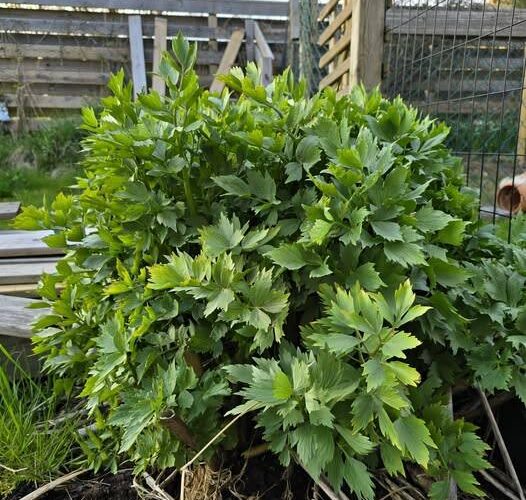
With its hearty and intense aroma, lovage adds spice to soups and sauces. The perennial native herb is easy to grow and versatile and should not be missing in any herb garden.
Profile: Lovage
- Sowing: At the beginning of March or end of September directly into the open ground
- Location: sunny to shady
- Soil: loose, deep & moist
- Water: water in case of drought
- Fertiliser: with plant manure and some compost
Lovage (Levisticum officinale) is a member of the umbelliferous family, which includes many other cultivated plants such as caraway, anise, dill, parsley, fennel and the carrot. Its original origin is believed to be in the Middle East. The plant reached Europe via the Mediterranean region. From the 8th century onwards, the spice and medicinal herb was cultivated in the monastic and cottage gardens of Central Europe.
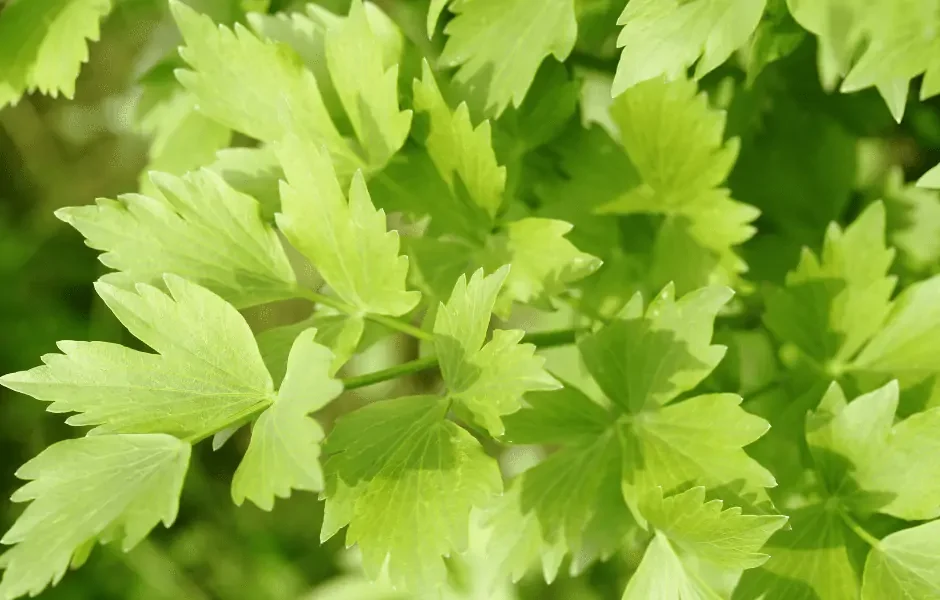
The hardy perennial can reach heights of up to two metres and grows up to one metre wide. On the branched dark green stems sit two to three pinnate leaves. In summer, yellow flower umbels form. After they have faded, the small brown fruits ripen. The entire plant exudes an intense aroma.

Maggi herb or aphrodisiac?
Lovage is better known under the name Maggikraut. Although the spice is not a component of Maggi’s popular liquid seasoning, it tastes and smells very similar.
Long before Julius Maggi invented his soup seasoning, lovage was considered an aphrodisiac because of its name. In the etymological sense, the word lovage has nothing to do with love, but is derived from ligystikon, Dioscorides’ Greek name for the plant.
Location & Soil
Lovage is not a delicate plant that can be placed in a small corner of the bed. The perennial can live up to 15 years and reaches stately proportions after about five years. Make sure that the herb can spread both in width and height.
The soup herb thrives best in a sunny to semi-shady place, but can also cope with a location in the shade. If you have a large balcony or terrace, you can grow lovage in a pot there. Place the plant in a large container with a vent hole in the bottom and make sure that the sun does not burn down on the perennial all day. Regular watering is mandatory for pot culture.
The so-called Maggikraut prefers soils with a high nutrient and lime content and needs sufficient moisture to develop accordingly. A deep subsoil with a high humus content and thus a good water retention capacity is optimal. If your garden soil is rather barren, you should improve it with humus and compost.
Plantation
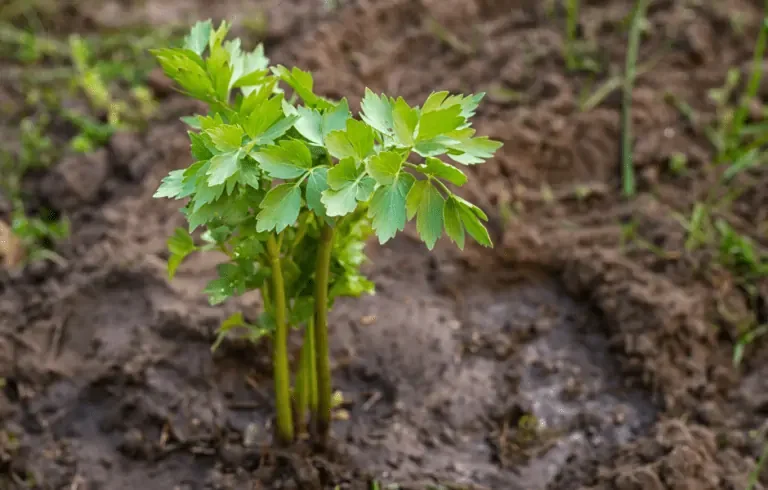
If you bought a lovage in the garden store, you can plant it in the bed from April. Keep at least 70 centimeters away from other plants in all directions.
As a competitive perennial perennial, lovage prefers to grow on its own. Its essential oils can even inhibit the growth of other herbs and vegetables. The only neighbor suitable – with enough distance – is tarragon.
Sowing
Between April and June you can sow lovage directly into the bed. A pre-culture in the house is unusual. Prepare the bed carefully. Remove all weeds and rake the soil nice and finely crumbled. Since the seeds need sunlight to germinate, it is advisable to water the bed beforehand and then press the seeds only lightly. After about three weeks, the first tender green appears.
Care – Watering & Fertilizing
Lovage is considered easy to care for and uncomplicated. Only longer dry periods do not suit the perennial. Therefore, water regularly. If you have prepared plant manure such as comfrey manure or nettle manure, you can add a little of it to the irrigation water.
Give your lovage a scoop of compost every autumn after the plant has moved in. If you divide the perennial every now and then, you don’t need to reseed later.
Lovage in winter
The spicy soup herb survives the cold season without any problems and does not require any winter protection. Don’t be alarmed if the leaves wilt in late summer. It is not a nursing error, but a completely natural process. The above-ground parts of the plant die in autumn. The next spring, fresh shoots will sprout from the rootstock.
Augment
Vegetative propagation
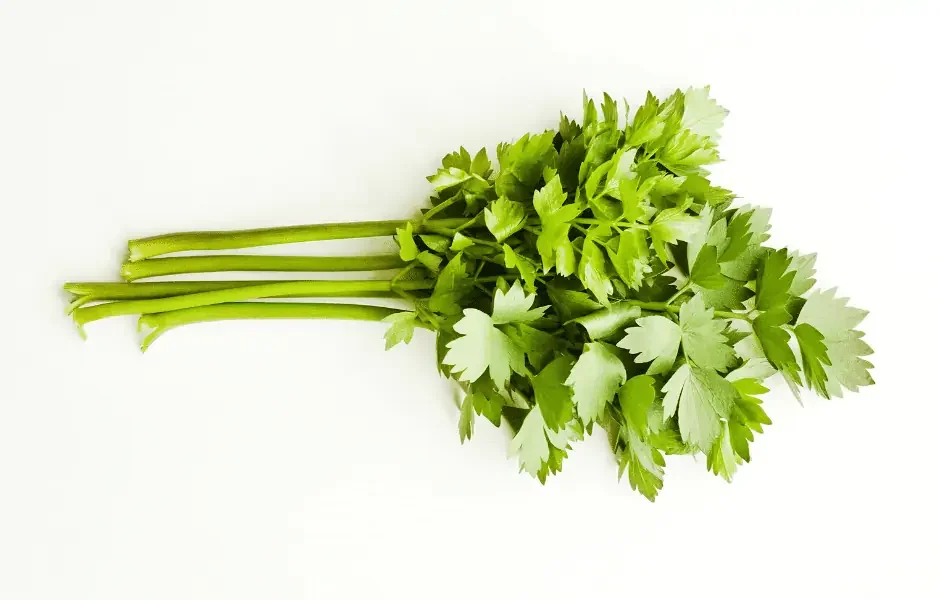
The easiest way to propagate lovage is by dividing. In this way, you can also keep the massive plant in check a little. By dividing the perennial in good time, you can also keep it young. Otherwise, the lovage will slowly die after about 15 years. With younger plants, it is easier to cut off a part with a spade, as they are not yet so deeply rooted.
Propagation via seeds
Propagation via seeds is associated with a little more effort, but in principle not difficult. To get seeds yourself, you have to make sure to leave the buds when harvesting the shoots. Wait until seeds have formed after pollination by insects and give them time to fully mature.
After harvesting, the seeds should dry a bit before storing them in a screw-top jar or paper bag in a dry, dark place until spring. By the way, you can use the majority of the seeds in the kitchen – a few are enough for Aden cultivation. The aromatic seeds are ideal for refining bread or rice.
Harvest
From May to autumn you can harvest lovage continuously. Use the herb fresh in the kitchen and at the same time stock up for the winter. The seeds should remain on the plant until they turn brown. Let them dry a little before storing them in screw-top jars.
If you regularly harvest a lot of lovage and have enough space, you should have at least two perennials. This way you can harvest the plants alternately and then take them a little easier.
Got a taste for it?
You don’t want to miss the spicy Maggi cabbage in the kitchen anymore? If you regularly harvest a lot of lovage and have enough space, you should have at least two perennials. This way you can harvest the plants alternately and then take them a little easier.
Use in the kitchen
The taste of lovage can best be described with the Japanese word umami – the fifth sense of taste in addition to sweet, sour, salty and bitter. In German, this taste perception is called hearty, spicy or spicy. The aroma of the herb is similar to that of celery.
Lovage is often used to flavor soups and stews, but also tastes good with egg dishes, mushroom dishes as well as in spreads and salads. A pesto made from the leaves is a delicious basic seasoning for pasta dishes. Not only is the herb edible, but the dried seeds can also be used in the kitchen. They are suitable as an ingredient for bread and pastries, as a roast spice and for cheese dishes.
Use lovage sparingly
Lovage tastes so intense that you should be rather restrained when seasoning with the cabbage. To soften its penetrance a bit, you can remove the leaves after a short cooking time. When dried, the spice is far less aromatic and can be used more generously.
Ingredients & Healing Effects
Soloton is responsible for the typical aroma of the plant. This component of the essential oil provides the Maggi scent. Another odor and taste component is the phthalides, which are also found in celery.
In terms of vitamin and mineral content, lovage can boast B vitamins, vitamin C and vitamin A, as well as calcium, iron and potassium.
Drunk as a tea, the traditional medicinal herb is said to counteract urinary tract infections and relieve menstrual cramps. The herb is also often used for respiratory diseases. The fruits are used in folk medicine to alleviate digestive problems.
Diseases & Pests
Lovage is basically a very robust plant. Nevertheless, in rare cases, fungal diseases such as leaf spot diseases or rust fungi can occur. Watering with horsetail extract gives you the opportunity to strengthen the perennial preventively. In the case of severe infestation, only vigorous pruning will help.
The young shoots are often attacked by aphids. In this case, it helps to remove the pests manually. If you are disgusted by the lice, you can also hose down the plant with a garden hose. In the course of the year, beneficial insects such as ladybirds, ichneumon wasps and lacewings as well as garden birds take over the control.
Free sowing calendar
Never miss the right moment to sow your favorite vegetables again! Simply register and get started!
Your sowing calendar is on its way…Your sowing calendar is on its way…
Nice that you are here! Just check your e-mail inbox. Your free sowing calendar is already waiting for you. Have fun with it!
I discovered my passion for the plant world as a child during Mendelian crossbreeding experiments. Since then, I have been fascinated by everything that grows and blooms. I love historical roses, experiment with the cultivation of exotic fruits and am interested in wild herb cuisine. With my articles, I would like to make you want to garden and answer your questions about plant care.