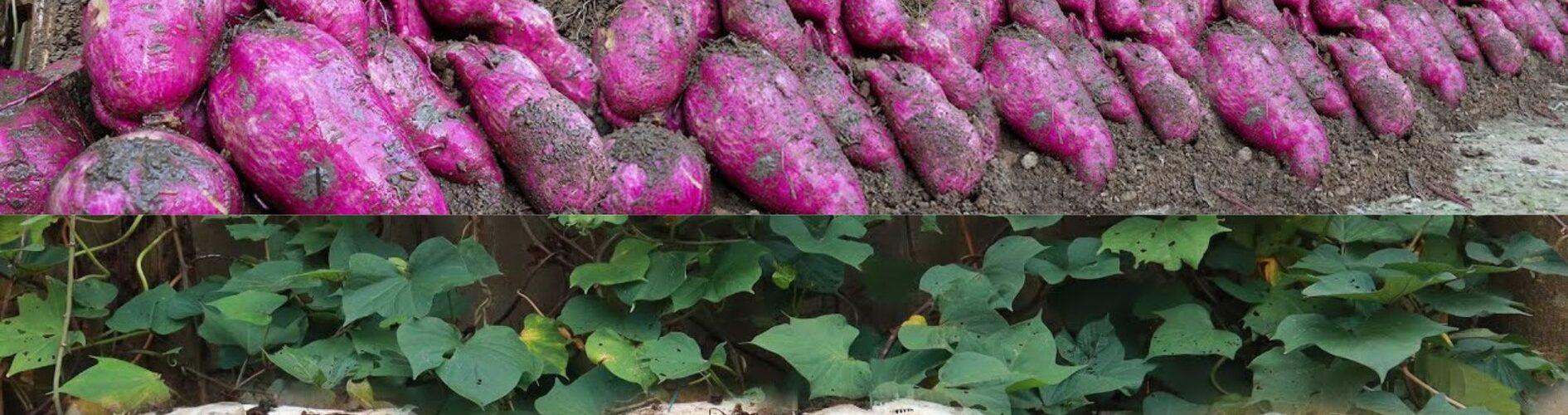
It’s not difficult to grow sweet potatoes and potatoes by following these simple and useful tips.
Growing Sweet Potatoes
Associated with morning glories, the sweet potato is produced by a tropical vine that grows best in regions with long, hot summers and provides nice ground cover during this season. Some of these vines are grown purely for decorative purposes.
Grown from tubers or root sprouts, sweet potatoes thrive best in sandy marl soil and need sunlight and about 120 days of warm temperatures.
- Planting Sweet Potatoes
- Mound the soil to about 30 cm in height and 30 cm in width. Sweet potatoes appreciate good drainage.
- Plant the tubers 10 cm deep, leaving 40 cm of space between each, and keep them moist for several days.
- Sweet potato tubers are usually planted in warm weather, so it’s best to cover them with a planter or flower pot to protect them from the strong sun for a few days after planting.
- Increasing the Harvest
- With edible or ornamental sweet potatoes, you can increase your harvest by cutting 15 cm pieces of stem and planting them in moist potting soil.
- Curing
- After digging up the sweet potatoes, cure them in a warm place (29°C) for 7 to 10 days. This curing period helps toughen the skin while making the tubers sweeter.
- Once cured, store the tubers in a cooler place where the temperature is between 13 and 18°C. They will keep for four to five months.
Growing Potatoes
Grow what you can’t buy, like butter-yellow flesh potatoes or the oblong “Roussette” variety. Blue-flesh potatoes are fun to grow, as is the “Totally Blue” variety. You can also try the “Caribe” potato, which has snow-white flesh under purple skin.
- Help Potatoes Stay Cool
- Plant early, two to three weeks before the last expected frost, when the soil is still cold.
- When leaves and stems appear, start mulching to keep the soil cool and moist.
- Potatoes stop producing new tubers when the soil warms up, so it’s best to help them get off to a quick start in the spring.
- Store Potatoes in Darkness
- Light exposure turns potatoes green and causes solanine, a mildly toxic substance with a bitter taste.
- As the plants grow, keep as much soil or mulch around them as possible to prevent the sun from reaching the tubers, which are sometimes just below the soil surface.
- Wait for a cloudy day to harvest the potatoes so you don’t expose them to bright sunlight.
- New Potatoes
- True new potatoes are small potatoes harvested while the plants are still green.
- Gently remove the mulch, feel around to gather the potatoes, and then replace the mulch once you’ve collected enough for your dinner. The plants won’t even notice they’re gone.
- Harvest the rest when the plants begin to naturally wither.
- Watch for Potato Beetle Larvae
- Potato beetles are large red larvae that munch on potato leaves and flowers.
- Remove them manually, spray with a neem-based insecticide, or, better yet, prevent them from hatching in the first place.
- Check the undersides of leaves for yellow egg clusters and pinch off any leaves that contain them.
In summary, growing sweet potatoes or potatoes is not as complicated as it seems.