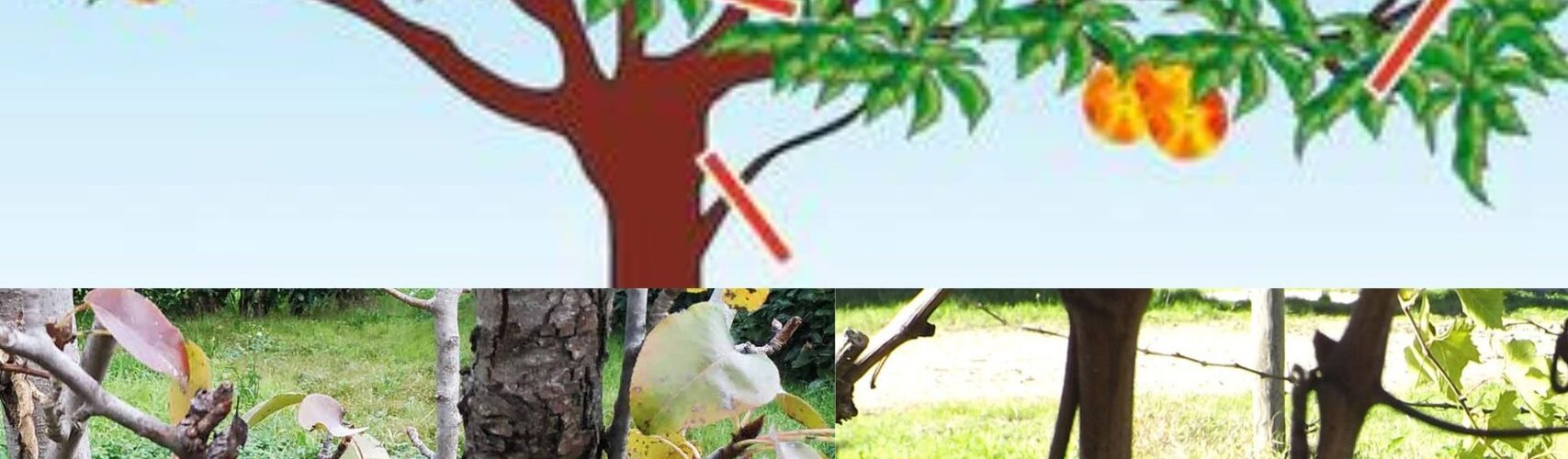
Assessing Tree Health
Before pruning, assess the overall health and structure of the tree. Determine whether the tree is worth saving, considering factors such as the uniqueness and quality of its fruit, structural integrity, and location. Examine the trunk and major branches for signs of decay or damage. If the tree is structurally unstable, severely diseased, or in a disadvantageous location, it may be more practical to plant a new tree or propagate the old tree vegetatively.
Pruning Steps
- Remove Dead and Diseased Branches: Remove all dead, diseased, and broken branches. This step is essential to the health of the tree and prepares the ground for further pruning.
- Gradual Tree Height Reduction: If the tree is too tall, reduce its height gradually over the course of 2-3 years, removing no more than one-third of the tree’s total height in a single year to avoid shock. This helps manage the tree’s size and encourages new growth of branches lower down.
- Branch Thinning: Remove unwanted branches within the canopy, especially those that cross or grow too close together. This improves light penetration and air circulation, which are critical for fruit quality and disease management.
- Lengthening and Thinning Pruning: Use lengthening pruning to shorten and stiffen branches, encouraging branching lower down. Thinning pruning removes entire shoots back to their point of origin, opening up the canopy without encouraging excessive regrowth.
Annual Progression
In subsequent years, continue to shape and reduce the tree’s height as needed, always aiming to improve light and air penetration to all branches. This gradual process allows the tree to adapt without over-stressing it.
Additional Considerations
- Pruning Timing: Perform major pruning in late winter or early spring, during dormancy, to encourage healthy spring growth.
- Pruning Systems: The pruning system depends on the type of fruit tree. For example, semi-dwarf apple and pear trees often use a center-trunk system, while peach and nectarine trees typically use an open-center system.
- Hygiene and Tools: Make sure your pruning tools are sharp and sterilized to prevent the spread of disease. After pruning, clean and dispose of the pruned wood properly, especially if it is diseased.
Aftercare and Maintenance
Aid the tree’s recovery by removing tall grass or brush around the trunk and checking the soil pH. Mulch under the tree with compost or well-rotted manure to improve soil health and the tree’s vigor. Begin a regular program of treatments with dormant oils and fungicides each dormant season to keep the tree healthy.
Restoring a neglected fruit tree is a multi-year process that requires patience, careful consideration, and a thoughtful approach to pruning and aftercare. By following these steps and maintaining regular care, you can regenerate older fruit trees, improving their health and fruit production. Remember, the goal is to create a tree with a balanced structure, an open canopy, and good fruiting ability.