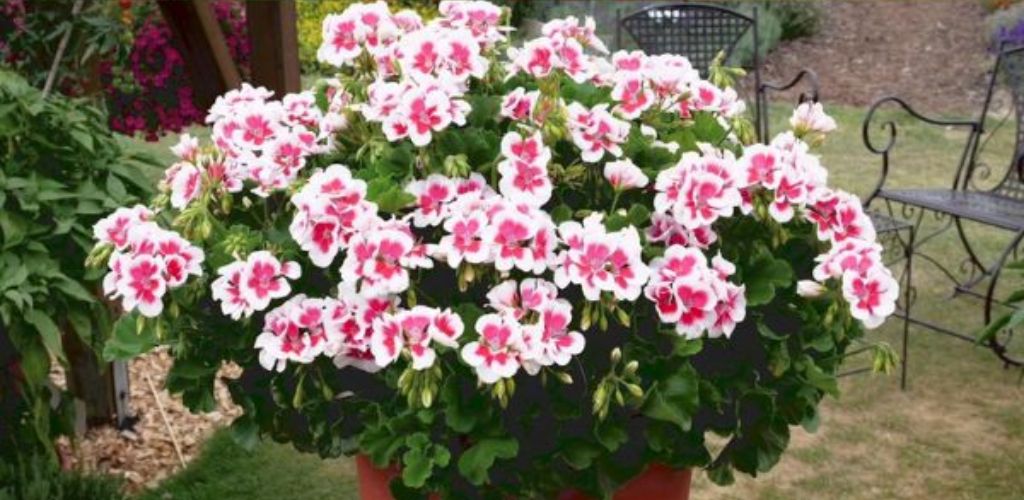
Geraniums are one of the most popular plants to decorate a garden or balcony. They bloom for a long time, resist time and require little care. Geraniums are also natural mosquito repellents. But it happens that geraniums do not bloom or their leaves turn yellow.
Here are the secrets of a healthy plant and perfect flowering!
The light
Geraniums need lots of light, especially if you want them to bloom! Expose them to light, if possible towards the south or southeast.
The optimal temperature for the plant is between 15 and 25 degrees. Geraniums hate cold and wind, so it is important to keep them protected in winter by placing them in a bright but not very windy place in your garden or balcony.
If temperatures are very cold, you can cover the geraniums with a nylon tarp.
Water
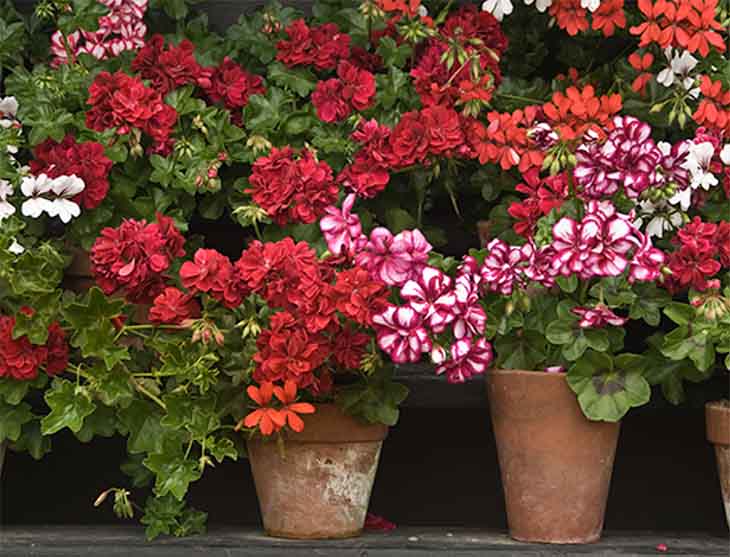
Water often, especially in summer!
Geraniums need a lot of water: the soil must always be moist. Therefore, in case of high temperatures, water once or several times a day.
In cold weather, however, water only occasionally, taking care that the soil does not dry out.
Sometimes the water you normally use may not be suitable for geraniums due to too high a calcium content.
You can solve this problem by leaving the water in the watering can overnight, with a little peat at the bottom, which will give the water an optimal pH for your plant.
Attention :
When watering, do not create water stagnation, at the risk of root rot. Also avoid watering the leaves, which can develop fungus or mold.
the pots
One of the secrets of a healthy plant is the pot in which you plant it.
Geraniums can be planted in pots of any shape, but size is what matters.
The ideal pot size is at least 20 cm in diameter and at least 15 to 20 cm deep: these are the optimal dimensions to allow the plant’s roots to develop freely.
If, on the other hand, the geranium is very large, it is advisable to opt for larger pots, up to 40 cm in diameter.
At the bottom of the pot, you can place gravel, which will give it weight and prevent the wind from knocking the plant over.
Soil
Geraniums need slightly acidic soil.
Although it has strong roots, which adapt to all types of soil, the plant grows best in light, porous soils rich in clay: you will find suitable soils for your geraniums in nurseries.
The plant should normally be transplanted with fresh soil in late winter or early spring.
Before replanting, clean the roots of old soil.
Pay
Don’t forget to fertilize your plant!
The best time to fertilize is the flowering period, that is, from spring to late autumn, and the most suitable fertilizers are those that contain nitrogen, phosphorus and potassium.
The essential natural fertilizer is coffee grounds: two tablespoons of sun-dried coffee grounds are enough to provide your plant with an important dose of nutrients!
During the hottest months, you can also fertilize the plant every 15 days if you want it to bloom abundantly.
Cleaning
Cleaning geraniums requires a little more care, including removing dried flowers and leaves.
For new flowers and leaves to appear, the old ones must be removed with scissors: before using them, however, remember to disinfect them with alcohol to prevent the plant from becoming infected.
diseases and parasites
Like many plants, geraniums attract pests that can damage them and cause their death.
If the leaves turn yellow and the surface of the plant feels sticky, aphids or mites may be the cause.
In this case, you can combat them with a natural remedy based on Marseille soap or by putting a few drops of cinnamon essential oil in the irrigation water.
However, one of the biggest dangers for geraniums is the lycene geranium: this is a parasite that can infect the plant and cause its death in a short time.
Natural remedies consist of cleaning the leaves and branches of geraniums with cotton soaked in water and garlic to eliminate possible larvae.
There are several natural remedies for cochineal, including linseed oil diluted in water, alcohol or Marseille soap.