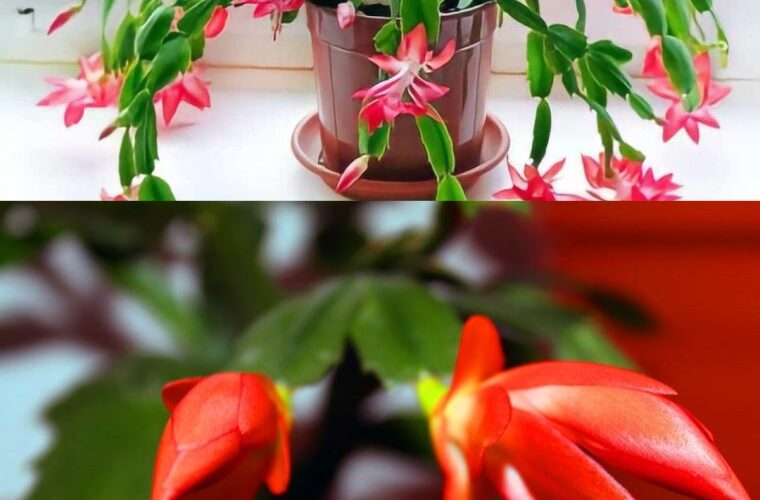

Delight in the beauty of the Christmas cactus, one of the most beloved winter plants, by growing it and caring for it to ensure you have a prosperous life beyond the festive season. If you are given this exquisite plant during the upcoming holiday, with the proper attention, you will be able to enjoy its shining and colorful flowers that easily illuminate any room.
Let’s delve into the secrets of growing the Christmas cactus, scientifically known as Schlumbergera and native to Brazil. This tropical forest dweller thrives in shade and humidity, making indoor winter environments, with the gentle heat of heating systems, the perfect climate for its lush growth.
The Flowering Period of the Christmas
Cactus Unlike other cacti, the Christmas cactus blooms as the festive season approaches, earning it the name of a precious winter plant native to Brazil and various Latin American countries. Its stunning flowers decorate our homes between December and January, displaying a fascinating range of colors ranging from pink to red, and purple to reddish-purple. To ensure that the flower buds bloom and do not wilt prematurely, keep the Christmas cactus away from drafts and heat sources. Avoid placing it near frequently open doors or too close to fireplaces, stoves, or radiators.
Optimal Location for Your Christmas
Cactus The Christmas cactus thrives in indoor temperatures around 20°C (68°F). To prolong its winter bloom, place the plant in a well-lit room. During the summer, move your Christmas cactus outdoors to a partially shaded location, sheltering it from direct sunlight that could cause sunburn to the leaves. When autumn approaches, in early September, bring the plant back inside. Decreased sunlight hours and sun exposure will delay flowering until the holiday season, ensuring a mesmerizing festive display.
An ideal place for your Christmas cactus during December and January is on an interior windowsill, where the flowers can enjoy natural light and bloom throughout the winter. Additionally, it elevates the plant out of reach of pets such as dogs and cats, as certain parts of the plant could cause diarrhea or vomiting if ingested. Ensuring secure placement will protect your furry friends. If you have any problems, consult your veterinarian promptly.
Proper Watering Schedule for Christmas
Cacti With its origin in the tropical rainforests of South America, the Christmas cactus thrives in a humid climate, requiring careful watering in both summer and winter. In winter, water the plant regularly but in small amounts, avoiding water accumulation in the saucer by keeping the soil moist. In the summer, follow the same approach to watering and occasionally spray water on the leaves with a sprayer. For best results, water your Christmas cactus in the evening in the summer, when small amounts of water at a time are most beneficial. In dry climates, consider placing the plant in a room with a small humidifier or next to other plants.
To prevent water stagnation and root rot, avoid overwatering, especially during flowering. Root rot, caused by fungus, may not be visible externally until the first signs of damage appear. The flowering of the Christmas cactus can extend from December to February. After the flowering period, reduce watering. For the duration of the plant’s life, water only when the soil surface appears dry. In winter, watering once or twice a week may be enough.
Nutrition and Propagation of Your Christmas
Cactus The Christmas cactus thrives in soil with an acidic pH, ideally containing peat moss for optimal growth. While natural fertilizers during the flowering period are optional, they ensure the nourishment of the plant. Stop fertilizing when the flowers fall off. If you choose to fertilize, do so in the spring and summer when the plant experiences physiological growth.
To propagate your Christmas cactus, you can use stems from the previous year. Follow these steps:
Take a branch about 10-15 cm long from the plant.
Leave the cut aside for at least 48 hours to dry.
Once dry, plant the cut in the ground, preferably a sandy mix, burying it at least 3 cm.
For another method of propagation, manual pollination, you need two or more plants with flowers of different colors. Use a brush to collect pollen from one plant and transfer it to another. Wait for the plant to produce fruits containing small seeds that can be planted in the spring.
Embrace the Longevity of Christmas
Cacti Christmas Cacti boast an impressive lifespan