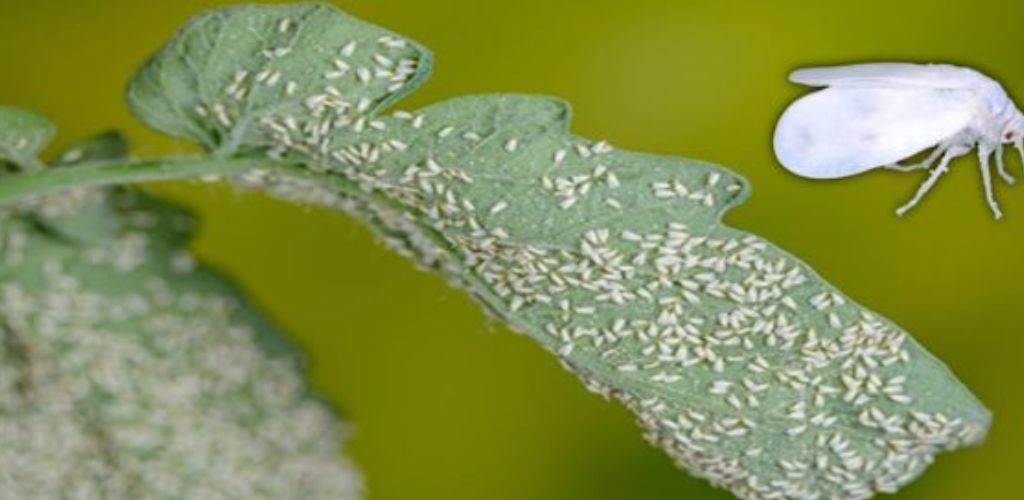
The whitefly is a parasitic insect of plants and feeds on the sap found in the leaves. Let’s better find out what it is and how to remove it.
Of tropical origin, the whitefly can be dangerous for plants as it reproduces quickly.
what is whitefly
A parasitic insect that feeds on the sap of leaves, the whitefly can live well in environments where temperatures range between 27 and 33 degrees. The whitefly can spread very quickly as it reproduces very quickly, even laying 150 to 200 eggs at a time. Reproduction can also occur 4 times in a single year. The eggs hatch in just 24 hours.
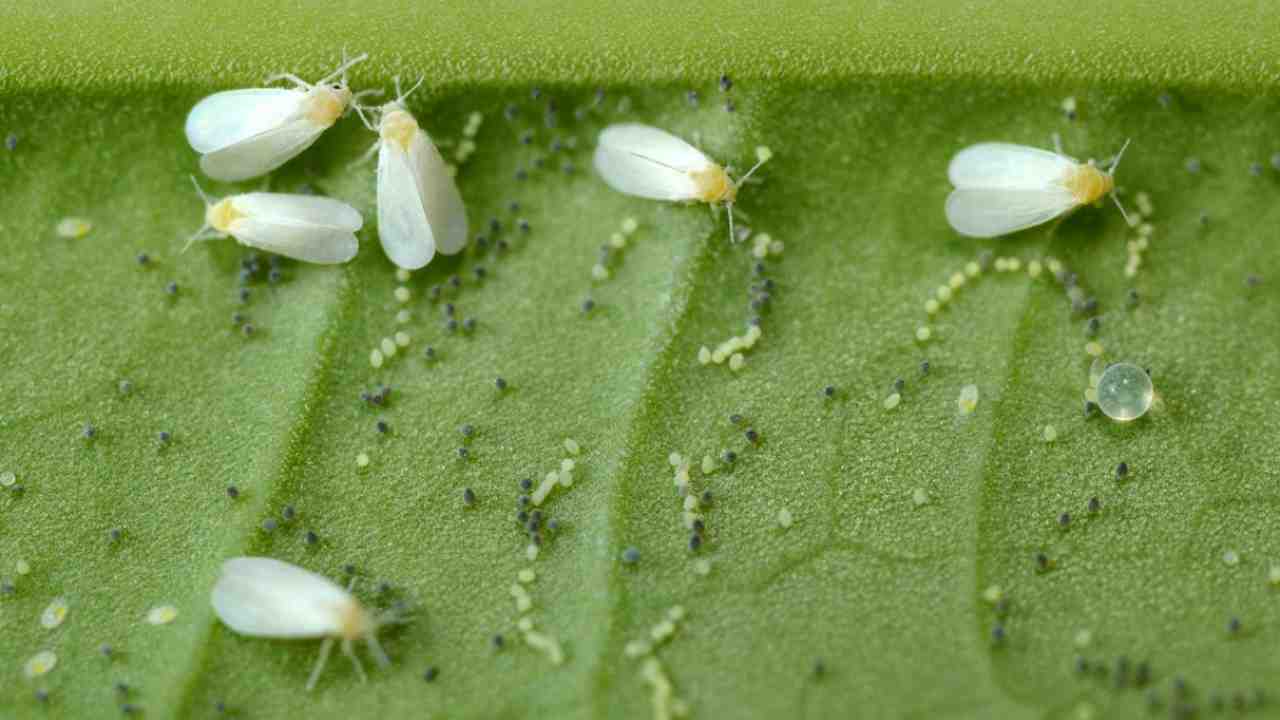
Visually, the insect closely resembles butterflies due to its wings that can reach up to 2 millimeters in length. Thanks to their wings they can fly and move. So, they have a head and six legs. To characterize the whitefly is the presence of a protective waxy powder.
The plants that this insect feeds on are the most varied and range from fruit trees to flowers. The symptom that plants affected by this parasite present is failure of chlorophyll photosynthesis , which can be hindered by the whitefly.
Therefore, the leaves that previously turned yellow fall off the plant, precisely because the vital process for them is missing. Additionally, the whitefly produces and releases a sugary powder on the leaves that could cause molds that transmit viruses and bacteria that could be fatal to the plant. /span>
How to get rid of this parasite
Combating the appearance of whiteflies is very difficult. Rather, to eliminate them it would be better to act in advance, preventing their appearance. It can be done by giving air to the greenhouse, if the plants are inside them, ensuring that the temperatures remain below 27 degrees .
Another natural remedy is to introduce insects that feed on whiteflies where your plants are. An example? The ladybugs . In addition, among other deterrents are: garlic, chilli but also Marseille soap.
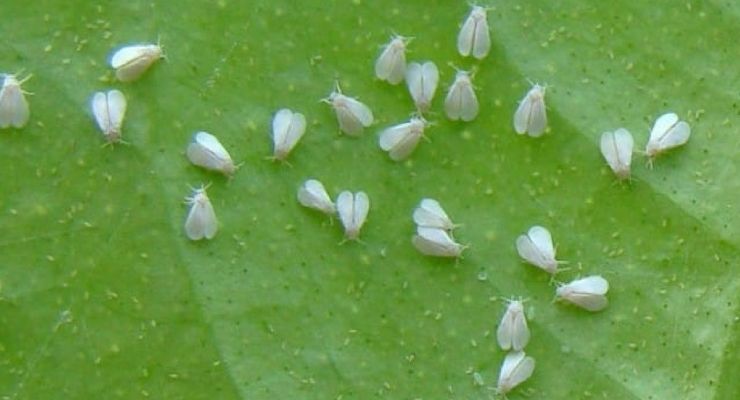
To kill the aleuroides (another name for the whitefly), other methods are allowed in organic farming, including the use of sweet orange essential oil , neem oil and pyretus.
The use of chromotropic traps should not be excluded. They should be hung in the garden, just above infested plants. They work similar to flypaper. But be careful, as it could also kill innocent useful insects, especially if there are flowering plants.