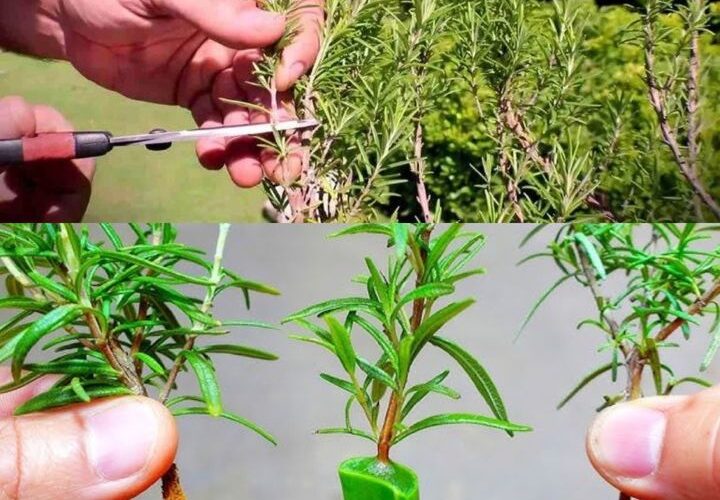
I love the scent of rosemary that permeates my garden and my kitchen, so when I discovered a simple and fast method to reproduce this aromatic plant infinitely in water, I couldn’t resist informing green lovers like me. In this article, I will share with you my personal approach to propagating rosemary using water, a process that takes just a few minutes but guarantees constant and abundant growth.
- Preparation and Necessary Materials
1.1 Selecting Rosemary Sprigs
To begin, obtain fresh and healthy rosemary sprigs from a healthy mother plant. It is important to choose sturdy sprigs and without signs of disease or pests.
1.2 Transparent Pot and Clean Water
Opt for a transparent pot that allows you to easily observe the development of the roots. Fill it with clean water at room temperature, preferably filtered or distilled to avoid contamination.
1.3 Positioning and Brightness
Choose a bright but indirectly exposed location to place the pot. Rosemary thrives with at least 6-8 hours of indirect sunlight per day.
- Propagation Procedure
2.1 Removing Lower Leaves
Before immersing the rosemary sprigs in water, gently remove the leaves from the lower part of the sprigs. This will help prevent rotting in the water and promote root development.
2.2 Immersing the Sprigs in Water
Place the prepared sprigs in the water, taking care to completely immerse the bare parts of the sprigs, ensuring that the remaining leaves do not come into contact with the water.
2.3 Monitoring and Changing the Water
Regularly check the state of the water in the pot and replace it every 2-3 days or whenever it becomes cloudy. Clean water is essential to prevent the growth of mold and bacteria that could damage the roots.
2.4 Root Development
After about 2-3 weeks, you will start to notice roots developing on the sprigs immersed in water. Make sure the roots are healthy and white before transplanting into soil.
- Transplanting into Soil
3.1 Choosing Soil and Pot
Before transplanting the rooted sprigs, prepare well-drained soil and a suitable pot with drainage holes. Use a mix of herb potting soil and perlite to ensure good drainage.
3.2 Removing from Water and Transplanting
Very gently remove the rooted sprigs from the water and transplant them into the prepared soil in the pot. Cover the roots with soil and lightly compact around the stem to stabilize the plant.
3.3 Post-Transplant Care
After transplanting, place the pot in a sunny spot and continue to keep the soil moist, but not overly wet. Provide protection from extreme environments and strong winds to allow the plant to establish itself.
Conclusion
Reproducing rosemary in water is a simple and rewarding method that allows you to obtain new plants in a very short time. By following the steps described and paying attention to the details, you can enjoy the freshness and aroma of rosemary in your garden or on your window at any time of the year.