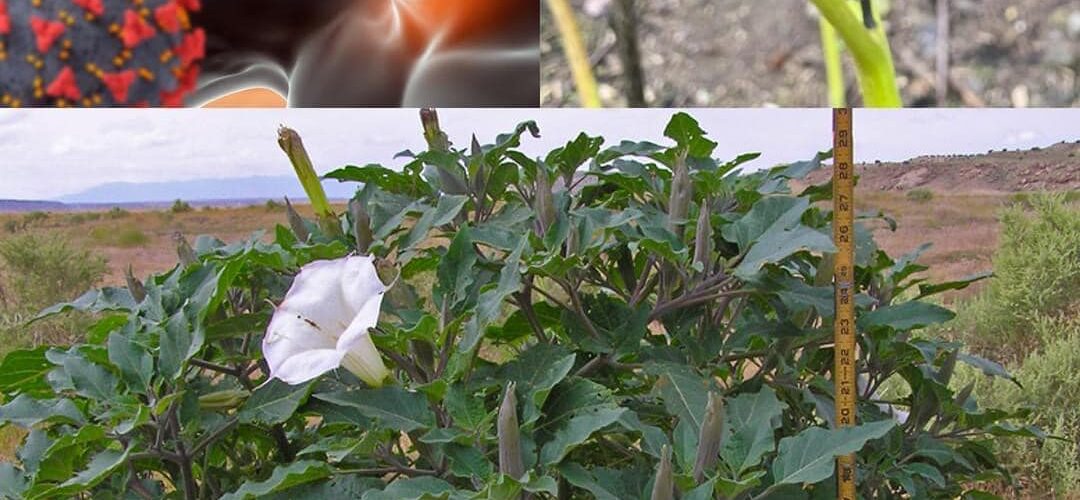
The genus Datura is famous for its striking but dangerous plants, often called devil’s trumpet or prickly apple. Despite their attractive appearance, these plants are extremely toxic and pose a serious threat to human and animal health. Below, we explore the genus Datura, its common species, and the dangers associated with these poisonous plants.
What is the genus Datura?
Part of the Solanaceae family, also known as the nightshade family, the genus Datura includes plants native to the Americas that have now spread throughout the world. They thrive in disturbed soils, roadsides, and gardens, where they are sometimes mistakenly grown for their ornamental appeal.
Identified by their large, trumpet-shaped flowers in shades of white, violet, or yellow and thorny seed pods, all species within this genus are extremely venomous. Learn more about its risks in this article on Datura Stramonium.
Common species of Datura
1. Datura stramonium (Stramonium or thorny apple)
Recognized by its white or purple trumpet-shaped flowers and pointed seed pods.
Known for its hallucinogenic properties, even small amounts can cause serious poisoning.
Learn more about the impact of Datura stramonium in this in-depth article.
2. Datura metel (Horn of Plenty)
It has large, showy white, yellow, or purple flowers.
Cultivated for its ornamental value, but equally toxic as other species.
Traditionally used in Ayurvedic medicine, although its misuse can be very dangerous.
3. Datura inoxia (Moon flower)
It is distinguished by its white, fragrant flowers that bloom at night.
It is often confused with the harmless moonflower vine, leading to accidental poisonings.
The seeds and flowers are particularly rich in toxic alkaloids.