Lemon leaves: let’s learn how to use them
We talk a lot about lemons in general and yet we often tend to forget to talk about their leaves.
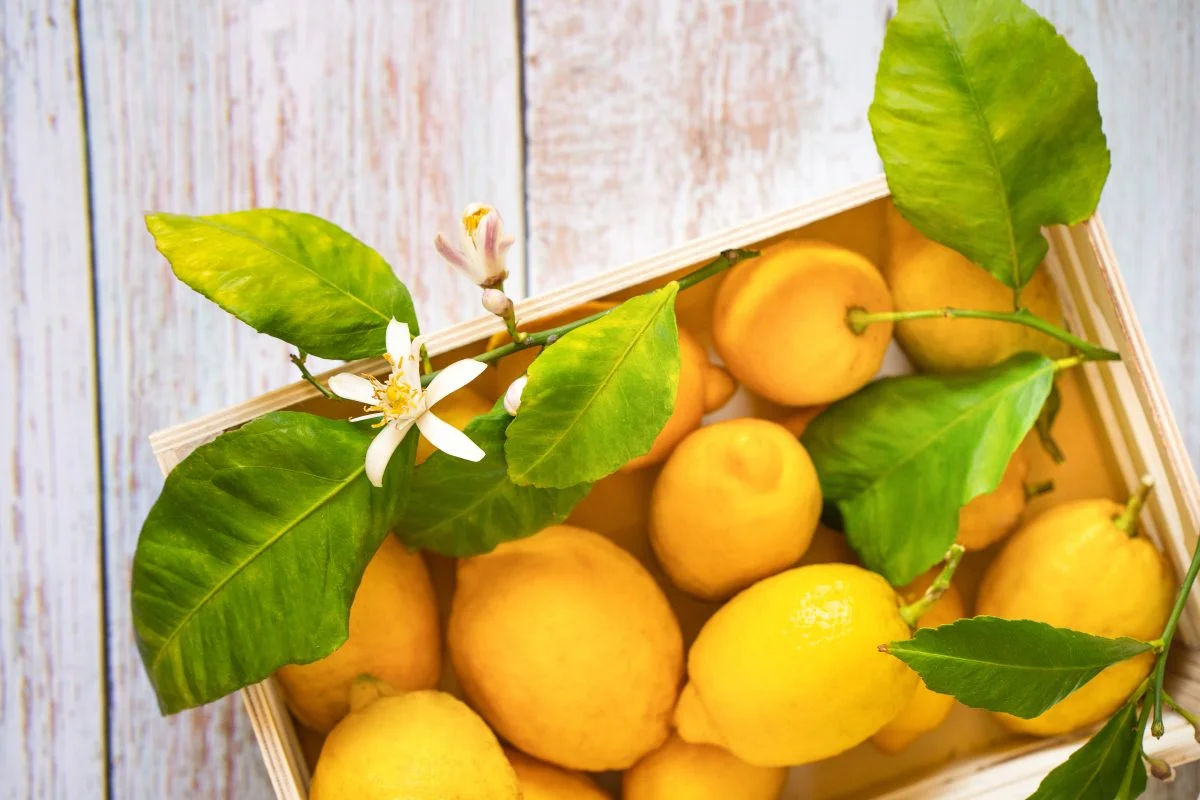
The leaves of the lemon tree are dark with an elliptical shape and fill the tree, obviously mixing with the fruit.
Neglecting the leaves of this plant is a very bad idea because they can reveal the health status of citrus fruits. In fact, if the leaves appear yellow, it means that the tree needs more water. However, if they shrivel, it means that the plant is attacked by insects and therefore develops sooty mold, a devastating disease for lemons.
It is therefore clear that the leaves should never be set aside but should be controlled and used in the same way as lemons.
It is precisely for this reason that the leaves, like all citrus leaves, can be used in many ways. They can decorate a dish and make it tasty, they can be made into herbal teas and infusions and they can also become a limoncello if you decide to replace the skin with leaves.
However, their consumption is not recommended because there are doubts about possible contraindications.
In addition, these leaves are also perfect for mulching, as they reduce grass growth during the summer months and protect crops from moisture during the winter months. Simply place them at the foot of the plant.
It should not be forgotten that they can also be used in compost as they are able to reduce bad odors and help materials to decompose.
Lemon leaves can therefore be used for a variety of reasons and as you continue reading you can discover them all.
Lemon leaves: Here are all the ways to use these leaves.
As already mentioned, lemon leaves can be used in several areas and you will find out how to do this below.
Lemon leaves in the kitchen
These leaves can give their aroma to any dish, but in addition to embellishing dishes, it is possible to use them in cooking, but in other ways.
Indeed, it is possible to wrap the meat in a lemon leaf, fix it with a toothpick, and let it cook in the oven or pan. Of course, the leaf must be removed before serving. The same process can also be replicated with meatballs.
It is obvious that the same method can be used with fish. The most suitable are trout and anchovies and for seafood it is possible to do it with oysters and shrimps.
It should not be forgotten that, as with bay leaves, lemon leaves can be included in soups and soups. After baking, simply remove them and serve the result to everyone.
Even mozzarella and scamorza can be wrapped in lemon leaves while cooking. The same also applies to cheeses that are more suitable for baking and in this case too, the leaves should be removed when tasting the result of the dish.
Thanks to Spain, it is possible to get to know a dessert called paparajotes . In this recipe, the lemon leaves are “breaded” in a mixture of yeast, white flour, milk, eggs, a little salt and sugar. Then simply fry and serve after sprinkling a little sugar and cinnamon on it.
To add them to iced tea or hot tea, simply crush them and they can obviously be used to prepare digestives, herbal teas and diuretic infusions.
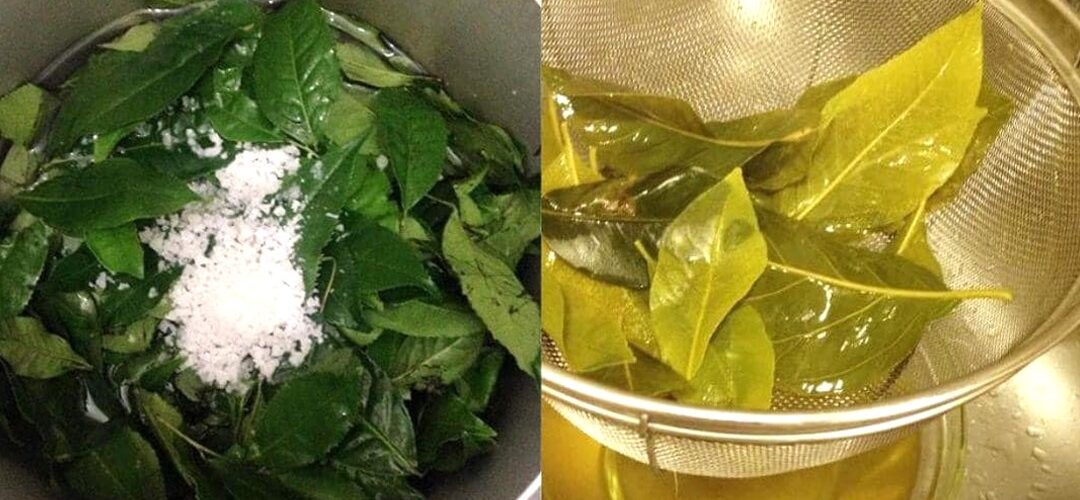
To make 2 cups of lemon leaf infusion, you need to use about 7 or 8 leaves and 1 liter of filtered water. Afterwards, the leaves should be placed in a mixture of warm water and baking soda for a few minutes to clean them. Then bring the water to a boil and insert the leaves into it for about 10 minutes. Finally, everything is filtered and you can then taste it.
How to Make the Liqueur
An alternative to limoncello is lemon leaf liqueur. Also perfect for digesting, you should use:
- 500 ml pure alcohol
- 30 lemon leaves
- 500 ml water
- 250 grams cane sugar
To prepare the liqueur, the leaves must be washed and then left to dry. They must then be macerated in the alcohol contained in a jar with its lid for 10 days. After the indicated time, let the water simmer for a few minutes and then dissolve the sugar. Finally, let it cool and place the two preparations in a bottle to keep in the refrigerator.
How to dry the leaves
If you want to have these leaves available all year round, you need to dry them . Obviously, they should then be stored in an airtight jar.
There are 2 methods to dry them.
The first method is to use the oven and simply place the leaves in a pan and let them “cook” between 30 and 40 degrees. Then open the oven and turn them halfway through cooking. The leaves should obviously not burn but become crunchy and then preserve them as well as possible.
The second method is to use the open air and just put the leaves on a tray and leave them in the open air for a few days. However, they should not get sunny, otherwise they risk getting burned. It is also possible to dry them at home if the environment is not humid.
How to store the leaves
After drying the leaves, you should store them. To do this, you need to chop them first so that you can use them later in drinks. They should therefore be placed in glass and airtight jars.
Here’s how to use all parts of the citrus fruit
It is obvious that not all parts of this citrus fruit should be wasted. To avoid wasting pulp waste, simply collect it, usually in a juicer, and use it to acidify the water used to wash salads and vegetables. It can also be added to fruit salads to replace lemon juice. It is also perfect for making a lemon popsicle.
It is clear that even the skin should not be wasted, as it can be mixed, cut and dried. It can be used as a simple spice or to prepare the famous salted lemons.
So there’s no need to waste anything, especially since lemon, whatever its composition, is very effective in preventing cardiovascular problems.
Good job.