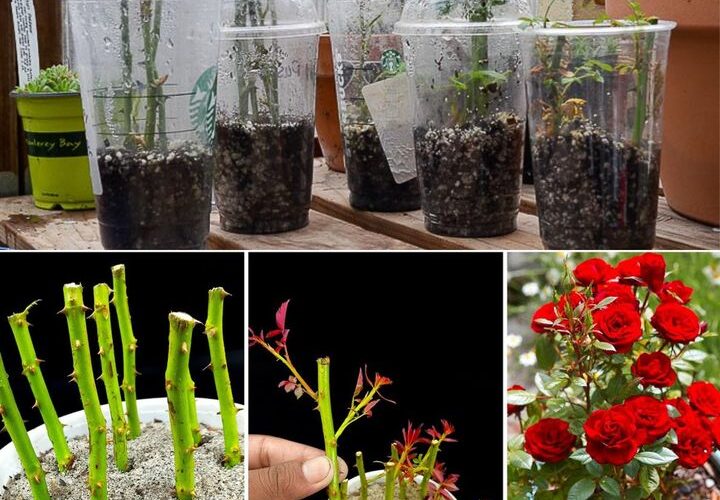
Materials Needed:
- Healthy rose cuttings (6-8 inches long)
- Sharp, clean pruning shears or scissors
- Optional: rooting hormone powder or gel
- Small pots or containers
- Well-draining soil (peat moss, perlite, vermiculite)
- Clear plastic bags or propagation domes
- Watering can or spray bottle
- Soil for transplanting
Step-by-Step Guide:
- Choosing and Preparing Cuttings:
- Select healthy branches from a disease-free rose plant. Branches should be 6-8 inches long and have 2-3 sets of leaves.
- Use sharp pruning shears to make a cut just below a leaf node.
- Preparing Cuttings for Planting:
- Remove flowers, buds, and leaves from the bottom half of each cutting.
- Optional: Dip the cut end in rooting hormone to encourage roots to emerge.
- Planting the Cuttings:
- Fill the pots with well-draining soil. Make a hole and insert the cuttings, making sure the leaves are above the soil level.
- Gently press the soil around the cuttings and water lightly.
- Creating a Humid Environment:
- Cover the pots with clear plastic bags or domes to maintain humidity.
- Place in a bright, indirect location, ensuring good air circulation to prevent mold.
- Positioning and Care:
- Keep the soil consistently moist, but not soggy, using a sprayer or watering can.
- Avoid direct sunlight, which can be too intense for cuttings.
- Rooting and Growth:
- Monitor for new leaves and shoots. Rooting usually takes 4-6 weeks.
- Transplant:
- Once roots have developed, transplant into larger pots or into garden soil mixed with compost.
- Caring for Transplanted Roses:
- Water regularly to maintain soil moisture, especially during dry periods.
- Provide 6-8 hours of sunlight per day for healthy growth and abundant blooms.
- Pruning and Maintenance:
- Prune as needed to encourage bushy growth and remove dead or diseased growth.
- Watch for pests and diseases, treating promptly if necessary.
- Enjoy Your Roses:
- Roses will bloom and thrive with proper care. Remove spent flowers to encourage continued blooming.