
Companion planting is a technique that involves growing certain plants together to improve garden performance. In fact, some plants have the peculiarity of attracting useful insects that protect certain varieties. While others are excellent repellents. This associated planting can only do good for your orchard, your garden or your orchard. Find out why garlic should be grown next to roses.
Combining certain plants with each other improves the harvest and limits the use of chemical fertilizers and pesticides. In fact, some plants enrich the soil, while others protect their companions from parasites and pests.
What are the benefits of companion planting?
– Enrich the soil: legumes and certain crops such as beans and peas enrich the soil with nitrogen. Additionally, some plants with long roots can bring nutrients from deep in the soil to the surface. This allows the so-called arable land to be enriched, that is, it can be plowed, and thus nourish plants whose roots are shallow.
– Provide plants with natural support: certain tall plants such as corn and sunflower serve as support for short crops such as peas and cucumbers.
– Regulate the light supply: some plants do not tolerate exposure to direct sunlight. In this case, it is useful to plant tall plants next to them to provide them with the shade they need.
– Eliminate weeds: to prevent the development of weeds, it is useful to plant field crops such as potatoes, along with plants green. This will fill empty areas and limit the appearance of weeds which harbor pests that spoil your harvest.
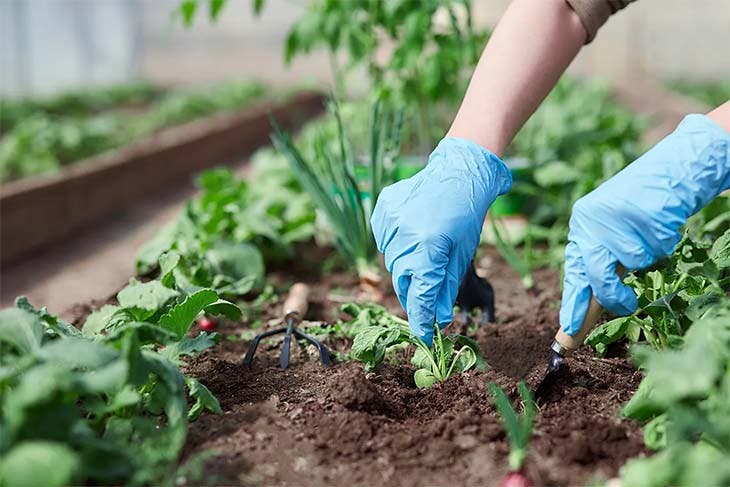
Why is garlic a good companion plant?
Garlic is a perennial vegetable, which is one of the best companion crops. This natural pest control helps repel insects. It is effective against, among others, fungus gnats, mites, aphids, ants, snails and onion gnats. Garlic also helps protect neighboring plants from fungi, thanks to its sulfur content, which is a natural fungicide.
Garlic can accompany various vegetable plants. These include, but are not limited to, tomatoes, cauliflower, broccoli, beets and spinach, peppers, cabbage, carrots and eggplants, as well as fruit trees. As for flowering plants, garlic can be planted along with roses, marigolds, and geraniums.
Why grow this vegetable next to roses?
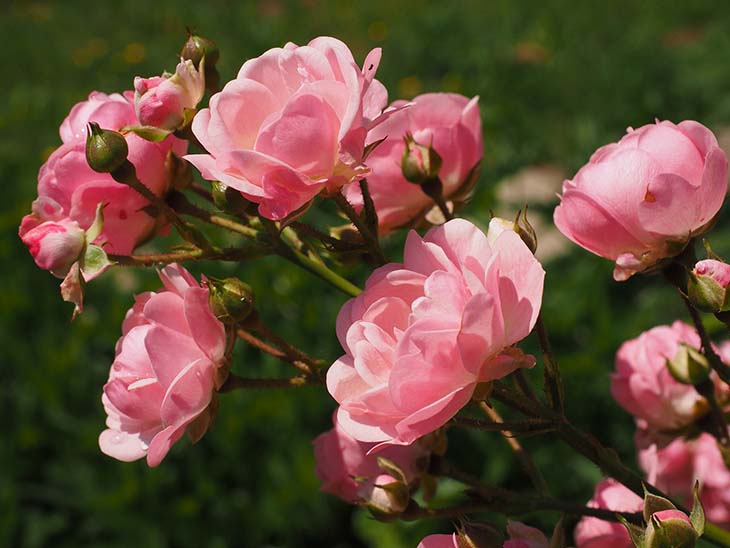
Garlic is small and does not take up much space. By planting it around your roses, you will protect your flowers from the pests that plague them. In fact, aphids disturb the growth of the rose bush and attack the foliage. Then the leaves begin to curl and wrinkle. Mites can also attack roses. In case of infestation, the leaves turn yellow and dry. You can also notice small white or yellowish dots on the upper part of the leaves.
By planting garlic with your rose, you will protect it from parasites, but it will also encourage it to accentuate its fragrance. In fact, since garlic gives off a strong odor, the rose bush will try to compete with it by increasing its fragrance even more. Above all because it is thanks to its smell that the rose bush attracts pollinating insects, which are essential to ensure its reproduction.
Garlic is a bad companion for what plants?
Garlic is only discouraged for a minority of plants. Avoid planting it with asparagus, sage, parsley, beans and peas. Garlic can slow down its growth.

How to successfully grow this vegetable plant?
To have a good harvest, even if you don’t have a green thumb, it’s important to provide your vegetable plant with the conditions it needs to grow.
Garlic appreciates drained, light soil rich in humus. It also needs to be planted in a sunny location. As for watering, garlic does not need much water. Avoid watering, except in times of drought. Avoid keeping standing water around your plants.
It is also important to choose the right variety of garlic according to the current season. Actually, there are two varieties of garlic. Cold-hardy fall varieties including white and purple garlic, and spring varieties. These keep better than the fall varieties and can be planted when the weather is mild. We distinguish in this category, pink and red garlic.
That said, planting garlic with your garden plants will protect them from pests, to promote healthy growth.